CAPA Benchmark: Why Coding Agents Should Learn Your Habits Across Sessions
TL;DR
A new 600-session benchmark shows coding assistants that read a user's resolved session history resolve ambiguous requests with far fewer clarifying questions - Claude Opus 4.8's first-turn success jumps from 24.3% to 60.3% when history is available.
What changed#
A new arXiv paper (2607.26611, submitted July 29) formalizes the problem every heavy coding-agent user hits within a week: your assistant asks the same clarifying questions over and over because it treats every session as a fresh conversation.
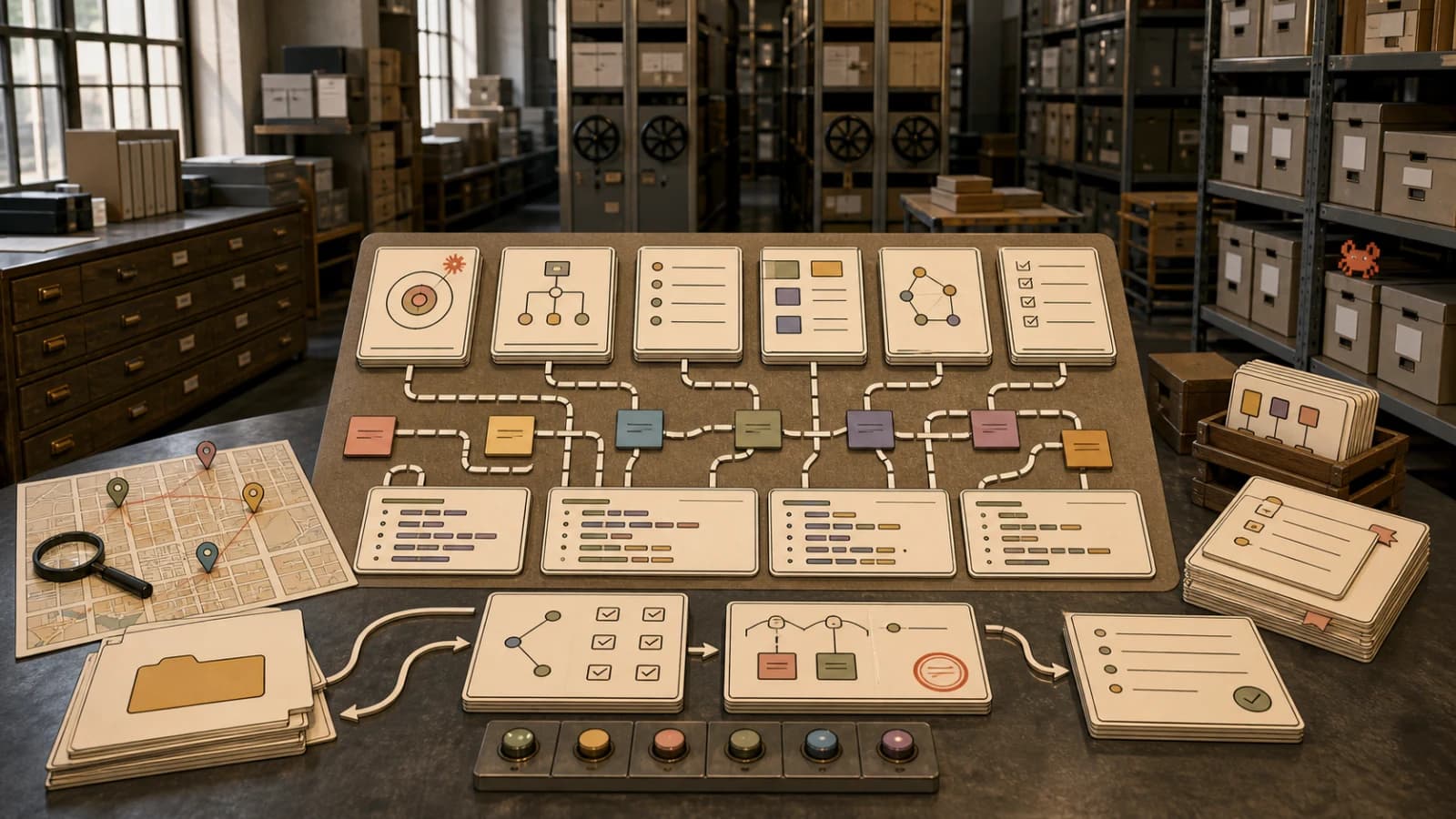
The authors call the task "personalized ambiguity adaptation" and ship CAPA (Cross-Session Adaptation to Personalized Ambiguity), a benchmark of 600 executable coding sessions built from HumanEval tasks. Sixty synthetic users each have a recurring ambiguity mechanism - a stable way they leave required implementation detail out of a request - plus a stable way they resolve it. Each user contributes five resolved history sessions and five held-out evaluation sessions, and the assistant's job is to infer the pattern and apply it to the held-out requests.
The six mechanisms are grounded in real coding conversations from WildChat: domain-cognitive polysemy (your own shorthand terms), structural logic misalignment (omitted scope or thresholds), habitual context omission (assumed conventions like "the usual entry point"), system-boundary misconception (presupposing file or runtime state you never fetched), conversational context misalignment (references to earlier decisions), and implicit constraint under-specification (unstated validation or edge-case requirements).
The running example is "normalize" meaning min-max scaling to one collaborator and z-score standardization to another. A colleague who has worked with you knows which one you mean; a coding assistant with no memory of your sessions guesses, or asks.
What the results say#
Twelve models across closed frontier, open-access frontier, and compact open-source tiers were tested under no-history and same-user-history conditions, scored on Executable Success (ES), First-Turn Executable Success (FT-ES), and Turns-to-Completion (TTC):
- Same-user history improved ES for 11 of 12 models, FT-ES for all 12, and reduced average TTC for every model
- Across models, history added 6.8 points to ES but 15.6 points to FT-ES, and cut 0.81 turns per task
- Claude Opus 4.8 went from 24.3% to 60.3% FT-ES with history (ES 88.0% to 90.0%)
- GPT-5.5 improved ES 74.3% to 84.3% and FT-ES 2.3% to 31.0%
- GLM-5.2 hit 89.7% ES and 46.7% FT-ES, competitive with the best closed models
- Compact models averaged 44.0% ES, with Qwen3.5-27B gaining the most from history (+18.3 points ES)
- The ceiling is far off: with no ambiguity at all, GPT-5.5 and DeepSeek V4 Pro both hit 100% ES and about 1.1 TTC
Two control experiments make the paper worth reading in full. First, shuffling history from other users still helped models (generic resolved sessions contain useful coding and dialogue patterns), but matched same-user history added consistent extra gains in FT-ES and TTC - the personalization signal is real, not just in-context learning from extra text. Second, general-purpose memory systems (mem0, A-mem) underperformed raw same-user history across all three metrics on two of three models tested. The authors' diagnosis is an objective mismatch: memory tools are built to store and retrieve facts, not to identify a user's recurring ambiguity-resolution pattern and decide whether the evidence justifies direct implementation.
Their lightweight fix is a "same-user history gating" workflow: a cheap gate LLM reviews resolved history for consistent ambiguity-resolution evidence, then either surfaces the single most informative prior session or states what remains unresolved. On GPT-5.5, DeepSeek V4 Pro, and GLM-5.2 it improved FT-ES by up to 13.3 points over raw history while holding ES steady.
From the archive
cdnjs Runs Entirely on Cloudflare's Developer Platform: 9 Billion Requests a Day on Workers
Jul 31, 2026 • 7 min read
Change2Task: The Assembly Line for Coding Agent Training Data
Jul 31, 2026 • 6 min read
Claude Mythos Preview Explained: Anthropic's Gated Frontier Model and Project Glasswing
Jul 31, 2026 • 7 min read
Coding Agents Almost Never Read Open Source Contribution Rules: RepoComplianceBench Study
Jul 31, 2026 • 6 min read
Why it matters to developers#
This is the measurable version of a UX annoyance you already live with. Every clarifying question is a context switch: you leave flow, explain yourself, wait for a turn. The paper shows the gap between what models can do and what they do by default is partly a memory-retrieval problem, not a capability problem. Claude Opus 4.8 is 2.5x better at first-turn success with five prior sessions of the same user's history in reach. The model knows how to use the evidence - the missing piece is deciding which evidence to use.
It also reframes what "agent memory" should store. The agent-memory space is crowded with tools competing on fact retrieval (preferences, credentials, project trivia). This paper argues the higher-value memory is procedural: how this user typically leaves requirements underspecified and what they usually mean. That maps directly to patterns the site has covered before, from Agent Memory Benchmarks Are Not Enough (benchmarks measuring recall miss what matters) to the Context Ledger argument that memory should be an auditable, append-only record rather than a silent profile.
For practical setups, the takeaway is cheaper than it sounds: the winning method is a gate prompt over your existing session logs, not a new memory database. If you run Claude Code, Codex, or an opencode-style agent with a session store, you can approximate same-user history gating today by having the agent skim the user's last few resolved sessions before planning a new ambiguous task - which is also consistent with the recent AGENTS.md ablation finding that what you put in context moves correctness more than the model's default behavior.
Continue Reading#
- Agent Memory Benchmarks Are Not Enough - why recall-based memory evals miss the working-value question
- AI Agent Memory Needs a Context Ledger - a design for auditable cross-session memory
- AI Agent Memory Patterns - the pattern catalog behind long-horizon agents
- AGENTS.md Files Don't Move Coding Agent Correctness - what context actually changes in agent output
- Intent Debt: The AI-Era Debt Nobody Is Tracking - the cost of ambiguity that never gets resolved
- AgentMemory Is Useful Only If You Audit What It Remembers
Sources#
- Fewer Clarifications, Better Code: Benchmarking Cross-Session Personalized Ambiguity Adaptation in Coding Assistants (arXiv 2607.26611) - fetched July 31, 2026
- Full text (arXiv HTML) - main results Table 1, shuffled-history control Table 3, memory-method comparison Table 4, history gating Table 5
Read next
Agent Memory Benchmarks Are Not Enough
Persistent memory for coding agents is trending because every session still starts too cold. The hard part is not saving facts. It is proving recall, freshness, deletion, and rollback under real development pressure.
9 min readAI Agent Memory Needs a Context Ledger
GitHub Trending is full of agent memory and context tools. The useful version is not magic recall. It is a context ledger: source-linked, scoped, expiring memory that agents can inspect and users can audit.
8 min readAI Agent Memory Patterns
Agents forget everything between sessions. Here are the patterns that fix that: CLAUDE.md persistence, RAG retrieval, context compression, and conversation summarization.
9 min readShare
Developers Digest
Technical content at the intersection of AI and development. Building with AI agents, Claude Code, and modern dev tools - then showing you exactly how it works.
300+ videos30K+ GitHub stars850+ articles
Related Tools
AI CodingDaily Driver

Claude Code
Anthropic's agentic coding CLI. Runs in your terminal, edits files autonomously, spawns sub-agents, and maintains memory...
View ToolAI Frameworks
C
Composio
Gives AI agents access to 250+ external tools (GitHub, Slack, Gmail, databases) with managed OAuth. Handles the auth and...
View ToolAI Coding

Augment Code
AI coding platform built for large, complex codebases. Context Engine indexes 500K+ files across repos with 100ms retrie...
View ToolAI CodingOpen source

OpenCode
Open-source AI coding agent for terminal, desktop, and IDE. Works with 75+ LLM providers including Claude, GPT, Gemini,...
View ToolApps from Developers Digest
Developer ToolsPlus $20/mo
Agent Eval Bench Plus
Score every coding agent on your own tasks. Catch regressions in CI.
View AppSaaS ProductsPopular
Fit
Log workouts, meals, and habits in plain English. Your progress shows up as a GitHub-style heatmap.
View AppSaaS Products
Overnight Agents
Spec out AI agents, run them overnight, wake up to a verified GitHub repo.
View AppRelated Guides
Guide
Resume Subagents - Claude Code
Continue a subagent's work across sessions.
Claude CodeGuide
MCP Servers Explained
What MCP servers are, how they work, and how to build your own in 5 minutes.
AI AgentsGuide
Run AI Models Locally with Ollama and LM Studio
Install Ollama and LM Studio, pull your first model, and run AI locally for coding, chat, and automation - with zero cloud dependency.
Getting StartedRelated Videos
TRAE: Custom AI Agents That Actually Understand Your Codebase
Check out Trae here! https://tinyurl.com/2f8rw4vm In this video, we dive into @Trae_ai a newly launched AI IDE packed with innovative features. I provide a comprehensive demonstration...
Video·

Buzz: Open-Source Collaboration for Humans + AI Agents
Buzz by Block: Open-Source Slack-Style Collaboration for Humans + AI Agents (Demo & Setup) Check out Arcade: https://arcade.dev.plug.dev/xiDRwlA Repo: https://github.com/block/buzz The video introd...
Video·

Agents 101: How to Build and Deploy Anything with AI Agents
Build Anything with Vercel, the Agentic Infrastructure Stack Check out Vercel: https://vercel.plug.dev/cwBLgfW The video shows a behind-the-scenes walkthrough of how the creator rapidly builds and d...
Video·
Related Posts
9 min read
AI Agents
Agent Memory Benchmarks Are Not Enough
Persistent memory for coding agents is trending because every session still starts too cold. The hard part is not saving...
8 min read
AI Agents
AI Agent Memory Needs a Context Ledger
GitHub Trending is full of agent memory and context tools. The useful version is not magic recall. It is a context ledge...
9 min read
AI Agents
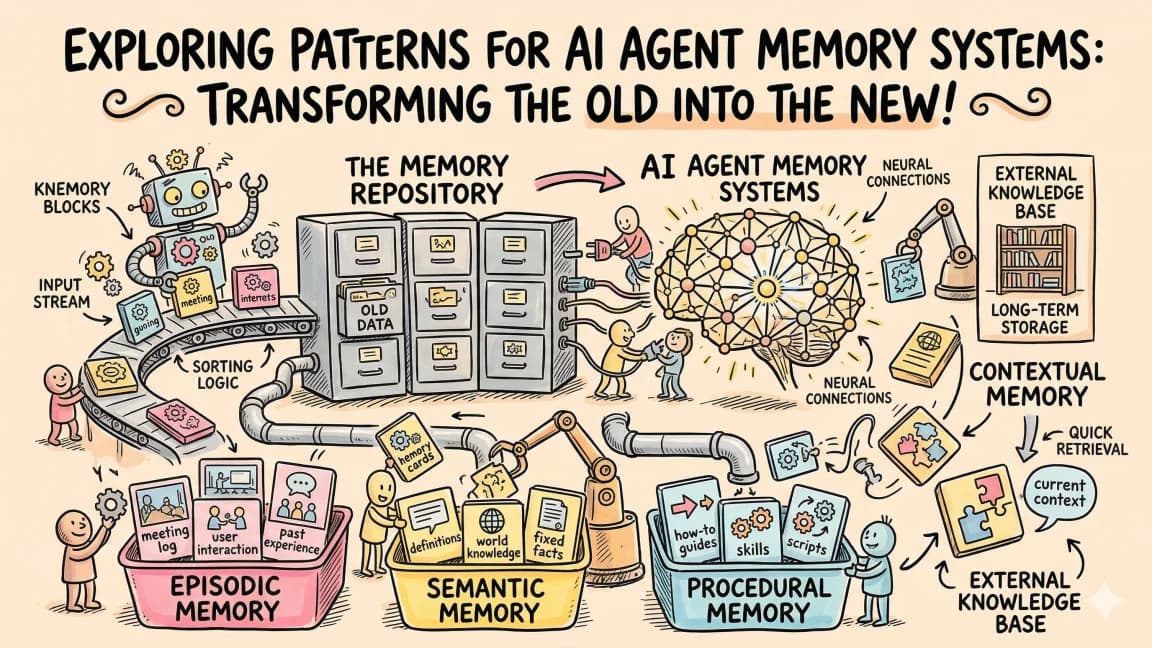
AI Agent Memory Patterns
Agents forget everything between sessions. Here are the patterns that fix that: CLAUDE.md persistence, RAG retrieval, co...

7 min read
News
AGENTS.md Files Don't Move Coding Agent Correctness: A 288-Run Ablation
A controlled ablation across Claude Code and Codex, 17 real tasks, and 288 evaluated runs finds context-injection strate...
8 min read
AI Coding
Intent Debt: The AI-Era Debt Nobody Is Tracking
Martin Fowler reframes AI-era debt into three layers - technical, cognitive, and intent. The third one is the one most t...
7 min read
News
ACE vs ALTK-Evolve: How You Deliver Agent Memory Determines the Token Bill
ACE and IBM's ALTK-Evolve both turn agent trajectories into reusable lessons. The difference is delivery: one injects th...
Build with the member tools

Get Smarter About AI Dev
New tutorials, open-source projects, and deep dives on coding agents - delivered weekly.
One email per weekReal code, not theoryFree forever