Vercel Passport Is GA: Deployments That Know Who Your Users Are

TL;DR
Vercel Passport is generally available: protect deployments behind Okta, Entra ID, or any OIDC provider, and read a verified identity in app code with getIdentity(). Here is how it works and why it matters.
Vercel Passport is now generally available. It turns any deployment into a gated application: visitors authenticate through Okta, Microsoft Entra ID, or any OIDC provider before they see a byte of your app, and your code receives a signed, verified identity instead of a shared password or a vague proxy header.
Deployment protection on Vercel used to be a blunt instrument. A shared password for previews, or Vercel's own SSO for your team. What it could not do was let the application itself know who was looking. Passport closes that gap: the identity provider sits in front of the request, and a signed token carries the visitor's identity through to your code.
What changed#
Passport runs in Vercel's network, before your deployment's routes and proxy functions execute. Unauthenticated browser visitors are redirected to your identity provider before they ever reach your application code. After a successful exchange, Vercel injects a signed identity token into the request.
The client-side contract is a single helper in a new package:
Install
npm install @vercel/passportTypeScript
import { getIdentity } from '@vercel/passport';

export async function GET() {
  const identity = await getIdentity();
  if (!identity) {
    return Response.json({ error: 'Unauthorized' }, { status: 401 });
  }
  return Response.json(identity);
}
Two details make this different from rolling your own auth proxy:
- Vercel strips any client-supplied value for the
x-vercel-oidc-passport-tokenheader and injects its own verified token, so a visitor cannot forge an identity by setting a header. getIdentity()returnsnullfor bypassed or unauthenticated requests, giving you one canonical way to test for a signed-in visitor. In local development it returns a configurable development identity, so the same code path runs without a real identity provider.
The identity payload carries a subject, a stable identifier scoped to your team and the Vercel Connect application that links Passport to your identity provider, plus an externalSubject, the visitor's ID inside the provider itself. That split matters: subject stays stable even if the visitor's provider-side ID changes, so you can key sessions and audit trails on it.
Group-based authorization is built in#
Passport can now carry additional identity claims from your provider, starting with group membership. You request the groups scope and allowlist the claim in the Vercel Connect application, then read it directly from the identity payload:
TypeScript
import { getIdentity } from '@vercel/passport';

export async function GET() {
  const identity = await getIdentity();
  const groups = identity?.payload.groups ?? [];
  if (!groups.includes('engineering')) {
    return Response.json({ error: 'Forbidden' }, { status: 403 });
  }
  return Response.json({ groups });
}
This is the shape of real authorization, not just authentication. A deployment protected by Passport can serve the same route to everyone, but only hand over admin data to members of a specific group. One gate at the edge, fine-grained checks in code.
From the archive
Weekly Highlights: Frontier AI Commoditized - Half-Price Opus 5, 3T Open Weights, and Agent Security Gets Real
Jul 31, 2026 • 12 min read
What If AI Was Free Tomorrow, at Exactly Today's Capabilities?
Jul 31, 2026 • 11 min read
Agent-Manager: A Tmux TUI for Running Claude Code, Codex, and OpenCode Side by Side
Jul 30, 2026 • 7 min read
Buzz by Block: The Open-Source Workspace Where Humans and AI Agents Build Together
Jul 30, 2026 • 8 min read
Forwarding identity to downstream services#
The token is not confined to the deployment it protected. You can forward it to another backend as a bearer token and verify it there with verifyIdentity(), available in @vercel/passport 1.0.0 and later. The helper checks the token signature, the Passport claims, and that the token came from the expected project and environment:
TypeScript
import { verifyIdentity } from '@vercel/passport';

export async function GET(request) {
  try {
    const identity = await verifyIdentity(request, {
      ownerId: 'team_your_team_id_here',
      projectId: 'prj_your_project_id_here',
      environment: 'production',
    });
    return Response.json({ subject: identity.subject });
  } catch {
    return Response.json({ error: 'Unauthorized' }, { status: 401 });
  }
}
Non-JavaScript services can verify the token as a standard JWT against the published JWKS endpoint at passport.vercel.com/.well-known/jwks.json. So a Python worker or a Go service can trust the same identity without sharing secrets.
The operational details that matter#
Every successful Passport authentication records a passport-access-granted event in both the Activity Log and Audit Logs, identifying the visitor and recording the protected hostname and project. That is the difference between "someone opened the preview" and "Marco from engineering opened the preview at 14:03".
Two bypass paths keep automation working:
- Protection Bypass for Automation: webhooks, cron jobs, and CI runs that already send a bypass secret in the
x-vercel-protection-bypassheader or query parameter keep working. Because Passport runs before your routes and proxy functions, the secret must be part of the original request rather than added by your own middleware. - Trusted Sources: the same bypass without a shared secret, using short-lived OIDC tokens from the Vercel projects and external services you authorize. This is how a workflow that triggers Vercel's open source agent framework eve from Slack can reach a Passport-protected deployment.
Custom environments are supported, so staging and qa deployments get the same identity provider sign-in as previews and production. Passport is available on the Enterprise plan.
Why it matters to developers#
The interesting thing about Passport is what it removes from your to-do list. Building auth-gated previews for customers, internal tooling, or demo environments has always meant standing up a proxy, managing session state, and hand-rolling identity plumbing that has nothing to do with your product. Passport moves that responsibility to the platform: Vercel owns the redirect, the token lifecycle, and the security boundary, and your code gets a typed identity object.
It also signals where Vercel's security model is going. Together with Better Auth's native Vercel support, the auth ecosystem on the platform is converging on real identity rather than shared secrets. Passport sits at the edge, while libraries like Better Auth handle identity inside your app; for teams that want every deployment to carry a verified visitor identity, Passport replaces the edge layer entirely.
For agent-heavy workflows the fit is natural. Zero-touch OAuth patterns, which solve the browser-auth problem for agents, pair with Passport's Trusted Sources bypass to let CI and agent frameworks reach protected deployments without human intervention. The token model also complements Vercel's durable execution programming model: a long-running workflow can forward the verified identity of its triggerer through every step.
If you ship internal tools or customer previews on Vercel, this is the easiest upgrade you will make this year. Enable Passport, point it at your existing OIDC provider, and delete the password-gate code.
Continue Reading#
- Better Auth Joins Vercel: What It Means for the Auth Ecosystem - where app-level auth on Vercel is heading
- AI Agent Auth Platforms Compared - how the agent auth providers handle the same problem
- Zero-Touch OAuth for MCP: Enterprise Auth Gets Practical - browser-free auth for automated workloads
- Vercel eve: The Framework for Building AI Agents - the agent framework Passport's Trusted Sources bypass supports
- Vercel's New Durable Execution Programming Model - long-running workflows that can carry verified identity
Sources#
- Vercel Passport is now generally available - Vercel Changelog, July 31, 2026
- Vercel Passport documentation - Vercel docs
- Read identity with getIdentity() - Vercel docs
- Verify identity in downstream services - Vercel docs
- Additional identity scopes - Vercel docs
- Trusted Sources for Deployment Protection - Vercel Changelog
Read next
Better Auth Joins Vercel: What It Means for the Auth Ecosystem
Vercel acquires the open-source authentication framework that became the go-to Next.js auth solution. HN weighs in on open source sustainability and vendor lock-in concerns.
5 min readAI Agent Auth Platforms Compared: Arcade vs Composio vs Nango vs Stytch
A practical comparison of the four authentication platforms developers reach for when connecting AI agents to third-party APIs: Arcade, Composio, Nango, and Stytch. OAuth 2.1, MCP support, integration counts, and which to pick by workload.
8 min readZero-Touch OAuth for MCP: Enterprise Auth Gets Practical
MCP's new Enterprise-Managed Authorization removes per-user OAuth friction. Anthropic, Okta, Figma, and Linear ship centralized auth for AI agent tooling.
7 min readShare
Developers Digest
Technical content at the intersection of AI and development. Building with AI agents, Claude Code, and modern dev tools - then showing you exactly how it works.
300+ videos30K+ GitHub stars850+ articles
Related Tools
AI Coding

v0
Vercel's generative UI tool. Describe a component, get production-ready React code with shadcn/ui and Tailwind. Iterate...
View ToolAI FrameworksEssential

Vercel AI SDK
The TypeScript toolkit for building AI apps. Unified API across OpenAI, Anthropic, Google. Streaming, tool calling, stru...
View ToolInfrastructurePopular
Vercel
Deployment platform behind Next.js. Git push to deploy. Edge functions, image optimization, analytics. Free tier is gene...
View ToolInfrastructureThis Site

Clerk
Drop-in auth for React/Next.js. Pre-built sign-in UI, session management, user profiles, org management. This site uses...
View ToolApps from Developers Digest
Related Guides
Guide
Migrating from Cursor to Claude Code
A concrete step-by-step guide to moving your development workflow from Cursor to Claude Code - settings, rules, keybindings, and the habits that transfer.
Getting StartedGuide
Getting Started with DevDigest CLI
Install the dd CLI and scaffold your first AI-powered app in under a minute.
Getting StartedGuide
MCP Servers Explained
What MCP servers are, how they work, and how to build your own in 5 minutes.
AI AgentsRelated Videos
TRAE: Custom AI Agents That Actually Understand Your Codebase
Check out Trae here! https://tinyurl.com/2f8rw4vm In this video, we dive into @Trae_ai a newly launched AI IDE packed with innovative features. I provide a comprehensive demonstration...
Video·

Build an AI Device with Groq, Llama 3, OpenAI, TTS, Whisper, Vision, Vercel AI SDK & Next.js
Repo: https://git.new/ai-pin Building an AI Assistant similar to the Humane AI Pin, the Rabbit R1 with Advanced Functionality from Scratch This video details the process of creating an AI...
Video·

Build a Next.JS Answer Engine with Vercel AI SDK, Groq, Mistral, Langchain, OpenAI, Brave & Serper
Building a Perplexity Style LLM Answer Engine: Frontend to Backend Tutorial This tutorial guides viewers through the process of building a Perplexity style Large Language Model (LLM) answer...
Video·
Related Posts
5 min read
News
Better Auth Joins Vercel: What It Means for the Auth Ecosystem
Vercel acquires the open-source authentication framework that became the go-to Next.js auth solution. HN weighs in on op...

8 min read
AI Agents
AI Agent Auth Platforms Compared: Arcade vs Composio vs Nango vs Stytch
A practical comparison of the four authentication platforms developers reach for when connecting AI agents to third-part...

7 min read
News
Zero-Touch OAuth for MCP: Enterprise Auth Gets Practical
MCP's new Enterprise-Managed Authorization removes per-user OAuth friction. Anthropic, Okta, Figma, and Linear ship cent...
9 min read
Vercel
Vercel eve: The Framework for Building AI Agents
Vercel launched eve at Ship 26, an open-source agent framework it calls Next.js for agents. You define each agent as fil...
10 min read
Vercel
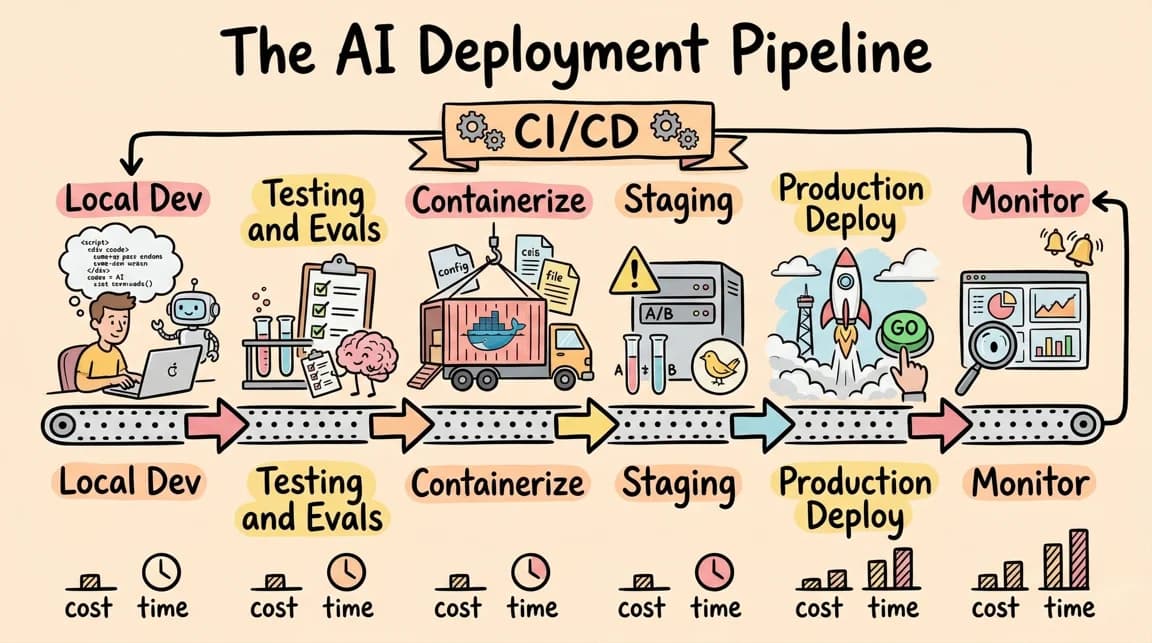
Vercel's New Durable Execution Programming Model: A Developer's Guide
Durable execution lands on Vercel. What it means for agents, long-running flows, and indie dev stacks - with code, gotch...

6 min read
News
Vercel Sandbox Gets a Real Network Boundary: Why Egress Control Is the Missing Half of Agent Security
Vercel Sandbox now polices all outbound traffic on the host, outside the microVM, with SNI-based domain policies, CIDR r...
Build with the member tools

Get Smarter About AI Dev
New tutorials, open-source projects, and deep dives on coding agents - delivered weekly.
One email per weekReal code, not theoryFree forever