Topic
AI RESEARCH
All blog posts, tools, and guides about AI Research from Developers Digest.
16 resources - 16 posts
Blog Posts
View in blog →
Anthropic's Fermat Proof Is an Autoformalization Milestone
Anthropic says Claude worked largely autonomously for 11 days to formalize Fermat's Last Theorem in Lean. The developer lesson is less about one theorem and more about verified repo-scale research artifacts.
7 min read

6 of 11 ASR Models Transcribe the Benchmark, Not the Audio: Benchmark Optimization in Speech, Quantified
A Hume AI and Hugging Face study puts hard numbers on 'benchmaxxing' in speech recognition: on two of the most-used ASR datasets, top-scoring models reproduce erroneous or silenced reference transcripts 18-30% of the time, and several can identify which benchmark they are being tested on with up to 90% accuracy.
7 min read

The ICML 2026 Agent Reproduction Audit: 23% of Examined Papers Had Falsified or Contested Claims
Hugging Face's open challenge used 1,200+ participants and their coding agents to attempt 2,226 ICML 2026 papers claim by claim. 51% had claims independently verified, 23% had a falsified or contested claim, and four documented falsifications include a spotlight theorem that fails after step 224.
7 min read

CLAUDE.md Files Never Stop Growing: A New Paper Names the Mechanism
A study of 247,694 instruction lifetimes in 1,867 repositories shows agentic prompt files grow +226% on average because the reasoning behind each rule decays. Comments encoding that reasoning remove 99.3% of the excess.
7 min read
The $44 Compiler: Persistent Projects Beat Persistent Agents
EvoX Genesis built a 250k-line Rust C compiler with DeepSeek V4 Flash for $44 in tokens by making the project the persistent thing and keeping agents finite-lived. The paper's three runs, the design that made them possible, and what it says about agent memory.
6 min read

OpenAI Publishes Ten Decade-Open Math Proofs, Each Formalized in Lean
OpenAI's next model, codenamed Astra, produced results on ten problems open for at least a decade - including non-sofic groups and Erdős problems 146, 180, and 183 - with every argument formalized as a Lean certificate.
6 min read
AGENTS.md Configuration Smells: 91% of Popular Repos Get One of Six Wrong
A SCAM 2026 study of 100 top-starred repos catalogs six configuration smells in AGENTS.md and CLAUDE.md files: Lint Leakage in 62%, Context Bloat in 42%, Skill Leakage in 35%. Only 9 of 100 files were smell-free.
6 min read

Coding Agents Almost Never Read Open Source Contribution Rules: RepoComplianceBench Study
A new 106-issue benchmark across 49 repositories finds frontier coding agents rarely retrieve AI contribution rules on their own - and never refuse to contribute in AI-banned repositories, no matter the prompt. Disclosure and verification can be fixed; bans cannot.
6 min read

AGENTS.md Files Don't Move Coding Agent Correctness: A 288-Run Ablation
A controlled ablation across Claude Code and Codex, 17 real tasks, and 288 evaluated runs finds context-injection strategy does not measurably change correctness (bounded to under 10-15pp). The failures are implementation skill, not missing repository knowledge.
7 min read
LLMs Resolve Java Merge Conflicts Better Than Structured Tools - Because They Never Give Up
A calibrated study on real ConflictBench Java conflicts finds LLM agents match the developer's own resolution on 55-59% of true conflicts versus 36.7% for the best structured tool. The edge is coverage, not accuracy: the tools abstain on 20-90% of conflicts, the LLM on none.
6 min read
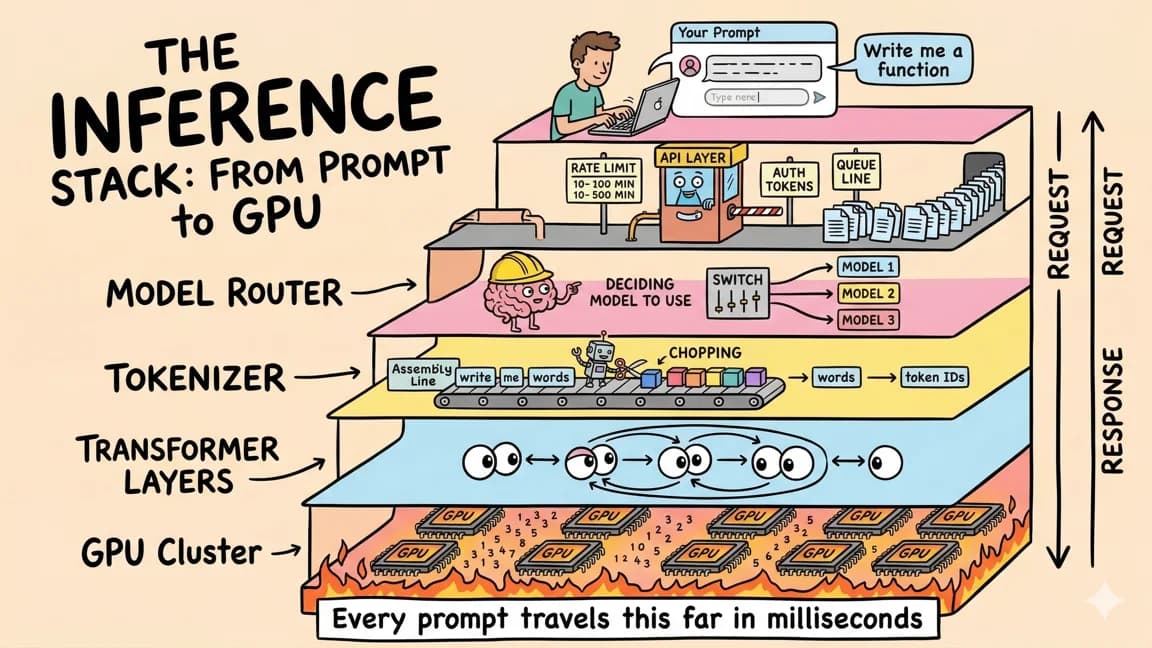
Kimi Linear: An Attention Architecture That Outperforms Full Attention
Moonshot AI's Kimi Linear paper introduces KDA, a hybrid linear attention that beats full attention at all scales - 75% less KV cache, 6x decoding at 1M context, and open-source checkpoints.
9 min read
GPT-5.6 Closes 30-Year Gap in Convex Optimization Theory
A researcher's 10-page domain-expert prompt helped GPT-5.6 produce a Lean-verified proof closing a complexity gap that stood since 1996. The paper is now on arXiv.
5 min read

GPT-5.6 Sol Ultra Produces Proof of the Cycle Double Cover Conjecture
OpenAI claims GPT-5.6 Sol Ultra has generated a proof for a 50-year-old graph theory conjecture in under an hour. The math community is now verifying whether it holds up.
5 min read
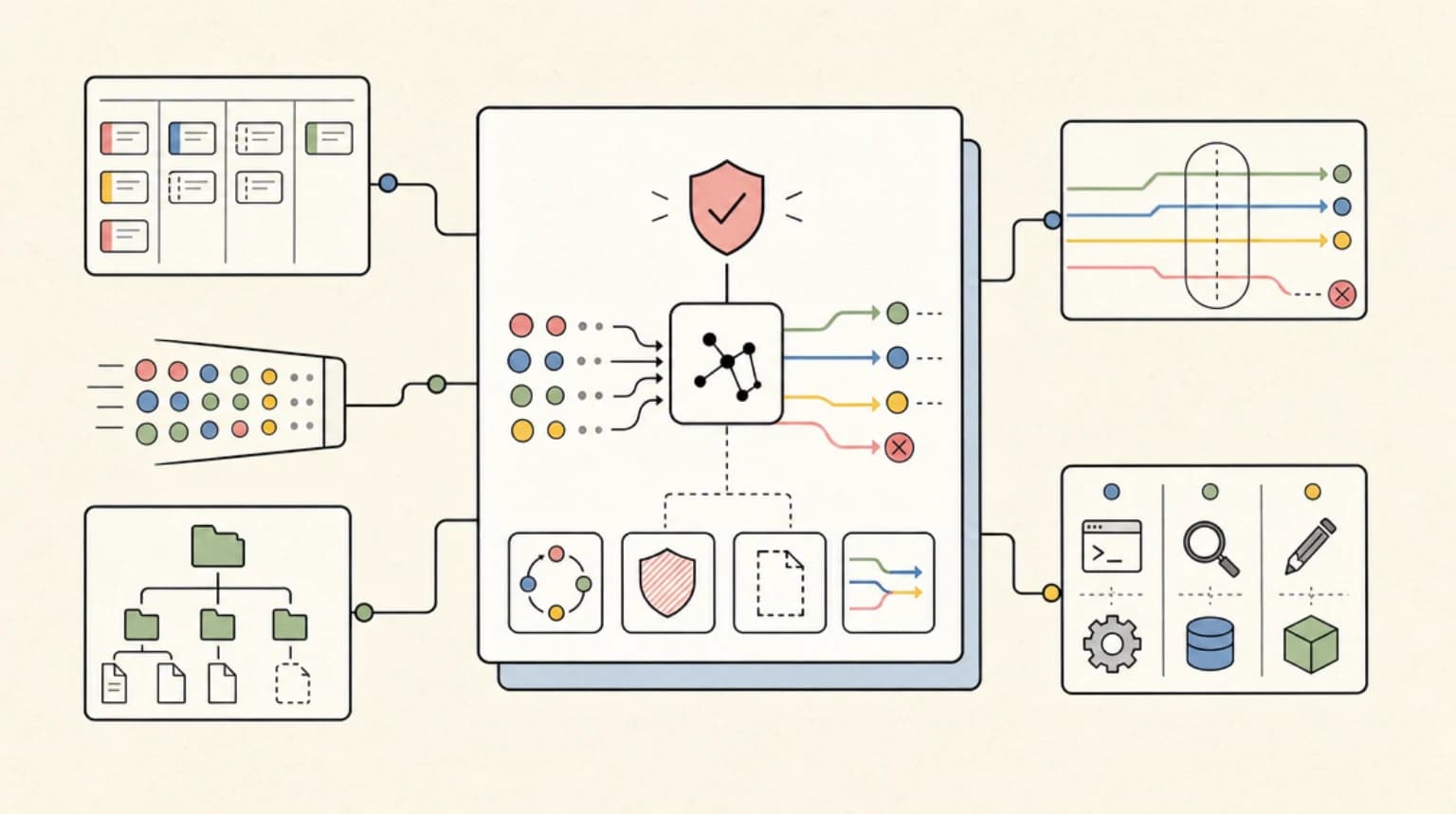
Anthropic Discovers J-Space: A Global Workspace Inside Language Models
Anthropic's new research reveals LLMs have an internal 'workspace' for silent reasoning - and it could change how we build safer AI.
8 min read

Leanstral 1.5: Mistral's Open Theorem-Proving Model Hits 100% on miniF2F
Mistral releases Leanstral 1.5, an Apache-2.0 licensed 119B parameter model (6B active) for Lean 4 theorem proving that saturates miniF2F and achieves SOTA on FATE benchmarks.
8 min read
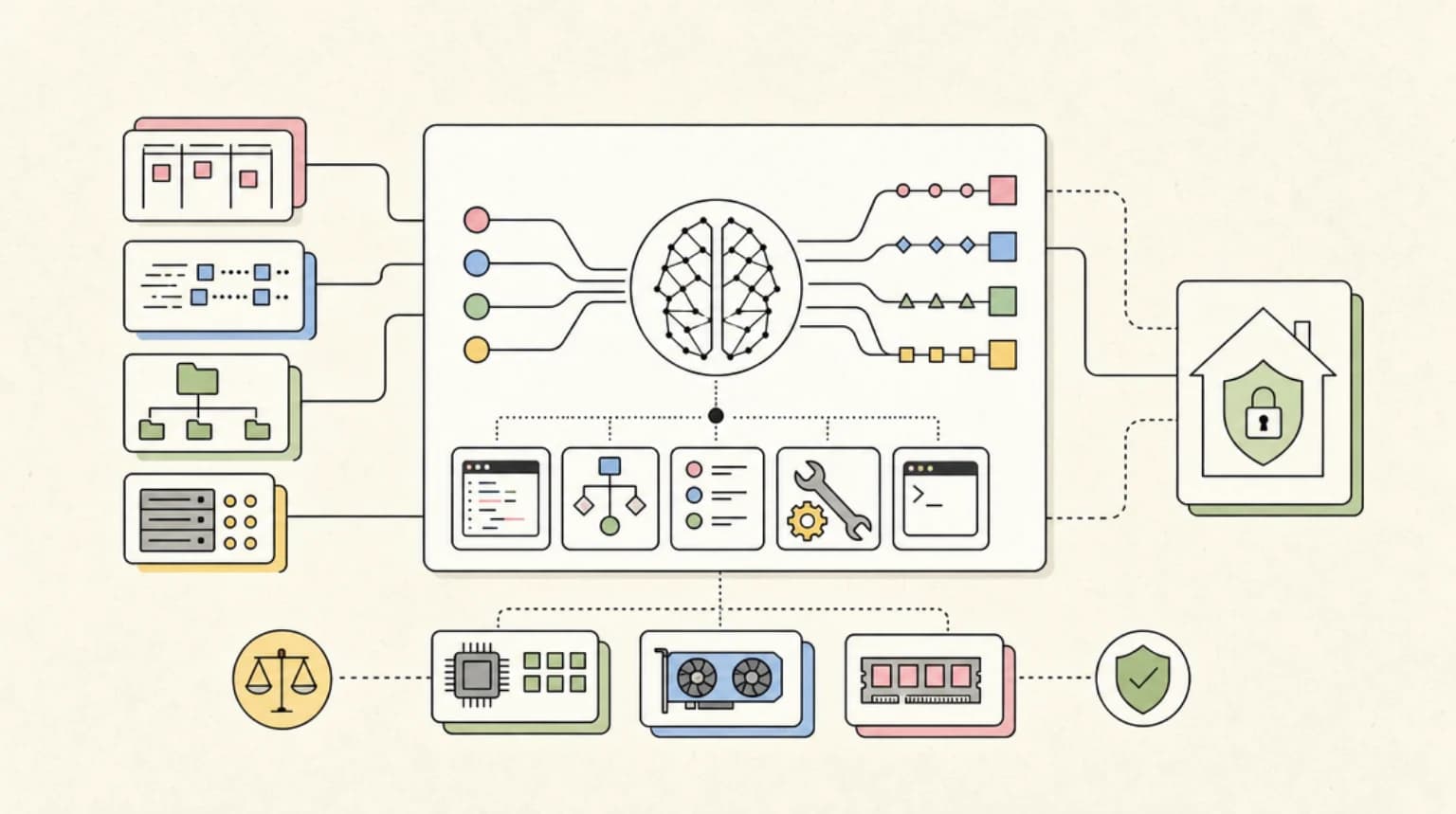
VibeThinker-3B: A 3 Billion Parameter Model That Outscores Opus 4.5 on Reasoning
A new paper shows a 3B parameter model hitting 94.3 on AIME26 and 96.1% on LeetCode contests - matching or exceeding models 100x its size. The catch: it traded general knowledge for pure reasoning ability.
6 min read
Keep exploring
More on AI Research
- - Tools Directory - dive deeper across the Developers Digest knowledge base
- - All AI Research articles in the blog archive
- - Developers Digest on YouTube - video tutorials covering AI Research and more

Get Smarter About AI Dev
New tutorials, open-source projects, and deep dives on coding agents - delivered weekly.
One email per weekReal code, not theoryFree forever
Explore 938 topics
Browse All Topics