Everything Vercel Shipped at Ship 26 (June 2026)

TL;DR
At Vercel Ship 26 in London on June 17, 2026, Vercel shipped a wave of agent-era tooling: the open-source eve agent framework, Vercel Drop for drag-and-drop deploys with no Git or CLI, spend caps for AI Gateway API keys, and the HarnessAgent API in AI SDK 7 that unifies Claude Code, Codex, and Pi behind one interface.
The agent-era Ship#
Vercel held Ship, its annual conference, in London on June 17, 2026, and the theme was unambiguous: this is the agent era, and Vercel wants to be the place agents deploy. The framing came with a number that explains the urgency. At the start of the year, fewer than 3% of deployments on Vercel were triggered by coding agents. Now agents account for more than half of all commits, and token volume through the AI Gateway has grown from roughly 2 million to 20 million over the same window.
"For the agent era, that's Vercel," said founder and CEO Guillermo Rauch, per SiliconANGLE's coverage. Here is what shipped that backs up the claim.
1. eve: an open-source agent framework#
The headline launch is eve, an open-source framework for building, running, and scaling AI agents in production. Vercel calls it "Next.js for agents," and the design is filesystem-first: you define each agent with files under an agent/ directory, and eve compiles them into an app that runs on Vercel Functions.
A minimal agent is two files. agent/instructions.md holds the system prompt, and agent/agent.ts holds the config:
TypeScript
import { defineAgent } from 'eve';

export default defineAgent({
  model: 'openai/gpt-5.4-mini',
});
Tools are just files in agent/tools/, with the filename becoming the tool name. The reason eve is more than a wrapper is that production concerns ship in the framework: durable execution (sessions checkpoint each step and survive crashes and deploys), sandboxed compute, human-in-the-loop approvals, subagents, and evals. Vercel says it already runs more than 100 production agents on eve, so this is dogfooded infrastructure, not a demo. eve launched as a public preview and is still in beta.
We did a full walkthrough in our deep dive on the eve framework, including the quickstart and real code. The short version: npx eve@latest init my-agent and you have a durable, sandboxed agent scaffold.
2. Vercel Drop: deploy by dragging a folder into the browser#
Vercel Drop is the antidote to "I just want this live." You deploy a file, folder, or .zip by dragging it into your browser. No Git, no Vercel CLI, no local setup.
The flow, per the Drop docs: drop a project onto vercel.com/drop, pick a team and project name, and select Deploy. Vercel creates a new project, uploads your files, and publishes straight to production with a shareable live URL, in seconds. It handles more than static files too. If Vercel detects a framework like Next.js, it builds it; files with no framework deploy as-is with no build step.
It is purpose-built for the moment where the artifact already exists and the friction is the pipeline. Drop is positioned for prototypes, one-off sites, and shipping exports from tools like Webflow, Claude Design, Google Stitch, and Bolt.new without wiring up a repository first. In an era where a generation tool can hand you a finished folder, "drag it to the browser to go live" is exactly the last mile that was missing.
From the archive
Factory Router, Explained: How Automatic Model Routing Cuts Coding-Agent Spend 20-25%
Jun 17, 2026 • 10 min read
Gemini CLI to Antigravity CLI Migration Guide: The June 18 Deadline
Jun 17, 2026 • 6 min read
GitHub Copilot SDK Hits GA: Embed the Copilot Agent Runtime in Your Own Apps
Jun 17, 2026 • 8 min read
GLM-5.2 Cost Math: When Open-Weights Coding Models Actually Save You Money
Jun 17, 2026 • 9 min read
3. AI Gateway: spend caps per API key#
Cost governance is the quiet anxiety of running agents, and Vercel addressed it directly with budgets for AI Gateway API keys. You can now set a spend cap on any AI Gateway key, and the gateway rejects further requests on that key once the limit is exceeded, until the budget resets or you raise it. The cap applies across all providers and models running through the key, so it is a single governance lever over your whole model spend.
You can pair a key with an optional refresh period (daily, weekly, monthly, or none) to scope the limit to a window, and you can create a budgeted key from the dashboard or programmatically via the CLI:
Terminal
vercel ai-gateway api-keys create --name my-key --budget 50 --refresh-period monthly
One honest detail worth knowing: the budget is a soft cap, not a hard limit. The check runs at the start of each request, so the request that crosses the limit still completes, and total spend can end up slightly over the budget. For anyone who has watched an agent loop chew through a token budget overnight, even a soft cap per key is a meaningful guardrail.
4. AI SDK 7: HarnessAgent unifies Claude Code, Codex, and Pi#
The most interesting developer-facing API is HarnessAgent in AI SDK 7, a single interface for running established agent harnesses. The AI SDK has always let you switch models without rewriting your agent. Now you can switch the entire harness the same way.
Harnesses manage everything above the model call: skills, sandboxes, sessions, permission flows, compaction, runtime config, and subagents. AI SDK 7 normalizes access to those capabilities behind one abstraction. The initial experimental adapters are Claude Code, Codex, and Pi, with more coming, and every harness runs the agent in a sandboxed workspace to keep the host environment safe.
The API looks like this:
TypeScript
import { HarnessAgent } from '@ai-sdk/harness/agent';
import { claudeCode } from '@ai-sdk/harness-claude-code';
import { createVercelSandbox } from '@ai-sdk/sandbox-vercel';

const agent = new HarnessAgent({
  harness: claudeCode,
  sandbox: createVercelSandbox({
    runtime: 'node24',
    ports: [4000],
  }),
  tools: { /* pass custom tools */ },
  skills: [ /* pass custom skills */ ],
});

const session = await agent.createSession();

try {
  const result = await agent.stream({
    session,
    prompt: 'Check the test failures and fix the production code.',
  });
  for await (const part of result.fullStream) {
    if (part.type === 'text-delta') {
      process.stdout.write(part.text);
    }
  }
} finally {
  await session.destroy();
}
Both HarnessAgent.generate() and HarnessAgent.stream() return AI SDK-compatible results, so a harness drops into the streaming patterns AI SDK developers already use. Swap claudeCode for codex or pi and the rest of your code stays put. For anyone who has thought about meta-harness agent orchestration, this is the standard library version of that idea. It is an experimental release, so expect breaking changes between versions.
The throughline#
Stack these four launches and a single thesis emerges. eve standardizes how you build an agent, HarnessAgent standardizes how you drive existing coding harnesses, AI Gateway budgets standardize how you bound the cost, and Drop standardizes the fastest possible path from artifact to live URL. Together they extend Vercel's agentic infrastructure stack from "deploy your app" to "build, run, govern, and ship your agents," which is the platform Vercel clearly intends to own.
Plenty of the launch was still beta or experimental, so treat the API surfaces as moving targets for now. But as a statement of where the platform is heading, Ship 26 was the most cohesive agent-era roadmap Vercel has put on stage.
Continue Reading#
Sources#
- Introducing eve - Vercel blog
- Introducing eve, an open-source agent framework - Vercel changelog
- Vercel launches a new framework and enterprise controls for agentic AI infrastructure - SiliconANGLE
- Introducing Vercel Drop - Vercel changelog
- Deploying with Vercel Drop - Vercel docs
- Budgets for API keys on AI Gateway - Vercel changelog
- Program Claude Code, Codex, Pi and other agent harnesses with AI SDK - Vercel changelog
Read next
Vercel eve: The Framework for Building AI Agents
Vercel launched eve at Ship 26, an open-source agent framework it calls Next.js for agents. You define each agent as files under an agent/ directory, and eve compiles it into a production app on Vercel Functions with durable execution, sandboxes, approvals, subagents, and evals built in.
9 min readVercel's Agentic Infrastructure Stack Explained
Vercel just declared the agent stack: AI Gateway, Sandbox, Flags, and Microfrontends. Here is how the four primitives compose, with code, and where each one actually fits in a real product.
12 min readVercel AI SDK: Build Streaming AI Apps in TypeScript
The AI SDK is the fastest way to add streaming AI responses to your Next.js app. Here is how to use it with Claude, GPT, and open source models.
5 min readShare
Developers Digest
Technical content at the intersection of AI and development. Building with AI agents, Claude Code, and modern dev tools - then showing you exactly how it works.
300+ videos30K+ GitHub stars850+ articles
Related Tools
AI FrameworksEssential

Vercel AI SDK
The TypeScript toolkit for building AI apps. Unified API across OpenAI, Anthropic, Google. Streaming, tool calling, stru...
View ToolAI Coding

v0
Vercel's generative UI tool. Describe a component, get production-ready React code with shadcn/ui and Tailwind. Iterate...
View ToolInfrastructurePopular
Vercel
Deployment platform behind Next.js. Git push to deploy. Edge functions, image optimization, analytics. Free tier is gene...
View ToolInfrastructure

AWS EC2
Amazon's flagship compute service. Hundreds of instance types, every region, deep integration with the rest of AWS. The...
View ToolApps from Developers Digest
Templates
DD Starter
Clone, rename, ship. Skip the first two weeks of every SaaS project.
View AppSaaS ProductsIn Progress
RSS Radar
Watch any list of changelogs/blogs, get a single daily digest of what shipped - filtered by your stack and with AI-written one-liners.
View AppSaaS ProductsIn Progress
Creator Ops Suite
Plan, multiply, schedule, and measure content across every platform you ship to.
View AppRelated Guides
Guide
Claude Code Complete Course
A complete, citation-backed Claude Code course with setup, prompting systems, MCP, CI, security, cost controls, and capstone workflows.
ai-developmentGuide
Background Tasks - Claude Code
Run Bash commands with Ctrl+B and retrieve output by task ID.
Claude CodeGuide
Getting Started with Claude Code
Install Claude Code, configure your first project, and start shipping code with AI in under 5 minutes.
Getting StartedRelated Videos
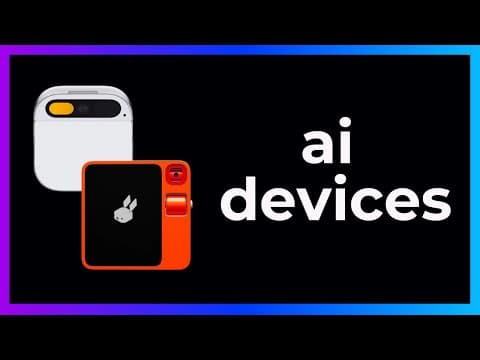
Build an AI Device with Groq, Llama 3, OpenAI, TTS, Whisper, Vision, Vercel AI SDK & Next.js
Repo: https://git.new/ai-pin Building an AI Assistant similar to the Humane AI Pin, the Rabbit R1 with Advanced Functionality from Scratch This video details the process of creating an AI...
Video·
Build a Next.JS Answer Engine with Vercel AI SDK, Groq, Mistral, Langchain, OpenAI, Brave & Serper
Building a Perplexity Style LLM Answer Engine: Frontend to Backend Tutorial This tutorial guides viewers through the process of building a Perplexity style Large Language Model (LLM) answer...
Video·
ChatHN: Next.JS, OpenAI Functions, Vercel AI SDK
In this video I will show you how to get up and running in just a few minutes with getting a Next.js chatbot that leverages the brand new vercel ai sdk as well as the OpenAI SDK. Huge shout...
Video·
Related Posts
9 min read
Vercel
Vercel eve: The Framework for Building AI Agents
Vercel launched eve at Ship 26, an open-source agent framework it calls Next.js for agents. You define each agent as fil...
12 min read
AI
Vercel's Agentic Infrastructure Stack Explained
Vercel just declared the agent stack: AI Gateway, Sandbox, Flags, and Microfrontends. Here is how the four primitives co...
5 min read
Vercel AI SDK
Vercel AI SDK: Build Streaming AI Apps in TypeScript
The AI SDK is the fastest way to add streaming AI responses to your Next.js app. Here is how to use it with Claude, GPT,...
10 min read
Vercel
Vercel's New Durable Execution Programming Model: A Developer's Guide
Durable execution lands on Vercel. What it means for agents, long-running flows, and indie dev stacks - with code, gotch...

5 min read
LangChain
LangChain vs Vercel AI SDK: Which TypeScript AI Framework Should You Use?
Two popular frameworks for building AI apps in TypeScript. Here is when to use each and why most Next.js developers shou...
10 min read
Vercel
Build Your First Agent with Vercel eve: A Step-by-Step Tutorial
A hands-on, beginner-friendly walkthrough of building an AI agent with Vercel eve: scaffold the project, define an agent...
Build with the member tools

Get Smarter About AI Dev
New tutorials, open-source projects, and deep dives on coding agents - delivered weekly.
One email per weekReal code, not theoryFree forever