GitHub Adds Enterprise Team Model Policy Targeting: Admin Control Over Which AI Models Each Team Gets

TL;DR
GitHub's new model policy targeting lets enterprise admins set a baseline of Copilot models for the whole company, then grant extra models to specific teams. How the preview works, the least-restrictive evaluation rule, and what it changes for AI governance.
GitHub announced on July 31 that enterprise model policy targeting is in public preview: admins can now set a baseline of Copilot models for the whole enterprise, then grant additional models to specific enterprise teams. It is the first step of a shift the changelog describes as team-level governance, and it matters because model access control is quietly becoming the most important enterprise AI lever, ahead of billing or prompts.
What Changed#
The feature lives in the Copilot page under "Models" as an Enterprise teams mode toggle. Once enabled, model availability is managed at the enterprise level through three states per model:
- Enabled - available to all enterprise members
- Disabled - not available to any enterprise member
- Optional - only available when assigned to an enterprise team
Admins can create enterprise teams and assign Optional models to them before switching the mode on, which lets them prepare model-to-user assignments during the rollback window.
Two behaviors in the changelog are worth reading twice. First, evaluation uses a least-restrictive strategy: if a user gets a model from any single enterprise team, they have access to it everywhere, across every org they belong to. Second, when enterprise teams mode is on, organization-level model settings no longer apply at all - the enterprise policy becomes the only policy.
The preview also includes a rollback: during the preview you can reset to your previous configuration. GitHub is rolling the opt-in out gradually, with most enterprise customers gaining access on August 3.
This lands two days after GitHub's "Default model enablement" change for Copilot Business and Enterprise, and the two read as one program: first make a sensible model default available to everyone, then let admins carve access down by team rather than by org.
From the archive
GitHub Models Is Retired: What to Use for Model Access Now
Jul 31, 2026 • 6 min read
GitHub Stacked PRs Hit Public Preview: Small Reviews for the Agent Era
Jul 31, 2026 • 7 min read
Inkling-Small: Thinking Machines Ships a 12B-Active Open Model That Beats Its Big Sibling on Agent Work
Jul 31, 2026 • 8 min read
LLMs Resolve Java Merge Conflicts Better Than Structured Tools - Because They Never Give Up
Jul 31, 2026 • 6 min read
Why This Matters#
Model policy is the layer between "Copilot works" and "Copilot works safely at 5,000 people," and until now the only granularity was the org. That is the wrong granularity for how companies actually work: a platform team that needs a frontier model for agentic work is a team, not an organization, and so is a security review group that should only get models approved for code review.
Three implications for developers:
Cost control becomes role-based. Enterprises do not pay for model access per user in the abstract - they pay for frontier model usage, and the pricing story has been shifting to usage-based all year. Assigning expensive models to the teams whose work justifies them, instead of to every org, is the cleanest spend control that does not touch billing policy at all. It should reduce the budget-blowout scenario where one enthusiastic team's frontier-model usage balloons an enterprise bill.
Least-restrictive access is a real security property. A user who sits on two enterprise teams inherits the union of both teams' models. That is convenient and predictable, but it means team-level policies do not isolate: access is a superset, never an intersection. Security teams should treat "assigned to a team" as "assigned to everyone in that team's blast radius."
The org layer is going away, quietly. When enterprise teams mode is enabled, org-level model settings stop applying. Any org with hand-tuned model availability that upgrades to this preview should diff its org settings against the new enterprise policy before flipping the toggle, because the old configuration does not layer - it is simply bypassed.
How It Fits With Adjacent Tools#
GitHub is building the enterprise governance layer in stages: default model enablement first, team targeting now, and more team-level controls promised. It slots into the same admin story as Copilot usage-based billing, agent PR governance, and the agent metrics review surface - the pattern is that as Copilot agents get more autonomous, GitHub keeps giving admins more precise levers over what models run, who can invoke them, and how their output is reviewed.
For teams that run Copilot alongside other providers, the same governance gap exists everywhere: any platform that exposes multiple models needs a policy layer. If your stack is multi-vendor, the questions this changelog answers (baseline, per-team grants, least-restrictive semantics, rollback) are the right checklist to apply to whatever you use instead.
Continue Reading#
- Enterprise AI coding budget blowouts: where the money goes - why frontier-model usage is the cost driver model policy should be controlling
- GitHub Copilot usage-based billing, explained - how enterprise Copilot spend is actually metered
- Agent PR governance: the review pipeline GitHub Copilot needs - the other half of safe agentic coding
- GitHub Copilot agent metrics: measuring review quality - what admins can measure once access is controlled
- The September policy reset: prepaid seats, unified agent experience, Balanced by default
- GitHub Copilot Coding Agent CLI - what the agent runtime the policy applies to can do
- Gemini 2.5 Pro and Gemini 3 Flash Deprecated in GitHub Copilot: What to Switch To
Sources#
Read next
Enterprise AI Coding Budget Blowouts: What Uber and Microsoft Teach Us
Uber burned through its entire 2026 AI tools budget by April. Microsoft is canceling Claude Code licenses company-wide. What enterprise teams can learn from the first major AI coding tool budget crises.
8 min readGitHub Copilot's New Usage-Based Billing: What Changed June 1 and What It Costs Now
GitHub Copilot switched to AI Credits billing on June 1 - here is what the change means for your team's budget, how Copilot Max fits in, and how costs compare to Claude Code and Codex.
8 min readAgent PR Governance: The New Rules for Copilot Reviews
GitHub's June Copilot review updates point to a practical policy stack for agent-authored pull requests: validation, review depth, repo instructions, attribution, and release-note accountability.
8 min readShare
Developers Digest
Technical content at the intersection of AI and development. Building with AI agents, Claude Code, and modern dev tools - then showing you exactly how it works.
300+ videos30K+ GitHub stars850+ articles
Related Tools
AI Coding328K views

GitHub Copilot
The original AI coding assistant. 77M+ developers. Inline completions in VS Code and JetBrains. Copilot Workspace genera...
View ToolAI Frameworks

LangChain / LangGraph
Most popular LLM framework. 100K+ GitHub stars. Chains, RAG, vector stores, tool use. LangGraph adds stateful multi-agen...
View ToolAI Models

GPT-5
OpenAI's latest flagship model. Major leap in reasoning, coding, and instruction following over GPT-4o. Powers ChatGPT P...
View ToolAI Models

DeepSeek V3.2
DeepSeek's reasoning-first model built for agents. First model to integrate thinking directly into tool use. Ships along...
View ToolApps from Developers Digest
Developer ToolsIn Progress
SkillForge CI
Catch broken SKILL.md files in CI before they hit your team.
View AppSaaS Products
Overnight Agents
Spec out AI agents, run them overnight, wake up to a verified GitHub repo.
View AppSaaS ProductsPopular
Fit
Log workouts, meals, and habits in plain English. Your progress shows up as a GitHub-style heatmap.
View AppRelated Guides
Guide
Split Pane Display - Claude Code
Run each teammate in its own tmux or iTerm2 pane.
Claude CodeGuide
Run AI Models Locally with Ollama and LM Studio
Install Ollama and LM Studio, pull your first model, and run AI locally for coding, chat, and automation - with zero cloud dependency.
Getting StartedGuide
gh CLI Integration - Claude Code
Full GitHub CLI support for automated PR and issue workflows.
Claude CodeRelated Videos
GitHub Copilot Spark Launch: New Rival to Cursor + v0? Full Update in 6 Minutes
Learn The Fundamentals Of Becoming An AI Engineer On Scrimba; https://v2.scrimba.com/the-ai-engineer-path-c02v?via=developersdigest Introducing GitHub Spark and Exciting GitHub Copilot Updates!...
Video·
Continue: Incredible Open Source Github Copilot Alternative. Use Groq + Llama-3, Ollama and more
Introducing Continue: The Open Source Alternative to GitHub Copilot for Coding The video introduces 'Continue,' an open source alternative to GitHub Copilot, designed to enhance coding with...
Video·
GitHub Copilot Chat
#Github #GithubCopilot #GitHubCopilotChat #VSCode #ProgrammingWorkflow #CodeProductivity In this video, we dive into GitHub Copilot Chat in VS Code, exploring its powerful capabilities and...
Video·
Related Posts
8 min read
enterprise
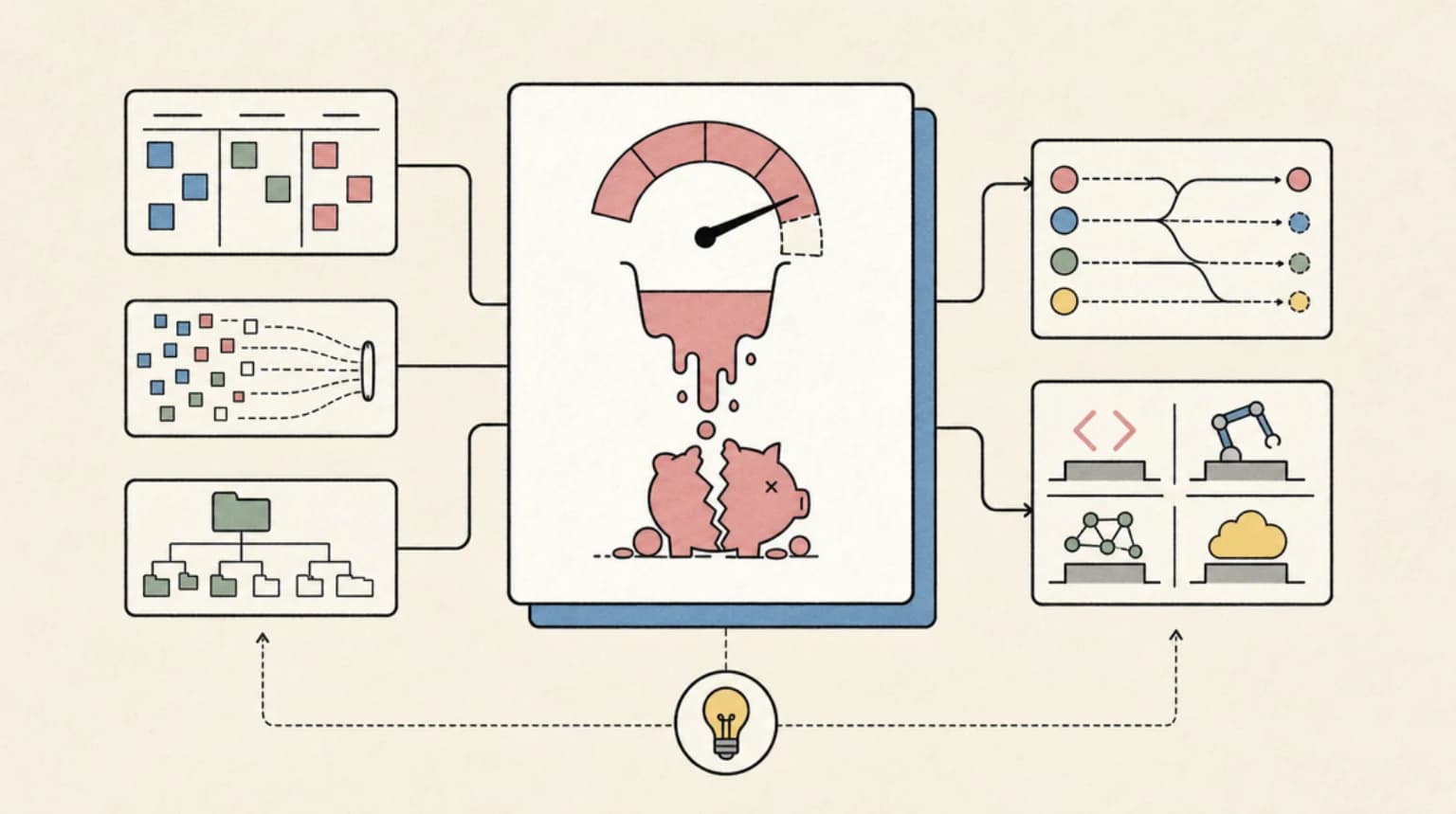
Enterprise AI Coding Budget Blowouts: What Uber and Microsoft Teach Us
Uber burned through its entire 2026 AI tools budget by April. Microsoft is canceling Claude Code licenses company-wide....
8 min read
GitHub Copilot
GitHub Copilot's New Usage-Based Billing: What Changed June 1 and What It Costs Now
GitHub Copilot switched to AI Credits billing on June 1 - here is what the change means for your team's budget, how Copi...
8 min read
GitHub Copilot
Agent PR Governance: The New Rules for Copilot Reviews
GitHub's June Copilot review updates point to a practical policy stack for agent-authored pull requests: validation, rev...

7 min read
GitHub Copilot
GitHub Copilot Agent Metrics Are the Real Product Update
GitHub's Copilot cloud agent updates are not just about autonomous coding. The bigger shift is usage metrics, session vi...
8 min read
GitHub Copilot
GitHub Copilot Coding Agent and CLI: Why GitHub Is Back in the Agent Race
GitHub Copilot is moving from autocomplete into asynchronous coding agents, terminal workflows, MCP, skills, and model c...

7 min read
News
Kimi K3 Is GA in GitHub Copilot: Pricing, Rollout, and What It Means for Model Choice
GitHub made Kimi K3 generally available in Copilot on August 6 at $3/$15 per million tokens, hosted on Fireworks AI. It...
Build with the member tools

Get Smarter About AI Dev
New tutorials, open-source projects, and deep dives on coding agents - delivered weekly.
One email per weekReal code, not theoryFree forever