Ripple-65B: A Dense US Open-Weight Coding Model
TL;DR
Ricursive released Ripple-65B Preview, an Apache 2.0 dense model claiming US open-weight SOTA on Terminal-Bench 2.1. What the model card actually says, why HN pushed back, and who should test it.
Last updated: November 5, 2026
Ricursive Intelligence released Ripple-65B Preview yesterday, and the pitch is unusual: a 65B dense model, Apache 2.0, that the lab says beats much larger US open-weight models on agentic coding. It hit 200+ points on Hacker News, mostly for the argument about what "state of the art" means. If you are searching "ripple 65b", here is what the primary sources say, what is vendor-reported, and what you would actually test.
What Ricursive says#
From the launch post and the Hugging Face model card, all vendor-reported:
- A 65B dense Transformer (80 layers, d_model 5120), pretrained on 12T tokens, up to 1M context, Apache 2.0.
- Terminal-Bench 2.1 score of 80.52 using OpenCode as the harness where unspecified. The post compares against Reflection Beam 501B (80.1), Meta Muse Spark Open 816B (76.4), Thinking Machines Inkling 975B (63.8) and NVIDIA Nemotron 3 Ultra 550B (56.4).
- A claimed total R&D cost of $32M, which the lab says is about one-tenth of the prior open-weight leader on agentic coding. That is an estimate by Ricursive, not an audited figure.
- Released variants: BF16 instruction-tuned, an NVFP4 checkpoint, a BF16 base model and a speculative-decoding draft model called DFlash2.
- Light post-training with a focus on agentic coding. The model card says generation reaches 250 tok/s on 2xB200 at batch 8 before quantization or custom kernels.
The model card is more candid than the headline. Its own table shows Ripple behind Reflection Beam on SWE-bench Verified (76.5 vs 81.6), SWE-bench Pro v1.0 (61.42 vs 66.1) and MCP Atlas (71.67 vs 80.8), and well behind Muse Spark Open on DeepSWE 1.1 (44.3 vs 60.0). The card also admits that Terminal-Bench 2.1 scores were generally lower under the official Terminus 2 harness. The lead is real on a few benchmarks and absent on others.
The angle: dense is the bet, and the bet is local#
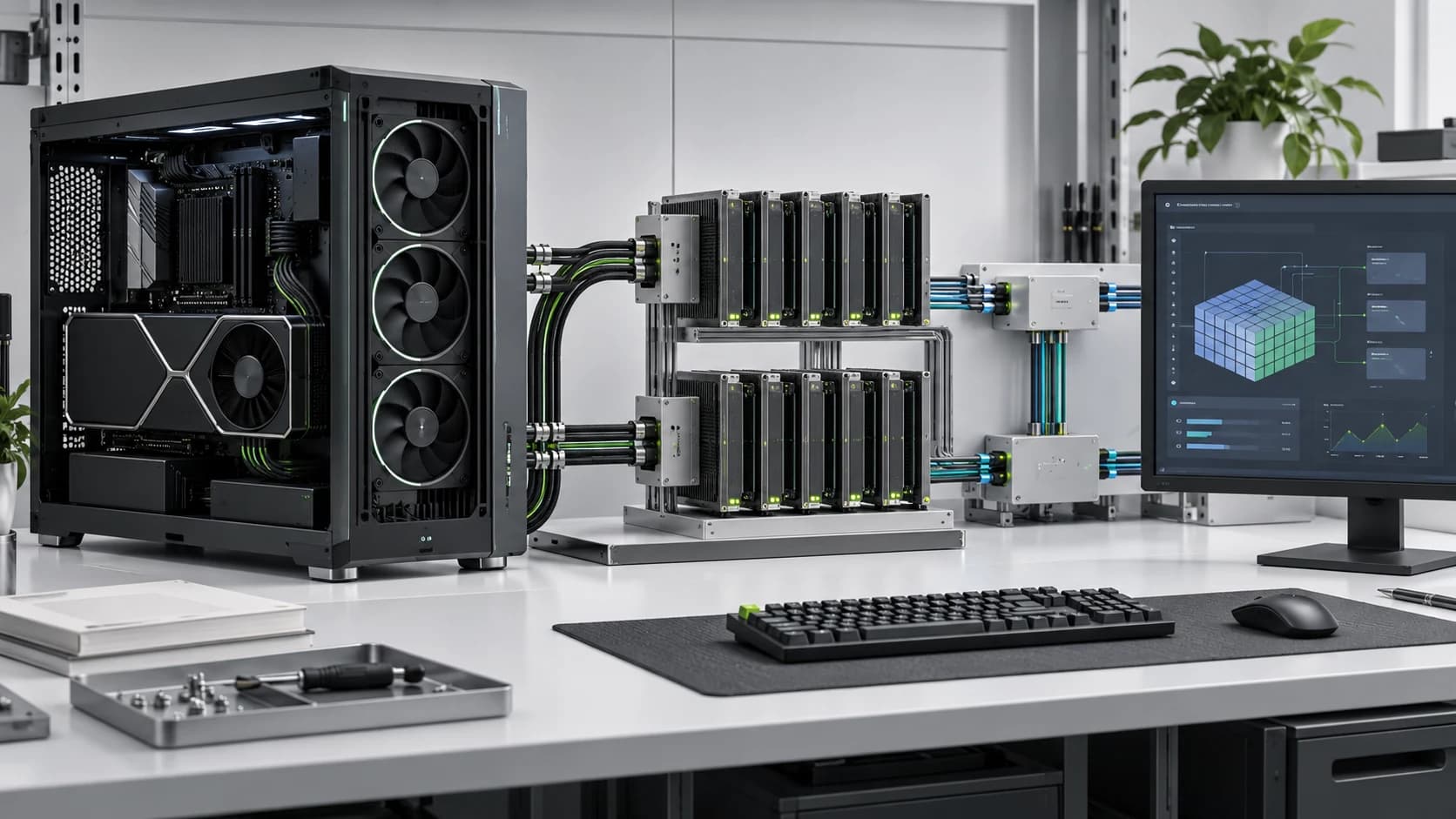
Every large open-weight release this year went mixture-of-experts. Ricursive went the other way and says the choice cut training complexity: 40% MFU with simple sharding and no custom kernels. For a builder, the consequence is at inference time.
A dense 65B reads all 65B weights for every token. A mixture-of-experts model reads only its active experts. On bandwidth-limited local hardware that gap is the whole story, which is why a mixture-of-experts model such as Qwen 3.8 Flash Next is the usual pick for bandwidth-limited local boxes. Our local LLM speed guide explains why memory bandwidth, not FLOPs, sets tokens per second.
Who wins and loses:
- Wins: teams barred from Chinese-origin weights who want a permissively licensed coding model they can run air-gapped. Apache 2.0 with BF16, NVFP4 and base checkpoints is a clean starting point for fine-tuning.
- Loses: nobody directly, but it does not displace the leaders. Anyone choosing purely on quality should still compare it against Qwen3.8-27B for local agentic coding, which an HN commenter quotes at 73.0 on Terminal-Bench 2.1 (a commenter's figure, not verified here) with far less hardware.
- Watch: other US labs. This follows Meta's Muse open-weight line and a crowded field, so expect the benchmark gap to close or reverse within weeks.
What a builder does Monday#
Do not trust either the launch chart or the thread. Run your own harness on your own tasks.
- Pull the NVFP4 checkpoint from the model card links and serve it with whatever engine you already use for dense models.
- Point your normal coding agent at it. Ricursive used OpenCode for its numbers, so that is the fair comparison harness.
- Run 10 tasks from your own repo against Ripple and against your current local default. Record pass rate and wall-clock time, not just the benchmark score.
- Decide on the speed number you measure. If tokens per second on your machine is below what your agent loop can tolerate, the benchmark lead is moot.
Treat this as a Preview. Ricursive itself calls the post-training light, and no independent reproduction exists yet.
What people are actually saying#
The HN thread was skeptical about framing rather than hostile about the model.
- The label. Several commenters objected that "frontier" and "SOTA" were narrowed to the US open-weight subset, with one noting the claim is mostly a lead of 0.4 points on a single benchmark over the second-best entry. Others pointed out that Qwen 3.8 models and Kimi K3.1 Pro were absent from the chart.
- The counter-case. A commenter who works under jurisdiction rules said some people are explicitly prohibited from using models from companies outside US jurisdiction, so the segmentation is not irrelevant even if it is not a global leaderboard.
- Benchmarks. Commenters questioned using Terminal-Bench 2.1 when newer versions exist, and suspected benchmark tuning. That is speculation, not evidence, but it is why independent evals matter here.
- Hardware. Mac Studio owners were enthusiastic about a model of this size. Others warned that dense generation will be slow on unified-memory machines compared with MoE models.
Continue Reading#
- Qwen3.8-27B vs Opus 4.6 Max: Local Agentic Coding Benchmarks - the local baseline commenters compare against
- Qwen 3.8 Flash Next: Run It Locally - the MoE alternative with a small active parameter count
- Local LLM Speed by Hardware - why dense models are slow on bandwidth-limited boxes
- Meta Muse Glimmer 30B: Open Weights for Local Agents - another US open-weight release
- Kimi K3 Open Weights on Hugging Face - the non-US open-weight reference point
- Best Open Source AI Models for Developers - the 2026 developer ranking of open models
- Best Local AI Models (2026) - open models ranked by hardware tier
Sources#
Get the next deep dive like this in your inbox
One email a week on Open Weights and the rest of the AI dev stack. Free.
Read next on local and open-weight models
Qwen3.8-27B vs Opus 4.6 Max: Local Agentic Coding Benchmarks
Qwen3.8-27B is a 27B dense Apache-2.0 model that beats Opus 4.6 Max on SWE-bench Pro (61.7 vs 53.4). Benchmarks, hardware, cost and when to run it.
10 min readRun Qwen3.8-Flash-Next on a Gaming PC With Strata
Run Qwen3.8-Flash-Next locally with Strata on a 12 GB GPU: hardware needs, speeds by quant, the license catch, and when the hosted API is the better call.
8 min readLocal LLM Speed by Hardware: What llmspeed Gets Right
llmspeed estimates tokens per second for 30 machines and 15 models. What its numbers mean, the memory-bandwidth rule behind them, and why prefill matters for coding agents.
7 min readNew here? Start with
Technical content at the intersection of AI and development. Building with AI agents, Claude Code, and modern dev tools - then showing you exactly how it works.