Conductor Joins Meta: Shutdown Dates and Alternatives
TL;DR
Conductor is joining Meta. Cloud goes read-only Nov 13 and shuts down Nov 20, and the local Mac app winds down in early 2027. The dates, what to export, and what to move to.
Conductor, the Mac app for running Claude Code, Codex and other coding agents in parallel, is joining Meta, and the product is being wound down on a fixed schedule. If you searched "conductor meta" because your workspaces are about to go read-only, the dates below are the part that matters. Conductor Cloud goes read-only on November 13 and starts deleting data on November 20. The local app lives longer, but not forever.
What the announcement says#
The founders' announcement post is short on what comes next: "We have some big, crazy plans for the next interface," with "something new for you to use early next year." It is specific about the shutdown timeline:
| Date | What happens |
|---|---|
| Wednesday, Nov 4 | No new sign-ups or downloads. Existing free users cannot upgrade, pro users keep pro features for free. |
| Friday, Nov 13 | Conductor Cloud goes read-only. You can read old chats and export data but cannot send messages. Active subscribers get a refund. |
| Friday, Nov 20 | Conductor Cloud shuts down and user data deletion begins. |
| Early 2027 | Local Conductor stops receiving new models and critical fixes and starts winding down. |
The post also says Conductor has "never sold or trained on" user data and will delete all user data when the app shuts down in early 2027. Nothing in the announcement says the code will be open sourced, and the Meta side of the deal is not described beyond the headline.
What to do this week#
The only urgent group is anyone with work in Conductor Cloud. The announcement gives two exports:
- Right-click a cloud workspace and choose Transfer to local to move the workspace and its chats to your Mac.
- Go to Settings, then Account, then Export data for an archive of everything.
Do both before November 20. If you only ran Conductor locally, nothing breaks today. You have until early 2027, and the sensible move is to pick a replacement while the pressure is low rather than during a deadline.
What Conductor actually gave you#
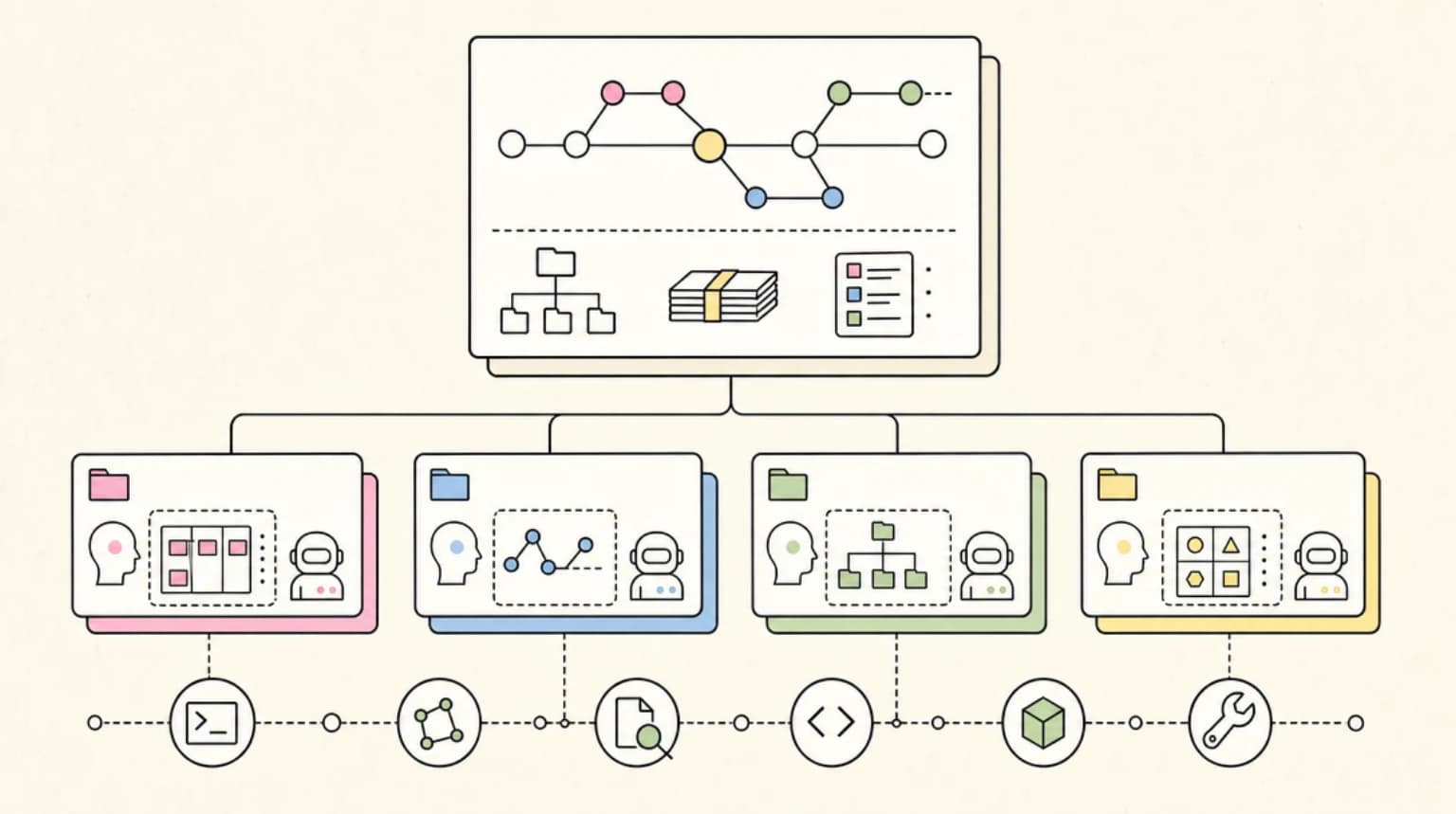
Before choosing a replacement, separate the three things it bundled. Conductor's docs describe running Claude Code, Codex, Cursor and OpenCode in parallel, with each task getting its own workspace, branch, files, terminal, diff and review path. Its worktree guide says each new workspace is a separate git worktree and branch, based on your configured base branch after fetching from origin. That decomposes into:
- Isolation. One branch and directory per agent. This is plain git, not a product.
- A control surface. One place to see what every agent is doing and whether it needs you.
- Review and PR flow. Diff, checks and merge attached to each workspace.
Isolation you can keep for free. The command is git worktree add ../myrepo-task-a -b task-a, and our worktrees guide covers the setup problems that bite first: untracked .env files, dependency installs and port collisions. Conductor handled the last two with setup scripts and a CONDUCTOR_PORT variable, so you will want to replace those with a small script of your own.
Where people are moving#
Replacement options split by which of the three pieces you care about.
A GUI over the agents you already pay for. T3 Code is MIT-licensed and works with Claude Code, Codex, Cursor, Grok Build, OpenCode, Google Antigravity and fx if they are set up on your machine. Its README lists Conductor among the products that inspired it, and says "We are very very early in this project. Expect bugs." Our T3 Code walkthrough covers what to check first.
A terminal-first control surface. Herdr is a native app and terminal multiplexer that shows whether each agent is working, done or waiting on you. Its site says the app, core and TUI are open source under Apache 2.0, and that agents keep running in a background server when you close the window. See the Herdr deep dive for how the status tracking works and where it falls short.
No app at all. If your main need was one branch per agent, worktrees plus your agent's own CLI is enough, and the vocabulary of harness versus control surface is in our agent harness explainer.
The deciding question is whether you used Conductor's review and PR flow. T3 Code and Herdr both emphasize driving and watching agents, so check that they cover your merge habits before you move the whole team.
What people are actually saying#
The Hacker News thread is mostly regret and logistics rather than outrage.
- The timeline. One of the first replies called the cloud migration window "very aggressive" and asked what tools people are moving to. The announcement's own dates (about two weeks to read-only) back that up.
- Open source. Several commenters wished the desktop app would be open sourced instead of retired. One guessed the technology is part of what Meta is acquiring, which is speculation, not something the announcement says.
- Alternatives named in the thread. One user said they moved to Orca for multi-machine and remote control, and another said they used Orca for a week and went back to Herdr, citing UI bugs. An Orca maintainer replied asking for bug reports and noting the project is MIT-licensed open source. Treat both as anecdotes.
- The counter-case. One commenter argued the economics of third-party harnesses are hard, because model vendors' own subscription plans undercut resellers. Another said every addition to a stack is a liability and they had never adopted this category. Both are a reminder that a thin layer over someone else's agents can be absorbed or abandoned.
The takeaway#
For builders, the lesson is about dependency risk, not Meta. A control surface that sits on top of agents you already pay for is the easiest layer to swap out, provided your real work product lives in git and your agent config lives in the repo. Check that today: if everything Conductor knew about your project is in AGENTS.md, a setup script and branches on your remote, moving costs you an afternoon. If it lived only in cloud workspaces, export it this week.
Continue Reading#
- T3 Code: Open-Source GUI for Claude Code and Codex - the open-source GUI option, with sharp edges
- Herdr Deep Dive: Inside the Agent-Native Terminal Multiplexer - the terminal-first alternative
- Git Worktrees + Claude Code: Run Parallel Agents - isolation without any app
- Claude Code Worktrees - the native worktree flow for sub-agents
- What Is an Agent Harness - the layers a control surface sits above
- Agent-Manager: A Tmux TUI for Coding Agents - another lightweight way to watch several agents
Sources#
Get the next comparison like this in your inbox
One email a week on Coding Agents and the rest of the AI dev stack. Free.
Read next on Claude Code
T3 Code: Open-Source GUI for Claude Code and Codex
T3 Code is a free, MIT-licensed desktop, web and mobile app that drives Claude Code, Codex, Cursor, OpenCode and more. What it is, how remote access works, and what to check first.
7 min readHerdr Deep Dive: Inside the Agent-Native Terminal Multiplexer
How Herdr went from a solo project to 41,000 GitHub stars and Y Combinator: how agent-aware terminals work and the gap they fill that tmux does not.
10 min readGit Worktrees + Claude Code: Run Parallel Agents in 2026
Several Claude Code agents on one repo cause branch collisions and stash chaos. Git worktrees give each agent its own directory on one shared Git history.
7 min readTechnical content at the intersection of AI and development. Building with AI agents, Claude Code, and modern dev tools - then showing you exactly how it works.