Deploy From Your Coding Agent: Wire Railway's MCP Server Into OpenCode
TL;DR
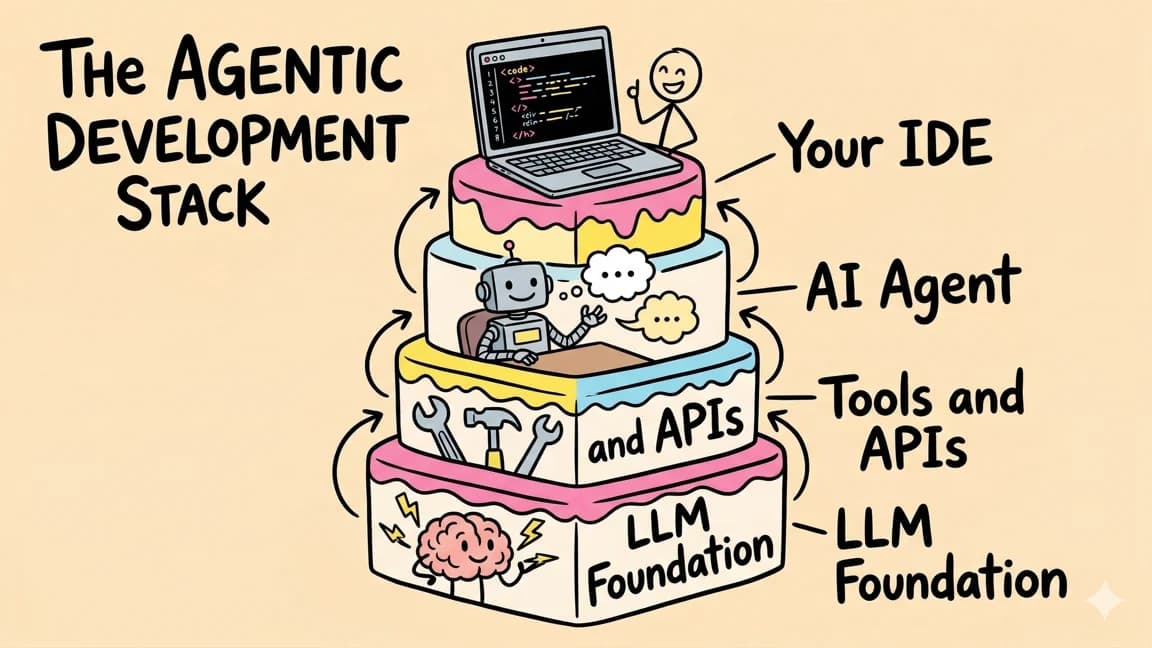
Your coding agent can write the code. With Railway's official MCP server it can ship it too: create the project, deploy the service, assign a domain, tweak variables, and read logs, all as tool calls. The complete one-hour build.
Your coding agent writes the pull request. You review it, merge it, and then the familiar second half of the job starts: open the hosting dashboard, create the project, push the code, wait for the build, assign a domain, find the logs when it crashes. That second half is exactly the kind of repetitive tool work an agent should be doing for you, and in 2026 it can: Railway ships an official Model Context Protocol (MCP) server that turns its whole platform into a toolset your agent can call.
This guide wires that server into OpenCode, the open source agent CLI, so one prompt covers the entire journey: create the project, deploy the service, assign a domain, verify it responds, tweak a variable, redeploy, and read the logs when something breaks. No dashboard clicks, no context switching, no "ship it" messages to your future self. Seven steps, under an hour, every step ending in something you can run. If you are new to MCP itself, the beginner guide covers the protocol; here we stay on the build.
Official Sources#
| Resource | Description |
|---|---|
| Railway MCP Server | The server, both transport modes, and the full tool list |
| Railway for Agents | CLI, MCP, and agent skills setup for AI coding agents |
| railway mcp command reference | railway mcp install and the exact config it writes per editor |
| Railway CLI | Install, login, and every CLI command |
| OpenCode MCP docs | Adding local and remote MCP servers to OpenCode |
| Railway Pricing | Plans, included usage, and per-resource rates |
Step 1: Install the two CLIs#
Prerequisites: a Railway account (the free trial comes with a one-time $5 grant, which covers this whole build), a code directory for a small test app, and a model provider key for OpenCode.
Install OpenCode with the official one-liner from the docs:
Terminal
curl -fsSL https://opencode.ai/install | bash
Install the Railway CLI from the official docs. The no-frills path:
Terminal
bash <(curl -fsSL railway.com/install.sh)
There is also curl -fsSL agents.railway.com | sh, which installs the CLI and immediately runs railway setup agent for detected editors, and npm i -g @railway/cli if you prefer npm (requires Node 16 or newer). Verify both sides:
Terminal
opencode --version
railway --version
What you have now: two CLIs on your machine, nothing connected yet.
Step 2: Authenticate both agents#
OpenCode needs a provider. Run opencode auth login and pick one; this week's DeepSeek V4 Flash guide covers why a budget model is plenty for tool orchestration like this. Prove the harness runs one task and exits:
Terminal
opencode run --model opencode/deepseek-v4-flash "print the current directory tree, two levels deep"
Railway needs your account. The login command opens a browser; use --browserless on a headless box:
Terminal
railway login
Confirm the session:
Terminal
railway whoami
What you have now: two authenticated CLIs. The next step is where they meet.
Step 3: Connect Railway to OpenCode over MCP#
Railway's agent setup writes the MCP configuration for you. The docs document three ways to connect - Local MCP, Remote MCP through a CLI proxy, and Remote MCP with direct OAuth - and railway mcp install targets specific editors with --agent. For OpenCode:
Terminal
railway mcp install --agent opencode
This merges an entry into OpenCode's config without touching any other MCP servers you have configured. What it writes, per the documented config table:
JSON
{
  "$schema": "https://opencode.ai/config.json",
  "mcp": {
    "railway": {
      "type": "local",
      "command": ["railway", "mcp"],
      "enabled": true
    }
  }
}
You could write that file by hand, but the installer is better: it keeps the exact command shape current across CLI releases. Verify the server registered:
Terminal
opencode mcp list
You should see railway listed with a local transport. Now run a probe that forces tool use:
Terminal
opencode run --model opencode/deepseek-v4-flash "list my Railway workspaces, projects, and services. use railway"
A real answer instead of an apology means the loop is live. Local MCP runs railway mcp as a child process using your existing railway login session, so there is no token file to leak and nothing to refresh.
What you have now: your coding agent can see Railway. It can read; the next step lets it ship.
Step 4: The first deploy, fully agent-driven#
Local MCP exposes the CLI workflow as tools: projects (list_workspaces, list_projects, create_project), services (create_service, connect_service_source, scale_service), deployments (deploy, list_deployments), domains (generate_domain, domain_status), variables (list_variables, set_variables), and observability (get_logs, service_metrics). The full list is in the MCP server docs.
Fire the canonical prompt from those same docs:
Text
Create a Next.js app in this directory and deploy it to Railway.
Also assign it a domain.
Watch the sequence: the agent scaffolds the app, calls create_project, connects the directory as a service, triggers deploy, waits on deployment status, and runs generate_domain. When it reports a URL, hit it:
Terminal
curl -I https://<your-service>.up.railway.app
Expect a 200 (or the 3xx from your app's own redirect - the point is a live response, not a dashboard state). You just went from a blank directory to a deployed, domain'd service with one sentence and zero dashboard tabs.
What you have now: a deployed service your agent built and shipped in one session.
From the archive
GitHub Copilot SDK for Java: Annotations, Virtual Threads, and BYOK for Enterprise Agent Harnesses
Aug 11, 2026 • 7 min read
Encrypted Chain-of-Thought Is Not Private: New Paper Decodes Reasoning Traces From Anthropic, OpenAI, and Google APIs
Aug 11, 2026 • 7 min read
Stop Means Stop: New Paper Finds Agent Approval Gates and Cancellation Leak in Six Frameworks
Aug 11, 2026 • 6 min read
Vercel Sandbox Gets a Real Network Boundary: Why Egress Control Is the Missing Half of Agent Security
Aug 11, 2026 • 6 min read
Step 5: Operate the loop from the chat#
Deployment is the first step, not the last. Keep the whole operating loop inside the agent:
Text
Add an environment variable GREETING=hello to my api service and deploy the change.
Then show me the last 20 lines of its logs.
That is set_variables, a fresh deploy, and get_logs back to back. This is the loop you will use every day: change something, ship it, look at the logs, iterate. When you want to check what is costing you money, the agent can do that too:
Text
Show me my current Railway usage and what it is costing. use railway
Small services like this one stay comfortably inside the Hobby plan's $5 of included usage ($20/vCPU/month and $10/GB/month, billed per minute, per the pricing docs) - but the habit of checking costs from the same chat that deploys is the one that keeps the overnight-bill failure mode from ever being yours.
What you have now: a deploy and iterate loop that never leaves the agent.
Step 6: Add the debugging agent (remote mode)#
Local MCP covers day-to-day operations, but two capabilities are remote-only: redeploy / accept-deploy, and railway-agent, Railway's hosted agent tool for multi-step work like log analysis and crash diagnosis. Install remote mode the same way:
Terminal
railway mcp install --agent opencode --remote
This swaps the entry to command: ["railway", "mcp", "proxy"] - the proxy reuses your railway login credentials and forwards to mcp.railway.com over HTTPS. There is also --remote --oauth, which writes {"type": "remote", "url": "https://mcp.railway.com"} and hands OAuth to OpenCode itself; with that mode, run opencode mcp auth railway once and OpenCode stores the token in its own auth store.
Now break the app on purpose, so the debugger has something to find. Set a variable that points your service at a nonexistent value and deploy. Then ask:
Text
Use the railway agent to figure out why my api service is crashing on deploy.
The railway-agent tool investigates on Railway's side - logs, config, recent deploys - and comes back with a diagnosis and a proposed fix. If you would rather work without the MCP hop, the same brain is available as a CLI command, documented at railway agent: railway agent -p "help me debug why my api service is failing". When the fix lands, accept-deploy is how a staged change ships.
What you have now: a debugging path for when your agent's own code is not the thing that is broken.
Step 7: The guardrails that make this safe#
Giving a coding agent deploy access is a real capability, and the security model matters more than the convenience. The Railway docs are explicit, and the rails worth keeping:
- Destructive tools ask first.
remove_service,delete_domain,redeploy,accept-deploy, andrailway-agentare marked with protocol-level hints, and Local MCP returns a preview that requires yourconfirm: true. Read the preview; an agent that deletes a service costs you a rebuild. - Scope the blast radius. With remote OAuth you choose which workspaces the client can access, tokens are short-lived and revocable from your account settings, and project tokens are not accepted for remote MCP at all - it requires a user identity for billing and audit trails. Railway's own guidance: avoid production risks by keeping agent access to non-critical environments.
- Watch context, not just cost. MCP servers add their tool list to every request's context, and the OpenCode docs warn that too many servers eat tokens fast. This one is worth it - it replaces a whole dashboard - but keep it scoped per agent (enable it for your build agent, disable it globally for the rest).
- The agent deploys, you review. The same discipline as PRs from scheduled agents applies here: let the agent ship to staging and preview environments, keep production deploys behind your own eyes, and
railway usageis your monthly scoreboard.
What you have now: a deploy-capable agent with explicit confirmations, scoped credentials, and a cost check in the loop.
What you have now, in one sentence#
A coding session that starts with "build me this" and ends with a live URL, with every intermediate step - project, deploy, domain, variables, logs, diagnosis - a tool call instead of a dashboard. The same connection works in Claude Code, Cursor, Codex, and the rest if you want it elsewhere, and Railway's agent skills (railway skills install) add procedural knowledge on top of the tools. The pattern that stays with you: hosting platforms are becoming agent toolsets, and the agent that writes the code should be the one that ships it.
FAQ#
Does the Railway MCP server work with OpenCode?#
Yes. Railway documents OpenCode as a supported agent: railway mcp install --agent opencode writes the exact config entry (local stdio, CLI proxy, or remote OAuth), and OpenCode's own MCP support handles local and remote servers with opencode mcp list to verify.
Local MCP or Remote MCP, which should I use?#
Local MCP for day-to-day work on a machine where you are already logged in with railway login - it runs the CLI as a child process with no token files. Remote MCP when you want the railway-agent debugging tool, redeploy / accept-deploy, or a hosted connection that survives your laptop.
Is it safe to let my coding agent deploy?#
Deploy to non-critical environments, keep destructive tools behind their confirmations, scope OAuth to specific workspaces, and use short-lived revocable tokens. Railway's remote MCP deliberately does not accept project tokens, so every action trails back to a user identity.
What does this cost?#
The build stays inside the free trial's one-time $5 grant and, after that, the Hobby plan's $5 monthly fee with $5 of included usage. A single small service typically stays inside the included amount; per-resource rates are $20/vCPU/month and $10/GB/month billed per minute. Ask your agent for railway usage instead of guessing.
Do I need a Railway API token for this?#
No. Local MCP and the CLI proxy reuse your railway login session, and remote OAuth authenticates in OpenCode via opencode mcp auth railway. For remote MCP specifically, Railway does not accept project tokens.
Sources#
| Source | URL |
|---|---|
| Railway MCP Server | https://docs.railway.com/ai/mcp-server |
| Railway for Agents | https://docs.railway.com/agents |
| railway mcp command reference | https://docs.railway.com/cli/mcp |
| railway agent command reference | https://docs.railway.com/cli/agent |
| Railway CLI | https://docs.railway.com/cli |
| Railway Pricing | https://docs.railway.com/reference/pricing |
| OpenCode MCP docs | https://opencode.ai/docs/mcp-servers/ |
| OpenCode Docs | https://opencode.ai/docs/ |
Some links to tools above are referral links - see our affiliate disclosure.
Last updated: August 11, 2026
Continue Reading#
- Ship a Remote MCP Server on Railway - the other direction: your own MCP server, hosted where the tools live
- OpenCode Developer Guide 2026 - the full tour of the agent CLI driving this build
- Put an AI Agent Behind a Webhook - deploys without anyone at the keyboard, event-driven
- Put an AI Agent on a Cron Job - the scheduled sibling of the same runner pattern
- What Is an MCP Server? - the protocol primer if any of this is new
- Give Your Coding Agent a Voice: Dictate Prompts with Wispr Flow
Read next
Ship a Remote MCP Server: Give Your Coding Agent Cloud Tools in an Afternoon
MCP just became stateless, which means your own MCP server is now just an HTTP endpoint that deploys like any web service. Build one with an agent, deploy it on Railway, and point opencode or Claude Code at the public URL. The full build, start to finish.
10 min readOpenCode Developer Guide: The Open Source AI Coding Agent with 160K Stars
OpenCode is the fastest-growing open-source AI coding agent - 160K GitHub stars, 7.5M monthly users, 75+ model providers. Here is how to set it up, configure models, and use it effectively in your workflow.
11 min readPut an AI Agent Behind a Webhook: Turn GitHub Issues into Pull Requests
The most common trigger for an AI coding agent is not a clock, it is an event. A GitHub webhook, a Railway service, and OpenCode headless add up to a repo where a labeled issue gets a real pull request without anyone at the keyboard. The full build, start to finish.
10 min readShare
Developers Digest
Technical content at the intersection of AI and development. Building with AI agents, Claude Code, and modern dev tools - then showing you exactly how it works.
300+ videos30K+ GitHub stars850+ articles
Related Tools
MCP Tools

Smithery
Registry and hosting platform for MCP servers. 6,000+ servers indexed. One-command install and configuration via CLI. Su...
View ToolAI CodingEssential

Cursor
AI-native code editor forked from VS Code. Composer mode rewrites multiple files at once. Tab autocomplete predicts your...
View ToolAI CodingOpen source

DeepSeek-TUI
Open-source terminal agent runtime with approval modes, rollback snapshots, MCP servers, LSP diagnostics, and a headless...
View ToolAI Coding

Bolt
StackBlitz's in-browser AI app builder. Full-stack apps from a prompt - runs Node.js, installs packages, and deploys....
View ToolApps from Developers Digest
SaaS ProductsIn Progress
MCPaaS
One command deploys any MCP server to a public URL. No infra wiring.
View AppDeveloper ToolsIn Progress
Skill Builder
Turn a one-liner into a working Claude Code skill. From idea to installed in a minute.
View AppDeveloper ToolsPlus $20/mo
MCPaaS Plus
Run any MCP server without running infra. Private endpoints, no DevOps.
View AppRelated Guides
Guide
Building Your First MCP Server
Step-by-step guide to building an MCP server in TypeScript - from project setup to tool definitions, resource handling, testing, and deployment.
AI AgentsGuide
MCP Servers Explained
What MCP servers are, how they work, and how to build your own in 5 minutes.
AI AgentsGuide
Claude Code Setup Guide
Configure Claude Code for maximum productivity -- CLAUDE.md, sub-agents, MCP servers, and autonomous workflows.
AI AgentsRelated Videos
How to Build and Deploy a Custom MCP Server in 10 Minutes
To try everything Brilliant has to offer—free—for a full 30 days, visit https://brilliant.org/DevelopersDigest/ . You’ll also get 20% off an annual premium subscription. Build and Deploy...
Video·
Text-to-MCP Servers with Databutton
Build MCP Servers with Databutton It's been a huge few months for MCP! In this video, I'll show you how to build and deploy MCP servers using Databutton— all with just natural language....
Video·

Build Your Own Voice AI Agent with Ten Agent: A Step-by-Step Guide
In this video, discover how to build your customized voice AI agents using TEN Agent, an open-source conversational AI platform. Learn to integrate top speech-to-text models, large language...
Video·
Related Posts

10 min read
mcp
Ship a Remote MCP Server: Give Your Coding Agent Cloud Tools in an Afternoon
MCP just became stateless, which means your own MCP server is now just an HTTP endpoint that deploys like any web servic...
11 min read
opencode
OpenCode Developer Guide: The Open Source AI Coding Agent with 160K Stars
OpenCode is the fastest-growing open-source AI coding agent - 160K GitHub stars, 7.5M monthly users, 75+ model providers...

10 min read
railway
Put an AI Agent Behind a Webhook: Turn GitHub Issues into Pull Requests
The most common trigger for an AI coding agent is not a clock, it is an event. A GitHub webhook, a Railway service, and...

11 min read
opencode
Put an AI Agent on a Cron Job: Automating Dev Chores with OpenCode
An agent CLI plus a cron schedule turns recurring dev chores into background work: dependency bumps, doc freshness check...

13 min read
MCP
What Is an MCP Server? A Developer's Beginner Guide (2026)
MCP is the USB-C of AI agents. What the Model Context Protocol is, why Anthropic built it, and how to install your first...
10 min read
railway
Put an AI Reviewer on Every Pull Request: A Webhook Build with OpenCode and Railway
Review capacity is the real bottleneck now that agents ship pull requests faster than people can read them. A webhook se...
Build with the member tools

Get Smarter About AI Dev
New tutorials, open-source projects, and deep dives on coding agents - delivered weekly.
One email per weekReal code, not theoryFree forever