Emergent Labs: Build Production-Ready Apps Through Conversation
TL;DR
Emergent Labs builds full-stack apps from a conversation, then checks them with an autonomous testing agent. How the workflow, pricing and GitHub sync work.
Last updated: June 6, 2026
Emergent Labs represents a shift in how development teams approach application prototyping. Instead of writing boilerplate or configuring infrastructure, you describe what you need in plain language and the platform handles the rest - provisioning cloud resources, scaffolding backend and frontend code, and running autonomous tests to verify everything works.
From Prompt to Production#
The workflow starts with a natural language description. You outline features, specify design preferences, and define the scope. Before any code generates, the platform's agent asks clarifying questions about priorities - whether to focus on core functionality first, which authentication methods to implement, and which features can wait for later iterations. This planning phase prevents the common trap of overbuilding an MVP.
For the implementation path around this, pair it with AI Agents Explained: A TypeScript Developer's Guide and How to Coordinate Multiple AI Agents: The Definitive Guide for 2026; those guides connect the idea to a shippable TypeScript stack.
Once you confirm the approach, the system scales up the required cloud infrastructure and begins parallel development on the backend and frontend. The agent writes Python for server logic and constructs the frontend architecture, iterating through components methodically. You can watch the progress in real time or let it run in the background while you handle other work.
The platform supports integrations that matter for real projects: GitHub sync keeps your code portable, MCP servers extend functionality, and connections to services like Notion or Supabase feed into the build process. You choose whether generations stay private or public.
Autonomous Testing as a Core Feature#
Where Emergent Labs distinguishes itself from other code generation tools is the testing agent. After the initial build completes, a separate agent spins up to validate the application. It uses browser automation to navigate the interface, creates test user accounts with real credentials, and exercises the functionality end-to-end.
In the demonstration build - a project management tool with kanban and list views - the testing agent verified user registration, authenticated sessions, created tasks, toggled between views, and confirmed data persistence across logout and login cycles. When it encounters errors, it feeds them back to the development agent for fixes and retests until the application meets the specifications.
This closed-loop quality assurance addresses the fundamental weakness of AI-generated code: the uncertainty about whether it actually works. Rather than hoping the generated code matches your requirements, you get verification that it does.
Building Real Applications#
The demonstration project took approximately 15 minutes from prompt to fully tested application. The result included working user authentication, task creation and editing, status management, view switching between kanban and list layouts, and persistent data storage.
You can preview applications directly in the platform or open them in new tabs for full testing. The interface supports multiple projects running simultaneously through a tab system, letting you iterate on different ideas without losing context. Mobile application generation is available on paid tiers.
For teams concerned about vendor lock-in, the GitHub sync feature exports all generated code. You own the output and can deploy it anywhere.
Pricing and Deployment#
Emergent Labs operates on a credit system. The standard plan runs $20 per month and includes 100 credits. The demonstration project management application consumed 10-15 credits for the complete workflow - planning, generation, testing, and iteration. This puts meaningful prototype development well within the standard plan's limits.
Hosting on the platform costs 50 credits per month per application, which covers infrastructure provisioning, maintenance, and scaling. For comparison, that represents half the monthly credit allotment of the standard plan.
Higher-tier plans at $200 per month add more credits and access to state-of-the-art models. Features like Ultrathink mode and mobile generation require these premium tiers.
The Verdict#
Emergent Labs replicates the workflow of an actual development team: product definition, implementation, quality assurance, and deployment. The autonomous testing agent is the critical piece that elevates this beyond simple code generation - it provides confidence that what gets built actually functions as specified.
For teams needing production-ready prototypes without the overhead of manual infrastructure setup and testing, this eliminates several hours of work per project. The credit pricing is reasonable compared to engineering time saved, and the GitHub export ensures you retain control of your codebase.
Official Sources#
| Resource | URL |
|---|---|
| Emergent Labs | emergentlabs.ai |
| Emergent Labs Documentation | docs.emergentlabs.ai |
| Emergent Labs Twitter/X | @emergentlabsai |
| Emergent Labs YouTube | YouTube Channel |
FAQ#
What is Emergent Labs and how does it differ from other AI code generators?#
Emergent Labs is a conversational AI platform that builds production-ready applications from natural language descriptions. Unlike simple code generators, it provisions actual cloud infrastructure, scaffolds both backend and frontend code, and runs autonomous testing agents to verify functionality. The key differentiator is the closed-loop quality assurance - after generating code, a separate testing agent navigates the interface, creates real user accounts, and exercises functionality end-to-end until the application meets specifications.
How does the autonomous testing agent work?#
After initial code generation completes, a dedicated testing agent spins up to validate the application. It uses browser automation to navigate the interface, creates test user accounts with real credentials, and exercises features end-to-end. When the agent encounters errors, it feeds them back to the development agent for fixes and retests automatically. This addresses the fundamental uncertainty with AI-generated code by providing verification that it actually works.
What is Emergent Labs pricing?#
The standard plan costs $20 per month and includes 100 credits. A typical project management application consumes 10-15 credits for the complete workflow - planning, generation, testing, and iteration. Hosting on the platform costs 50 credits per month per application. Higher-tier plans at $200 per month add more credits and access to premium features like Ultrathink mode and mobile app generation.
Can I export code from Emergent Labs to use elsewhere?#
Yes, Emergent Labs includes GitHub sync that exports all generated code. You own the output and can deploy it anywhere - there is no vendor lock-in. The platform is designed for teams that want to prototype quickly but retain full control of their codebase for production deployment.
What integrations does Emergent Labs support?#
The platform supports GitHub sync for code portability, MCP servers for extended functionality, and connections to services like Notion and Supabase that can feed into the build process. You can choose whether generations stay private or public.
How long does it take to build an app with Emergent Labs?#
A complete application can be built in approximately 15 minutes from prompt to fully tested deployment. The demonstration project - a project management tool with kanban and list views, user authentication, and persistent data storage - followed this timeline including planning, generation, testing, and iteration cycles.
Does Emergent Labs support mobile app generation?#
Mobile application generation is available on paid tiers. The higher-tier $200 per month plan includes access to mobile generation capabilities along with features like Ultrathink mode and state-of-the-art models.
What frameworks and languages does Emergent Labs use?#
The platform uses Python for server/backend logic and constructs frontend architecture using modern web technologies. The agent handles infrastructure provisioning and scaffolding for both backend and frontend, generating code that follows production-ready patterns with authentication, database integration, and responsive UI.
Watch the Video#
Continue Reading#
Get the next deep dive like this in your inbox
One email a week on Emergent Labs and the rest of the AI dev stack. Free.
Read next
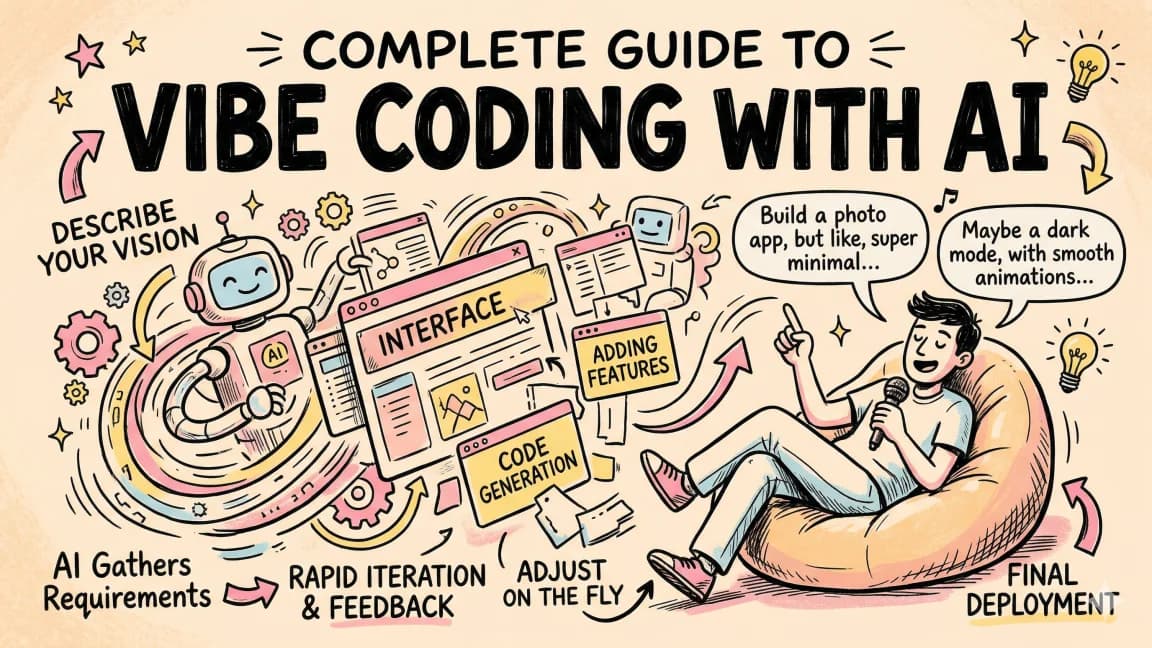
Vibe Coding in 2026: Build Fast Without Losing the Plot
Vibe coding works when you pair natural-language building with repo context, tests, diff review, security checks and rollback. The practical guardrail workflow.
10 min readDeep Agent: Build Full-Stack Apps in Minutes
Deep Agent by Abacus AI generates full-stack apps from one prompt on a real cloud VM. See how it asks clarifying questions, fixes build errors and exports code.
7 min readHow to Build Full-Stack TypeScript Apps With AI in 2026
A practical guide to building full-stack Next.js apps with Claude Code, Cursor, Convex, Clerk and Vercel - the TypeScript-native AI stack that works in 2026.
7 min readNew here? Start with
Technical content at the intersection of AI and development. Building with AI agents, Claude Code, and modern dev tools - then showing you exactly how it works.