What Happens When Tokens Are Too Cheap to Meter: Five Scenarios for Developers and Knowledge Work
TL;DR
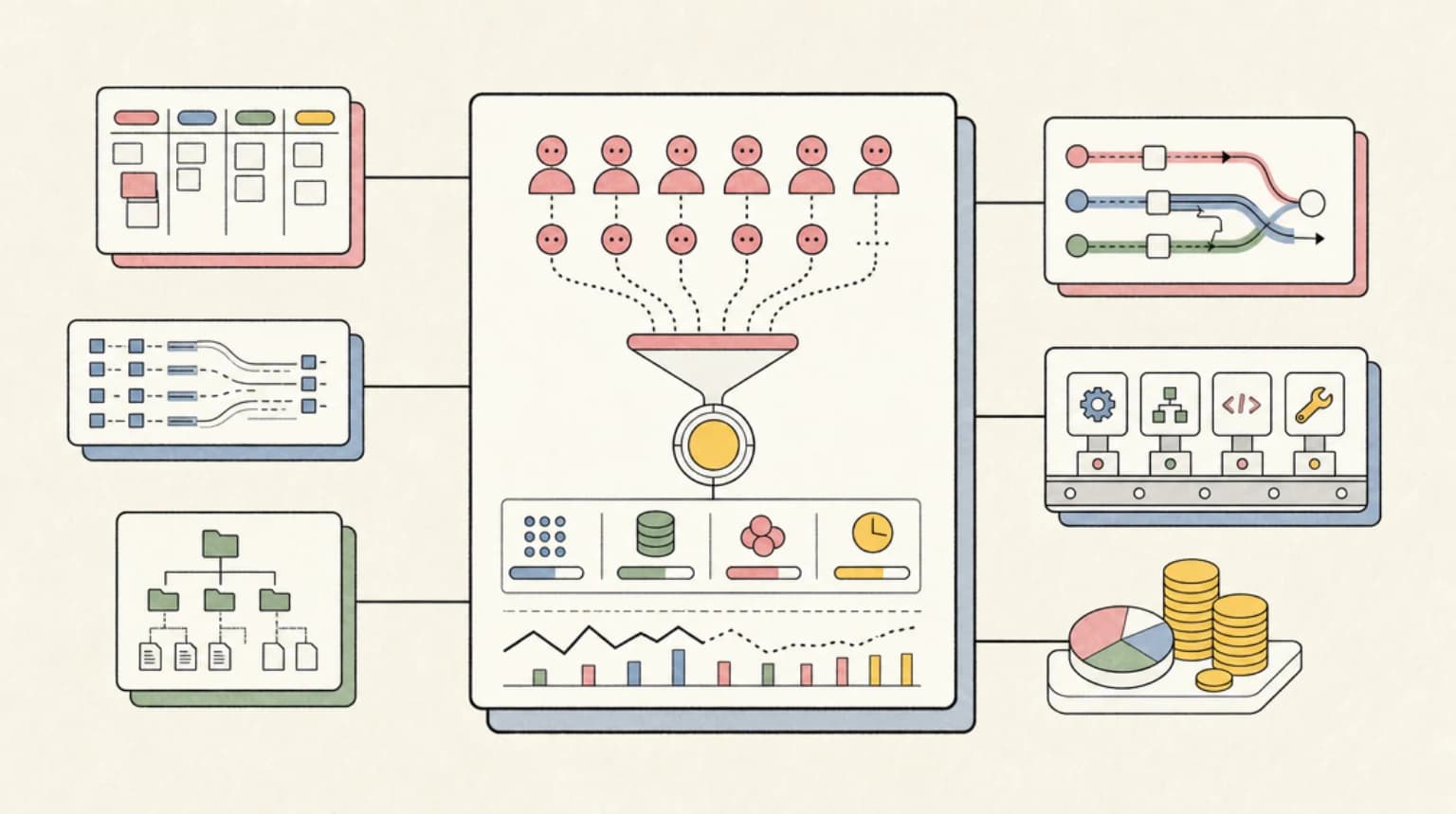
Model prices fell 80% in a single announcement this week. Run the trendline forward and the interesting question is not the price - it is what developers, teams, and the broader economy do when intelligence stops being the scarce input.
"Too cheap to meter" is a phrase with a bad track record - it was coined about nuclear electricity in 1954 and never came true. So treat this post as what it is: a structured set of hypotheticals, not a forecast. But the trendline demanding the exercise is real and recent. This week alone, OpenAI cut GPT-5.6 Luna by 80% to $0.20 per million input tokens, and DeepSeek shipped an open-weight model at $0.14/$0.28 that beats larger proprietary models on agent benchmarks. Part of the Luna cut came from the model optimizing its own serving kernels - cheaper intelligence making intelligence cheaper.
Here is the exercise, start to finish: first the ground rules so the speculation stays honest, then five scenarios ordered from "already happening" to "genuinely speculative," each with the signal that would tell you it is arriving. By the end you should have a working checklist for which of your own assumptions expire first.
The ground rules#
Three constraints keep this from being science fiction:
- "Too cheap to meter" means too cheap to think about, not free. Electricity is metered, but you do not weigh a Google search against its cost. The threshold that matters is psychological: when running an agent overnight costs less than the coffee you drink while reading its output, the metering stops shaping behavior.
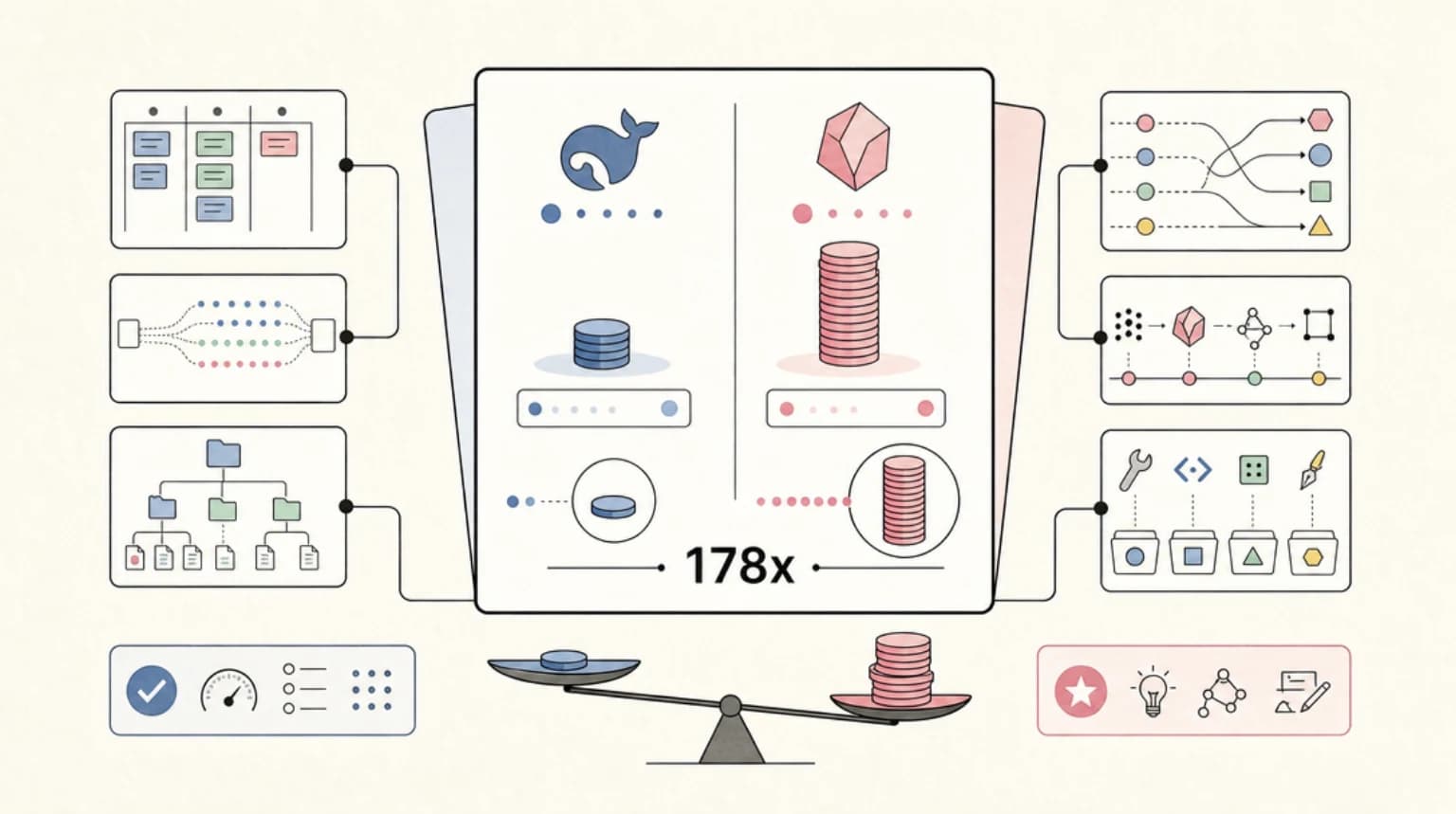
- Price is collapsing faster than capability at the floor. The gap between the cheapest useful model and the frontier is wide - Fable 5 lists at $10/$50 per million tokens against Flash's $0.14/$0.28, a 178x spread on output. The scenarios below assume the floor keeps rising in capability while falling in price, and the frontier stays expensive. That is the pattern the last two years actually show.
- Inference gets cheap; judgment does not. Every scenario below conserves one quantity: someone still decides what is worth doing and whether it was done well. The scarcity migrates; it does not vanish.
Scenario 1: The always-on codebase (already arriving)#
The first casualty of near-free tokens is the idea that code is only worked on when a person is looking at it.
At current floor prices, running a background agent against your repo every hour - checking doc drift, hunting flaky tests, bumping dependencies, re-verifying old claims - costs single-digit dollars a month. We walked through the mechanics in the cron automation guide; the economic point is that the cost is already below the metering threshold for any professional. The repo becomes something more like a garden with groundskeepers: unattended, it improves.
What changes for developers: "maintenance" stops being a sprint category and becomes ambient. The differentiator shifts from who fixes things to who writes the best standing instructions - the prompts, gates, and review rules the fleet runs on.
Signal it is arriving: scheduled-agent line items showing up in ordinary teams' tooling budgets the way CI minutes did a decade ago. This one is not hypothetical; it is an adoption curve.
Scenario 2: Speculative work becomes the default (1-2 years)#
Today you decide what to build, then build it. When a candidate implementation costs cents, the order inverts: build five, then decide.
Concretely: every nontrivial ticket gets three attempted implementations from different angles before a human looks. Every design decision arrives with working prototypes of the losing options. Every bug report arrives with a candidate fix already attached and tested. The expensive frontier model - or the human - moves to the judge's seat, exactly the escalate-the-judge-not-the-worker economics that already govern fleet design.
What changes for developers: reviewing becomes the core skill, and review capacity the bottleneck. Teams that are good at specifying and judging pull ahead of teams that are good at typing. Interviews start testing "here are four implementations, rank them and say why" rather than whiteboard recall.
What breaks: anything priced per attempt. Bug bounties, freelance marketplaces, and per-seat dev tools all assume attempts are scarce.
Signal it is arriving: issue trackers shipping "generate candidates" as a native button, and PR queues measured in review-hours becoming the number engineering managers complain about.
Scenario 3: The verification economy (2-4 years)#
If producing an analysis, a contract draft, a market report, or a codebase costs nothing, none of those artifacts can command a price. What still can: the guarantee that one of them is correct.
This is the deepest structural shift for knowledge work broadly. The deliverable stops being the document and becomes the signature - the audit, the warranty, the professional stake on "this one is right." Professions that already sell verification (auditors, actuaries, certifying engineers) look prescient. Professions that sell production (report writing, first-draft law, routine analysis) compress hard, the way stock photography compressed when cameras reached every pocket.
For developers specifically, the analogue is tests, evals, and formal guarantees. When implementation is free, the test suite is the asset; the eval harness is the moat. A team's real IP becomes its definition of correct.
Signal it is arriving: liability language. When contracts start distinguishing "AI-produced, human-verified" from merely "produced," the verification economy has priced itself into existence.
Scenario 4: Software stops being scarce (3-5 years, speculative)#
Most software exists because building it once was expensive, so one build had to serve millions. Near-free tokens attack the premise. Why adapt your workflow to a generic project tracker when generating a tracker shaped exactly like your team's process costs a weekend of background agents?
The hypothetical end state: a long tail of single-team, single-person, even single-use software - generated, used, discarded. SaaS does not die; it bifurcates. Products survive on what generation cannot copy: network effects, proprietary data, integrations, and trust. Products that are "a nice UI over a database" get generated locally on demand.
What changes for developers: employment shifts toward the substrate - the platforms, runtimes, and guardrails disposable software runs on - and toward the irreducibly shared systems (payments, identity, infrastructure) where trust matters more than code. "App developer" as a title ages the way "webmaster" did; the work migrates up and down the stack simultaneously.
Signal it is arriving: the first mainstream story of a mid-size company replacing a paid SaaS subscription with a generated internal tool and keeping it for a year. One is an anecdote; a pattern of them is the scenario.
Scenario 5: The attention inversion (speculative, timeline honest: unknown)#
Push all four prior scenarios together and one asymmetry dominates: machine output scales without limit, and human attention does not. An economy where intelligence is too cheap to meter is an economy organized around deciding what deserves to be looked at.
Hypotheticals that follow: filtering and curation become the highest-paid editorial skills, because a wrong "worth your time" costs more than a thousand wrong drafts. Reputation systems matter more than production systems - provenance, track records, graded predictions. Organizations flatten into small groups of high-context judges steering large automated fleets, and "how many people report to you" quietly gives way to "how much automated work does your judgment safely govern."
And a countertrend worth taking seriously rather than romantically: verified human effort becomes a luxury signal in some markets, the way "handmade" survived industrialization - not because the machine version is worse, but because scarcity itself is the product.
Signal it is arriving: when the scarce line item in a knowledge-work budget is explicitly reviewer time, and when "who vouches for this" is metadata every artifact carries.
The checklist#
The exercise, condensed into what to actually do with it:
- Audit your own value against the scenarios. How much of your week is production a floor-price model handles, and how much is specification, judgment, and verification? The ratio is your exposure.
- Build your standing instructions now. The always-on codebase rewards whoever has the best prompts, gates, and review rules written down. That asset compounds and is cheap to start - start with one cron chore.
- Invest in your definition of correct. Tests, evals, review taste. In every scenario above, that is the part that appreciates.
- Watch the signals, not the vibes. Each scenario names one. When a signal fires, shift; until then, the scenario is a hypothesis, including ours.
The nuclear comparison cuts both ways. Electricity never became too cheap to meter - but it became cheap enough to reorganize civilization around, and the winners were the ones who assumed abundance early and built for it. That is the honest version of the bet: not that the meter disappears, but that behaving as if intelligence were abundant becomes the correct strategy well before the price hits zero.
FAQ#
Are AI tokens actually getting cheaper?#
Yes, and quickly at the floor. In one week of July 2026, OpenAI cut GPT-5.6 Luna 80% to $0.20/$1.20 per million tokens, and DeepSeek's open-weight V4 Flash runs at $0.14/$0.28 with agent benchmarks above larger models. Frontier-tier models remain far more expensive - Fable 5 lists at $10/$50 - so the collapse is at the capable floor, not the top.
What does "too cheap to meter" mean for developers?#
The practical threshold: when running background agents on your projects costs less than you would bother tracking, cost stops shaping what you automate. At that point maintenance, candidate generation, and verification loops become ambient background work, and human time concentrates on specification and review.
Which developer skills gain value as tokens get cheaper?#
Specification, code review, test and eval design, and judgment about what is worth building. The common thread in every scenario: production gets cheap, verification and taste do not.
Is this a prediction?#
No - it is a set of explicitly hypothetical scenarios, each with a named signal that would indicate it is materializing. The only firm claims are the current prices and the direction of the trendline, both sourced above.
Sources#
| Source | URL |
|---|---|
| OpenAI GPT-5.6 pricing update (our analysis, primary links inside) | /blog/gpt-5-6-luna-80-percent-price-cut-hn-analysis |
| DeepSeek API Change Log | https://api-docs.deepseek.com/updates/ |
| DeepSeek V4 Flash on Artificial Analysis | https://artificialanalysis.ai/models/deepseek-v4-flash |
| "Too cheap to meter" origin (Lewis Strauss, 1954) | https://en.wikipedia.org/wiki/Too_cheap_to_meter |
Last updated: July 31, 2026
Continue Reading#
- OpenAI Cuts GPT-5.6 Luna by 80% - the price cut that prompted this exercise
- DeepSeek V4 Flash 0731 in OpenCode - the open-weight floor, hands on
- Fable 5 vs DeepSeek V4: Cost vs Quality - the 178x spread and where it matters
- Agent Fleet Economics - judge-vs-worker spending in practice
- Put an AI Agent on a Cron Job - scenario 1, as a build guide
- What If AI Was Free Tomorrow, at Exactly Today''s Capabilities?
From the archive
Vercel Made Deployments Up to 7 Seconds Faster: What Changed and Why It Matters
Jul 31, 2026 • 6 min read
Vercel Passport Is GA: Deployments That Know Who Your Users Are
Jul 31, 2026 • 7 min read
Weekly Highlights: Frontier AI Commoditized - Half-Price Opus 5, 3T Open Weights, and Agent Security Gets Real
Jul 31, 2026 • 12 min read
Agent-Manager: A Tmux TUI for Running Claude Code, Codex, and OpenCode Side by Side
Jul 30, 2026 • 7 min read
Read next
OpenAI Cuts GPT-5.6 Luna by 80%: The Price-Performance Frontier Just Shifted
OpenAI slashes GPT-5.6 Luna by 80% to $0.20/M input tokens, cuts Terra by 20%, adds Sol Fast mode at 2.5x speed, and reveals Sol autonomously optimized its own production kernels.
7 min readDeepSeek V4 Flash 0731: The Official Release, Benchmarks, and How to Run It in OpenCode
DeepSeek shipped the official V4 Flash release on July 31, 2026. The re-post-trained 0731 build beats V4-Pro-Preview on agent benchmarks at $0.14/$0.28 per million tokens. Here is what changed and how to run it through OpenCode today.
7 min readFable 5 vs DeepSeek V4: The Cost-Quality Gap Measured in Real Tasks
DeepSeek V4-Flash costs $0.28 per million output tokens. Fable 5 costs $50. That 178x gap is real - but so is the quality difference. Here is where it matters and where it does not.
7 min readShare
Developers Digest
Technical content at the intersection of AI and development. Building with AI agents, Claude Code, and modern dev tools - then showing you exactly how it works.
300+ videos30K+ GitHub stars850+ articles
Related Tools
AI Coding328K views

GitHub Copilot
The original AI coding assistant. 77M+ developers. Inline completions in VS Code and JetBrains. Copilot Workspace genera...
View ToolAI Frameworks

Outlines
Constrained generation library for LLMs. Uses finite state machines to mask invalid tokens during generation. Guarantees...
View ToolMCP Tools

MCP CLI
Lightweight CLI for discovering and calling MCP servers. Dynamic tool discovery reduces token consumption from 47K to 40...
View ToolProductivity
W
Warp
AI-powered terminal built in Rust with GPU rendering. Block-based output, natural language commands, Agent Mode for auto...
View ToolApps from Developers Digest
Related Guides
Guide
MCP Servers Explained
What MCP servers are, how they work, and how to build your own in 5 minutes.
AI AgentsGuide
Claude Code Setup Guide
Configure Claude Code for maximum productivity -- CLAUDE.md, sub-agents, MCP servers, and autonomous workflows.
AI AgentsGuide
AI Agent Frameworks Compared: LangGraph vs CrewAI vs Mastra vs CopilotKit
Deep comparison of the top AI agent frameworks - LangGraph, CrewAI, Mastra, CopilotKit, AutoGen, and Claude Code.
AI AgentsRelated Posts
7 min read
News
OpenAI Cuts GPT-5.6 Luna by 80%: The Price-Performance Frontier Just Shifted
OpenAI slashes GPT-5.6 Luna by 80% to $0.20/M input tokens, cuts Terra by 20%, adds Sol Fast mode at 2.5x speed, and rev...

7 min read
deepseek
DeepSeek V4 Flash 0731: The Official Release, Benchmarks, and How to Run It in OpenCode
DeepSeek shipped the official V4 Flash release on July 31, 2026. The re-post-trained 0731 build beats V4-Pro-Preview on...
7 min read
fable-5
Fable 5 vs DeepSeek V4: The Cost-Quality Gap Measured in Real Tasks
DeepSeek V4-Flash costs $0.28 per million output tokens. Fable 5 costs $50. That 178x gap is real - but so is the qualit...
8 min read
Fable 5
The Economics of Agent Fleets: Fable 5 Orchestrators, Sonnet 5 Workers
One expensive orchestrator plus many cheap workers beats an all-frontier fleet for most workloads. Here is the decision-...
11 min read
opencode
Put an AI Agent on a Cron Job: Automating Dev Chores with OpenCode
An agent CLI plus a cron schedule turns recurring dev chores into background work: dependency bumps, doc freshness check...
11 min read
ai-economics
What If AI Was Free Tomorrow, at Exactly Today's Capabilities?
A thought experiment with the sci-fi removed: freeze the models at today's capability, drop the price to zero overnight,...
Build with the member tools

Get Smarter About AI Dev
New tutorials, open-source projects, and deep dives on coding agents - delivered weekly.
One email per weekReal code, not theoryFree forever