Dan Luu's Agentic Coding Notes Point to the Real Bottleneck
TL;DR
Dan Luu's new agentic coding essay is not another vibe check. It is a useful reminder that coding agents only compound when the test loop, review loop, and task-selection loop are stronger than the code generator.
Last updated: July 4, 2026
Dan Luu's new agentic coding notes hit Hacker News today because they are the opposite of a launch post. No product wrapper. No benchmark table pretending the debate is settled. Just a long working note from someone using coding agents in the messy part of software work: bugs, support tickets, testing, variance, review, and the gap between "the agent produced code" and "the system got better."
That is why the essay is useful for developers. The AI coding market keeps arguing about which model writes the best first draft. Luu is mostly pointing at the parts around the first draft. If you already buy the premise that AI coding agents can open real pull requests, the next question is not whether the agent can type. It is whether your workflow can absorb, test, and correct the output without turning every human reviewer into a bottleneck.
The short version: agentic coding is becoming less constrained by generation and more constrained by verification. That matches the pattern behind the agent reliability cliff, where a chain that looks fine at each step can collapse once small errors compound across many steps.
The Useful Takeaway Is Testing, Not Autonomy#
The strongest part of Luu's essay is the testing argument. He describes a support-ticket-to-PR pipeline that can work when every fix still goes through human review, then spends more time on the older testing culture that shaped his bias: dedicated QA, randomized testing, fuzzing, large regression suites, and a lower reliance on handwritten unit tests.
That matters because most coding-agent discussions still treat "write tests" as a checklist item. The agent edits code. The agent adds tests. The agent runs the tests. The agent says everything passed. In practice, that loop is often too self-referential. The same model that made the change is now grading whether the change was enough.
Luu's point is narrower and more operational: agents are useful when they help you generate better tests, explore more input space, and turn bug reports into reproducible cases. They are weaker when you ask them to stare at code and declare it correct.
That maps directly to the pattern in Agent Evals Need Baseline Receipts. The receipt is not "the model sounded confident." The receipt is a stable baseline, a failing case, a reproduced behavior, a randomized test, a fuzz target, or a regression that runs again tomorrow.
Fuzzing Is a Better Agent Partner Than Vibes#
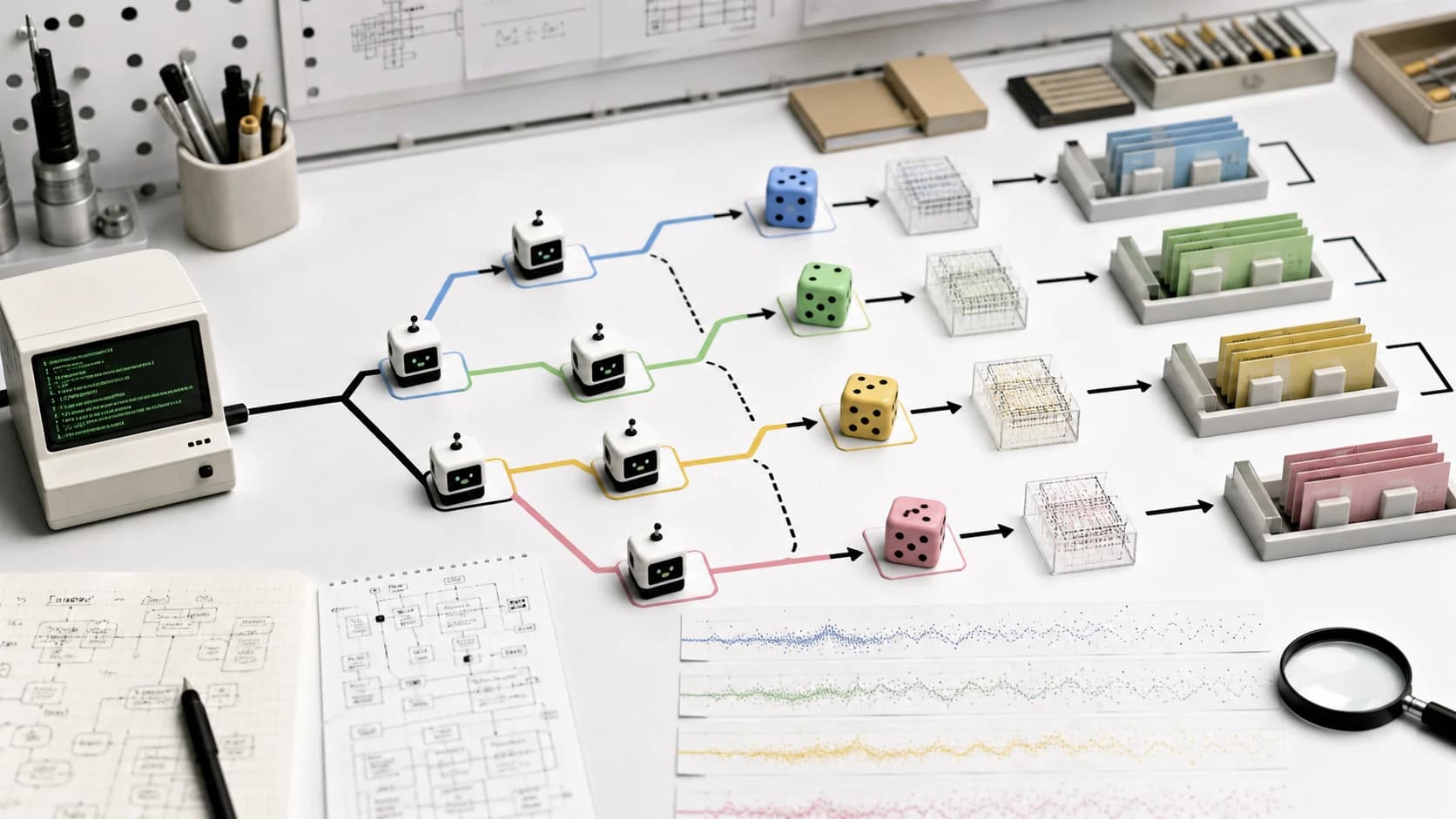
One reason fuzzing keeps showing up in serious agent discussions is that it gives the model an external signal. The agent does not have to be perfectly calibrated about correctness. It can propose generators, shrinkers, assertions, harnesses, seed cases, and instrumentation. The test runner supplies the feedback.
That is a healthier division of labor:
| Layer | What the agent can do | What should stay external |
|---|---|---|
| Bug intake | Summarize reports and infer reproduction paths | User-visible evidence and logs |
| Test design | Draft property tests, fuzz targets, fixtures, and invariants | The actual runner and failure output |
| Debug loop | Patch, rerun, narrow, and explain | Version control, CI, and reviewer approval |
| Release gate | Produce a compact change narrative | Deployment policy and rollback criteria |
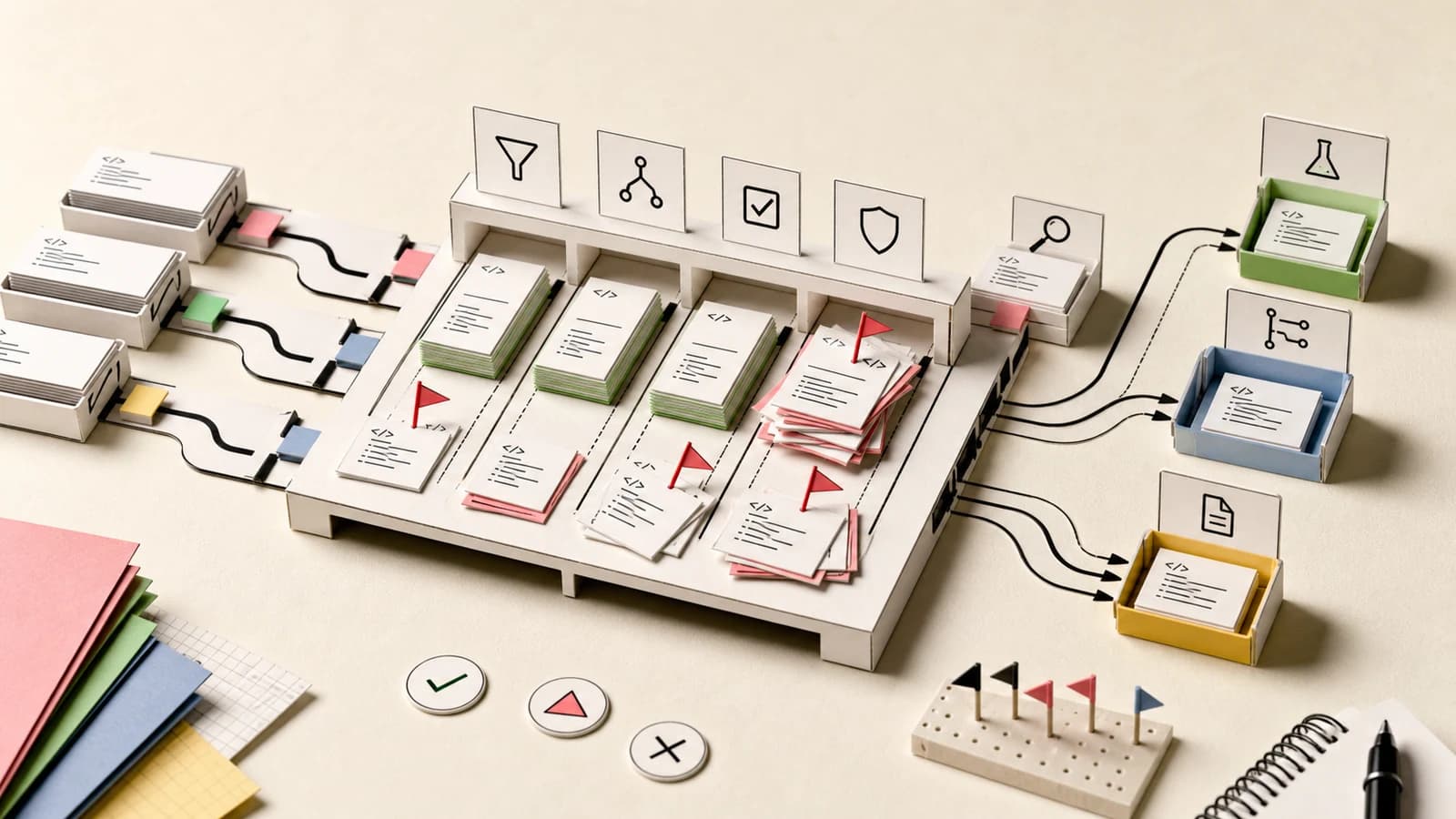
This is also why "agent writes test for its own change" is not enough. It is useful as a starting point, but it is not a quality system. A stronger pattern is "agent turns a bug report into a failing harness, then a separate gate proves the harness fails before the fix and passes after it."
That is the same philosophy behind AI Code Review Is the New Bottleneck: review has to shift from reading every generated line by hand toward demanding reproduction, smaller diffs, test evidence, and receipts.
Agent Variance Explains Why Everyone Sounds Right#
The other useful part of the essay is variance. People who use coding agents can have wildly different experiences and still be describing real results. The same prompt, model family, and repo can produce different outcomes across runs. A workflow that works on one class of task can break down on another. A benchmark that looks decisive can hide the distribution that matters to an actual team.
That is why the Hacker News thread around the essay is predictably split. Some readers see the workflow as evidence that agents are finally practical. Others see the failure modes as evidence that the optimism is overdone. Both sides can point to something real.
The practical response is not to average the anecdotes into a mood. It is to separate task classes:
- Good agent tasks: bug reproduction, migration scaffolding, mechanical refactors, test harness creation, documentation sync, small pull requests with clear acceptance criteria.
- Risky agent tasks: ambiguous product decisions, large architectural rewrites, security-sensitive changes, performance work without measurement, and anything where the reviewer cannot cheaply tell whether the answer is correct.
- Good orchestration tasks: split work, assign isolated branches, require evidence, and merge only after a gate passes.
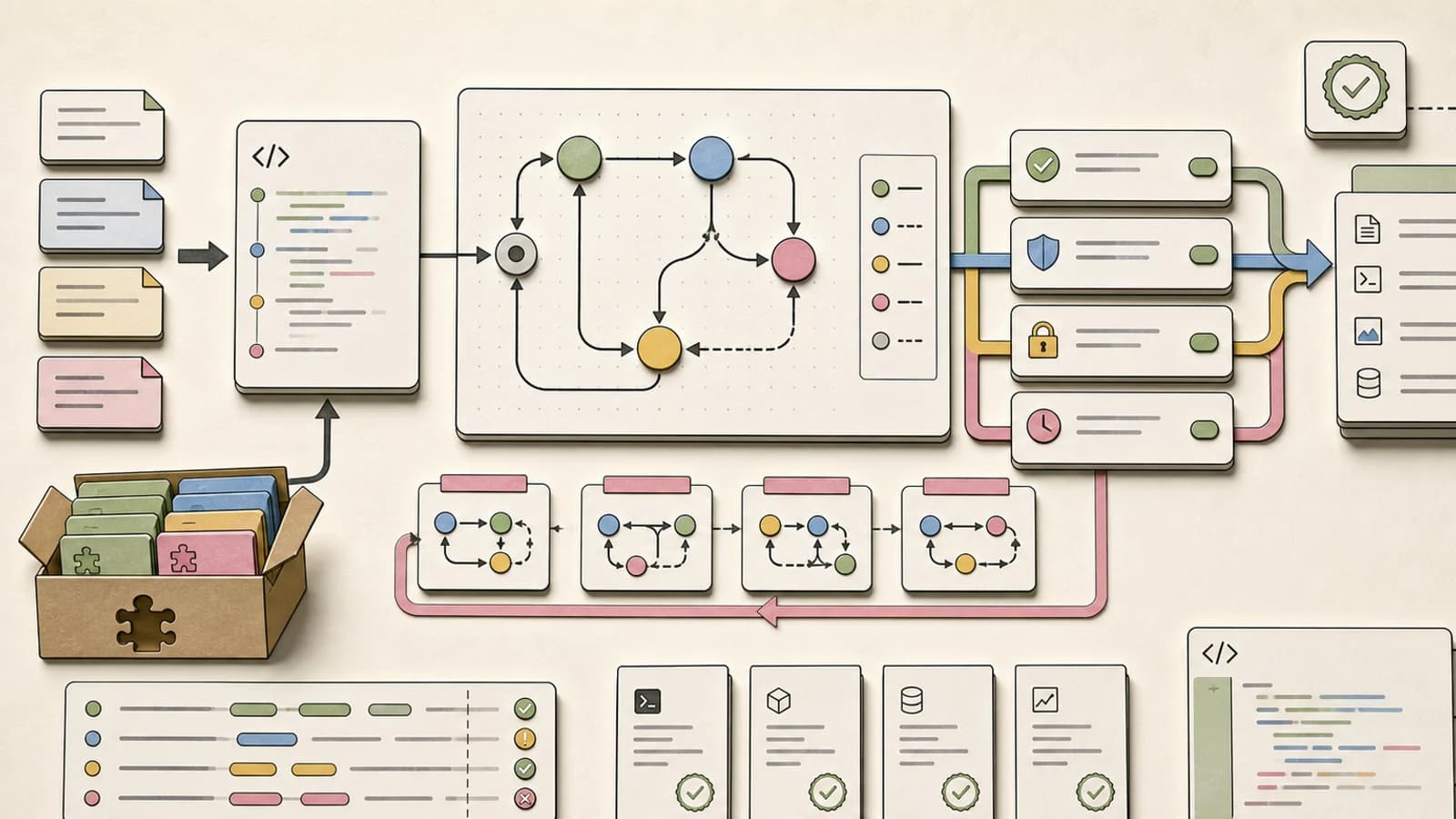
That is why agent workflow design increasingly looks like state machines instead of prompt checklists. Once variance is real, the workflow needs transitions, gates, retries, and stop conditions.
The "No Review" Lesson Is Easy to Misread#
The most dangerous misread of Luu's testing background would be: "a great test culture means you can skip code review." That is not the transferable lesson.
The transferable lesson is that code review was not the only quality mechanism in that environment. It had dedicated test engineers, large regression infrastructure, randomized testing, and a culture that treated testing as a first-class engineering path. If your team does not have that system, removing review because an agent is fast is just moving risk into production.
For most software teams, the better lesson is:
- Make the agent produce narrower diffs.
- Make the agent attach evidence.
- Make the agent rerun the exact failing case.
- Make the human reviewer inspect the decision and the risky code, not every generated line equally.
- Keep deterministic gates outside the model.
That is a more boring story than "agents replace developers." It is also closer to what teams can actually ship.
Google Trends Demand Check#
Google Trends was only partially reliable for today's candidate set. Several query groups returned 429 Too Many Requests, so I am not using fabricated search-volume numbers. The usable rows did show current relative interest around broader agent-workflow terms: agent orchestration, AI agent workflow, AI agent architecture, and multi-agent system.
That supports the article lane, but it does not prove demand for Dan Luu's essay as a named query. The durable search intent is broader: how to make AI coding agents reliable, how to test agent-written code, and how to structure agent workflows so the output can be trusted.
What I Would Change in a Team Workflow Tomorrow#
If a team is already using Claude Code, Codex, Cursor, or a similar agent, I would make three small workflow changes before buying more seats.
First, add a bug-to-test template. Every bug fix should start with the agent writing the reproduction path and the failing command. If there is no failing command, the diff should be treated as incomplete.
Second, split the agent role from the judge role. The same session can draft the change, but CI, a separate review agent, or a human reviewer should verify the claim. The important part is that the judge has a stable checklist and access to the real output, not just a summary.
Third, track agent output by task type. "Claude Code is good" or "Codex is bad" is too broad to be actionable. Track migration tasks, UI polish, bug reproduction, test writing, dependency updates, and architecture changes separately. You will find some lanes are ready for automation and others are still expensive.
This is the operating model behind agent evals with receipts. The field does not need another leaderboard as much as it needs better local measurement.
The Real Bottleneck#
The agent bottleneck is no longer only model capability. It is the surrounding system:
- Can the agent select a task that is actually worth doing?
- Can it produce a small enough diff?
- Can it generate a failing test before the fix?
- Can it rerun the relevant checks without hiding failures?
- Can a reviewer inspect the result quickly?
- Can the workflow remember what worked for the next run?
That last question is why skills, repo instructions, and operating playbooks matter. A team that turns repeated lessons into durable instructions will get better faster than a team that starts every agent session from a blank chat box. For the bigger pattern, see Why Skills Beat Prompts for Coding Agents.
Luu's essay is not a final theory of agentic coding. It is more useful than that. It is a reminder that the winning workflow is not the one with the most autonomy. It is the one with the best feedback loop.
FAQ#
What is Dan Luu's agentic coding essay about?#
Dan Luu's essay covers practical lessons from using AI coding agents, with emphasis on testing, fuzzing, support-ticket-to-PR workflows, variance across agent runs, and why benchmark-style debates often miss the operational details that matter in real software work.
Are AI coding agents good at writing tests?#
They can be good at drafting test harnesses, property tests, fuzz targets, fixtures, and reproduction cases. They are weaker when asked to certify their own work without an external runner, baseline, or reviewer. The stronger workflow makes the agent produce evidence that another system can verify.
Does fuzzing work well with AI coding agents?#
Fuzzing can pair well with coding agents because it gives the agent an external feedback source. The agent can propose generators and invariants, while the fuzz runner supplies concrete failures. That is usually more reliable than asking the model to inspect code and judge correctness from prose alone.
Should teams let coding agents merge without review?#
Usually no. A no-review workflow only makes sense when a team has unusually strong automated testing, regression infrastructure, rollback discipline, and ownership boundaries. Most teams should start by requiring smaller diffs, failing tests before fixes, CI evidence, and targeted human review.
How should teams measure coding-agent quality?#
Measure by task class rather than by vibes. Track bug reproduction success, test quality, CI pass rates, review time, rollback rate, and accepted-change rate separately for migrations, UI work, bug fixes, refactors, and architecture changes.
Sources#
- Dan Luu: Agentic coding notes from Galapagos Island - primary essay, fetched July 4, 2026.
- Hacker News discussion via Algolia item 48782671 - 120 points and 11 top-level comments observed July 4, 2026.
- Google Trends - attempted for candidate query clusters on July 4, 2026; several clusters returned 429, so only reliable rows were used for broad query framing.
Get the next deep dive like this in your inbox
One email a week on AI Coding and the rest of the AI dev stack. Free.
Read next on AI coding tools
The Agent Reliability Cliff: Why Your 10-Step Chain Only Succeeds 20% of the Time
The math of agent pipelines is brutal. 85% reliability per step compounds to about 20% at 10 steps. Here is why long chains collapse in production, and the six patterns the field has converged on to fight the decay.
9 min readAgent Evals Need Baseline Receipts
Hex's data-agent lab shows the practical eval pattern AI teams should copy: compare candidates against stable baselines, keep receipts, and judge changes by task behavior.
8 min readAI Code Review Is the New Bottleneck
Coding agents make code faster than teams can review it. The next advantage is not bigger prompts. It is review systems that force reproduction, small diffs, tests, and receipts.
8 min readNew here? Start with
Technical content at the intersection of AI and development. Building with AI agents, Claude Code, and modern dev tools - then showing you exactly how it works.