The Solo Developer's AI Toolkit in 2026
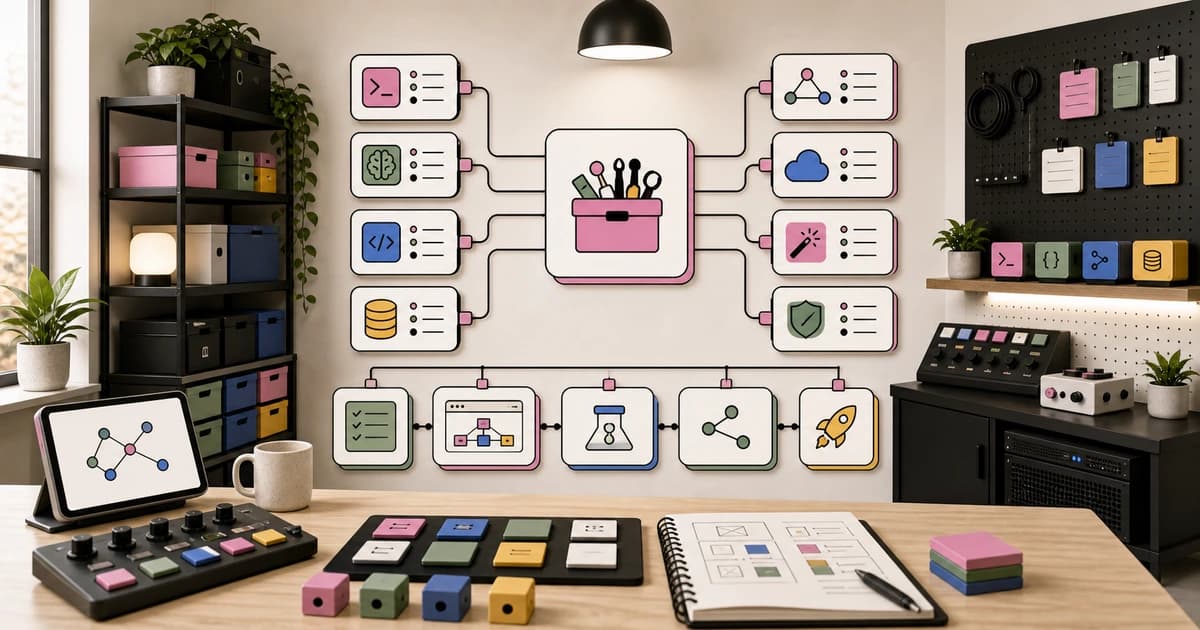
TL;DR
How solo developers and indie hackers ship products 10x faster using AI coding tools. The complete stack for building alone.
Official Sources#
| Tool | Official Page |
|---|---|
| Claude Code | Anthropic Claude Code |
| Cursor | Cursor |
| Vercel | Vercel |
| Convex | Convex |
| Clerk | Clerk |
| Gemini CLI | Gemini CLI GitHub |
| Windsurf | Windsurf |
| v0 | v0 by Vercel |
| Bolt | Bolt |
Solo developers have never had more leverage than they do right now. AI coding tools have compressed the gap between a single person with an idea and a funded team with engineers, designers, and DevOps. The tools available today do not just speed up coding. They eliminate entire categories of work that used to require hiring.
This is the complete breakdown of the AI toolkit that lets one developer build, ship, and maintain multiple products simultaneously. Every tool listed here is something I use daily on real projects, not theoretical recommendations.
The Solo Developer Advantage#
Teams pay a coordination tax on everything. Pull request reviews, standup meetings, Slack threads about naming conventions, sprint planning, design handoffs. A five-person team does not write code five times faster than one person. After coordination overhead, the real multiplier is closer to 2-3x.
Solo developers skip all of that. When you are the only person on the project, every decision is instant. You do not need consensus on the database schema. You do not wait for a code review. You do not schedule a meeting to discuss the deployment strategy.
AI tools amplify this advantage because they slot into a solo workflow with zero friction. There is no onboarding period, no access management, no shared context to maintain. You open your terminal, describe what you need, and the agent starts working. The feedback loop between "I want this feature" and "this feature exists" drops from days to minutes.
This is why solo developers and indie hackers benefit more from AI tools than large teams do. The coordination overhead that AI cannot fix is the exact overhead solo developers never had.
The $220/mo Stack That Replaces a Team#
Here is the exact stack, with real costs. Total monthly spend: $220. For the updated layered map that adds Codex background work, Mastra backend workflows, CopilotKit UI, MCP boundaries, run ledgers, and cost review, read the new AI coding stack I would pick today.
Claude Code Max - $200/mo#
Claude Code is your senior developer, architect, and code reviewer rolled into one. It runs in the terminal, reads your entire codebase, and executes multi-step tasks autonomously. You describe what you want. It reads your existing code, understands your patterns, writes the implementation, runs the tests, and fixes any issues.
The CLAUDE.md memory system is what makes it compound over time. You write project-specific rules, conventions, and context in a markdown file. Claude Code reads it at the start of every session. After a few weeks, it knows your codebase better than a new hire would after a month.
Markdown
# CLAUDE.md

## Stack
- Next.js 16 + TypeScript
- Convex for backend
- Clerk for auth
- Tailwind for styling

## Rules
- Use server actions, never API routes
- All components in components/, not app/
- Run pnpm typecheck after every change
The sub-agent system handles parallel work. Instead of tackling one file at a time, you decompose a task across multiple focused agents. A frontend agent builds the component. A backend agent writes the API. A test agent covers both. They run concurrently and finish in a fraction of the time sequential work would take.
At $200/mo, it is the most expensive line item. It is also the one that provides the most leverage. This single tool replaces what used to require a senior developer, a code reviewer, and a DevOps engineer.
Cursor Pro - $20/mo#
Cursor handles the work that benefits from visual feedback. UI iteration, component refinement, quick edits where you want to see the change in real time before committing to it.
The workflow splits naturally: Claude Code for heavy lifting and autonomous tasks, Cursor for interactive polish. You build the feature with Claude Code, then open Cursor to fine-tune spacing, adjust animations, tweak copy, and handle the visual details that require a tight edit-preview loop.
Cursor Rules serve the same purpose as CLAUDE.md. Define your project conventions once, and the tool follows them consistently.
Vercel - Free Tier#
Your entire DevOps pipeline. Push to main, the site deploys. Preview branches for every PR. Edge functions, image optimization, analytics. The free tier handles real traffic. The $20/mo Pro tier handles significant scale.
You do not need a DevOps engineer. You do not need to configure CI/CD pipelines. You do not need to manage servers. This is the kind of work that used to consume entire roles, and it now costs zero dollars and zero minutes of configuration.
Convex - Free Tier#
Convex replaces your backend team. Database, real-time sync, server functions, file storage, cron jobs, scheduled tasks. All TypeScript. All type-safe. Schema changes deploy instantly with no migrations.
The free tier includes enough for multiple production applications. Define your schema, write your queries and mutations, and the backend exists. No Express server. No database hosting. No ORM configuration.
TypeScript
// Define your schema
import { defineSchema, defineTable } from "convex/server";
import { v } from "convex/values";

export default defineSchema({
  projects: defineTable({
    name: v.string(),
    description: v.optional(v.string()),
    userId: v.string(),
    status: v.union(v.literal("active"), v.literal("archived")),
    createdAt: v.number(),
  }).index("by_user", ["userId"]),
});
The real-time aspect matters for solo developers. When your database updates push to connected clients automatically, you skip writing polling logic, WebSocket handlers, and cache invalidation code. Less code to write means less code for the AI to get wrong.
Clerk - Free Tier#
Authentication, user management, organizations, and role-based access. The free tier covers thousands of monthly active users. You do not write login forms. You do not handle password resets. You do not build organization switching.
Drop in the <ClerkProvider>, add the middleware, and your app has production-grade auth. The time from zero to "users can sign in with Google" is about five minutes.
The Total#
| Service | Role | Monthly Cost |
|---|---|---|
| Claude Code Max | AI coding agent | $200 |
| Cursor Pro | AI IDE | $20 |
| Vercel | Deployment + CDN | $0 |
| Convex | Backend + database | $0 |
| Clerk | Auth + user management | $0 |
| Total | $220/mo |
A single senior developer costs $10,000-15,000/mo fully loaded. This stack gives you capabilities that overlap significantly with what that developer provides, at 2% of the cost.
How I Ship a Full Product in a Weekend#
This is not a theoretical workflow. This is the actual sequence I follow when building a new SaaS product from scratch.
Friday Evening: Architecture and Context#
Write the CLAUDE.md file. This is the highest-leverage hour of the entire project. Define the stack, the conventions, the data model, and the rules. The better this file is, the better every AI interaction will be for the rest of the build.
Use Claude Code's plan mode to think through the architecture before writing any code. Describe the product, the features, the user flows. Let the model poke holes in the plan and suggest improvements. Iterate until the plan is solid.
Set up API keys. Clerk, Convex, any third-party services the product needs. Do this now so you never hit a "missing API key" error during the build. AI tools produce better code when they can validate against real endpoints.
Terminal
# Initialize the project
npx create-convex@latest my-saas --template nextjs-clerk
cd my-saas

# Set up environment
cp .env.example .env.local
# Add Clerk keys, Convex URL, any API keys
Saturday Morning: Core Features#
This is where Claude Code earns its cost. Give it bounded, specific tasks and let it run autonomously.
Code
Build the project dashboard:
- Protected route, redirect to sign-in if not authenticated
- List all projects for the current user from Convex
- Create project form with name and description
- Delete project with confirmation
- Empty state for new users
Claude Code reads the Convex schema, the Clerk middleware, and the existing file structure. It produces the page, the components, the Convex queries, and the mutations. You review the output, test it, and move on. One prompt, thirty minutes, a complete feature.
Stack three or four of these prompts across the morning. Each builds on the last. By lunch, you have a working application with auth, data persistence, and core functionality.
Saturday Afternoon: UI and Polish#
Switch to Cursor. The core logic exists. Now you are in refinement mode. Adjust the layout. Fix the responsive breakpoints. Tweak the typography. Add loading states and error boundaries.
This is where the Claude Code + Cursor split pays off. Claude Code built the right thing. Cursor makes it look right. The tight feedback loop of Cursor's editor means you can iterate on visual details at the speed you can form opinions about them.
Sunday: Test, Deploy, Launch#
Push to main. Vercel deploys automatically. Test the production build. Write a landing page. Set up the custom domain. Announce on X.
The total timeline from idea to live product: roughly 48 hours of elapsed time, maybe 16 hours of actual work. A year ago, this same project would have taken two to three weeks.
From the archive
Aider vs Claude Code: Open Source vs Commercial AI Coding CLI
Mar 19, 2026 • 5 min read
Astral Joins OpenAI: What It Means for Python Developers
Mar 19, 2026 • 4 min read
60 Claude Code Tips and Tricks for Power Users
Mar 19, 2026 • 25 min read
Claude Code vs Cursor in 2026: Which Should You Use?
Mar 19, 2026 • 5 min read
The Multiplication Effect#
The real power of this stack is not that it makes you faster at one project. It makes you capable of maintaining multiple projects simultaneously.
With AI tools, one developer can:
Write code at 3-5x speed. The baseline improvement. Claude Code and Cursor handle the typing, the boilerplate, the repetitive patterns. You focus on decisions, not keystrokes.
Maintain multiple products. Context switching between projects used to be expensive because you had to rebuild mental models. CLAUDE.md files store the context for you. Open a project, Claude Code reads the rules file, and it is up to speed instantly. You can work on three products in a single day without the cognitive overhead that used to make this impossible.
Ship features that used to need a team. Real-time collaboration, role-based access, payment processing, email notifications. These are not weekend projects for a solo developer working manually. With AI tools and managed services, they are afternoon tasks.
Handle frontend, backend, and DevOps. The stack boundaries blur when your AI tools understand all three layers. Claude Code refactors a React component, updates the Convex mutation it calls, and verifies the deployment configuration. One tool, one prompt, three layers handled.
Iterate based on user feedback daily. When a user reports a bug or requests a feature, you can ship a fix in the same conversation. Open Claude Code, describe the issue, let it find and fix the problem, push to main, deployed. The cycle from "user reported a problem" to "fix is live" drops from days to minutes.
Free Alternatives for Bootstrappers#
Not everyone starts at $220/mo. If you are pre-revenue and watching every dollar, here are tools that cost nothing.
Gemini CLI - Free, Unlimited#
Google's terminal-based coding agent. It handles file reading, code generation, and multi-step reasoning. The model quality does not match Claude, but the price is unbeatable. For early prototyping and boilerplate generation, it is a solid starting point.
Windsurf - Generous Free Tier#
A VS Code-based AI editor with a free tier that covers meaningful usage. It handles multi-file edits, understands project context, and provides inline suggestions. If Cursor's $20/mo is too much early on, Windsurf fills the same role at no cost.
v0 - Free for UI Generation#
Vercel's UI generation tool creates React components from natural language descriptions. Describe a pricing page, a dashboard layout, or a form with validation. v0 produces a working component using shadcn/ui and Tailwind that you can drop into your project.
Bolt - Free for Prototypes#
Bolt generates complete applications from descriptions. The trade-off is control. You get a working app fast, but the architecture is Bolt's, not yours. For validating ideas quickly before investing in a proper build, it saves time.
The Bootstrap Path#
Start free. Ship the first version with Gemini CLI and Windsurf. Get to revenue. Then upgrade to Claude Code Max when the cost is covered by the product itself. The free tools are good enough to build something worth paying for.
When to Hire vs. When to AI#
AI tools do not replace every kind of work. Knowing where the boundary is saves you from over-relying on tools that are not suited for certain tasks.
Use AI When#
Building features. This is the core use case. Describe the feature, let the agent implement it, review the output. AI excels at translating clear requirements into working code.
Prototyping. Speed matters more than perfection. AI tools let you test five approaches in the time it takes to manually build one. Throw away the bad ones and refine the good one.
Writing boilerplate. Forms, CRUD operations, API routes, database schemas, test files. Repetitive code that follows patterns is exactly what AI handles best.
Refactoring. "Convert this class component to a function component." "Add TypeScript types to this JavaScript file." "Extract this logic into a custom hook." Mechanical transformations with clear rules.
Content generation. Documentation, README files, blog posts, marketing copy. AI produces a solid first draft that you edit into the final version.
Hire When#
You need domain expertise you do not have. AI tools reflect the knowledge of their training data. If your product needs deep understanding of healthcare regulations, financial compliance, or specialized engineering, hire someone who has that knowledge.
Ongoing maintenance at scale. One developer with AI tools can maintain several small products. But a product with thousands of users, complex infrastructure, and constant feature requests eventually needs more hands. The signal is when you are spending more time maintaining than building.
Regulatory compliance. Security audits, SOC 2 certification, HIPAA compliance. These require human judgment and accountability that AI cannot provide.
Design that needs to be exceptional. AI tools produce functional UIs. A skilled designer produces UIs that make people feel something. If design quality is a competitive advantage for your product, hire a designer.
The Infrastructure Stack in Detail#
The zero-dollar infrastructure layer deserves a closer look because it is what makes the solo developer model viable. If you had to pay for hosting, databases, auth, and CDN separately, the economics would not work.
Next.js 16 handles the frontend framework. Server components reduce client-side JavaScript. Server actions eliminate API route boilerplate. The App Router provides file-based routing that AI tools understand well because the file structure maps directly to the URL structure.
Vercel deploys Next.js with zero configuration. Push to main, the site is live in under a minute. Preview deployments for branches. Automatic HTTPS. Edge functions for API routes that need low latency. The free tier is generous enough for products with real traffic.
Convex replaces the database, the ORM, the API layer, and the real-time infrastructure. One service instead of four. The TypeScript-first approach means your AI tools understand the schema, the queries, and the mutations as part of the same type system that powers your frontend.
Clerk handles everything auth-related. OAuth providers, email magic links, multi-factor authentication, organization management, role-based access. The free tier covers thousands of users. You never write auth code.
Tailwind CSS provides the styling layer. AI tools generate Tailwind classes more reliably than any other CSS approach because the utility class names are descriptive and deterministic. "Make this button blue with rounded corners and padding" translates directly to class names.
TypeScript
// Your entire backend is TypeScript
// Same language, same types, same tooling

// Schema (Convex)
const schema = defineSchema({
  products: defineTable({
    name: v.string(),
    price: v.number(),
    userId: v.string(),
  }),
});

// Query (Convex)
export const list = query({
  handler: async (ctx) => {
    const identity = await ctx.auth.getUserIdentity();
    if (!identity) throw new Error("Not authenticated");
    return ctx.db
      .query("products")
      .filter((q) => q.eq(q.field("userId"), identity.subject))
      .collect();
  },
});

// Frontend (Next.js + Convex)
export default function Products() {
  const products = useQuery(api.products.list);
  return <ProductList items={products} />;
}
The total infrastructure cost for a production application with authentication, real-time database, and global CDN deployment: $0/mo. This is not a limited trial. These are production-grade free tiers that scale to meaningful usage.
Building the Habit#
The tools only matter if you use them consistently. The developers who get the most from AI tools are the ones who have built a daily practice around them.
Start every session by reading your CLAUDE.md. Update it with anything you learned yesterday. Add rules for mistakes the AI made. Refine your conventions. This file is your compound interest.
Commit after every feature. Small commits, clear messages, frequent pushes. AI tools make it easy to generate large amounts of code quickly. Version control is how you maintain the ability to undo.
Ship something every week. The tools are fast enough that weekly releases are realistic for a solo developer. A new feature, a bug fix batch, a UI improvement. Consistent output builds momentum and user trust.
Run multiple projects. Once you are comfortable with the stack, start a second product. The CLAUDE.md system means context switching is cheap. The infrastructure stack means each new project adds near-zero cost. The AI tools mean development speed is not bottlenecked by typing speed.
The solo developer with AI tools is not a compromise. It is a competitive advantage. You move faster than teams. You spend less than startups. You ship more than most companies with ten engineers.
The tools exist. The stack is proven. The cost is $220/mo. The only remaining variable is whether you build something with it.
Frequently Asked Questions#
What are the best AI coding tools for solo developers?#
The essential stack is Claude Code ($200/mo) for autonomous multi-file coding and Cursor ($20/mo) for interactive UI work. Claude Code handles the heavy lifting - reading your codebase, implementing features across multiple files, running tests. Cursor handles visual refinement where tight feedback loops matter. Combined with free infrastructure (Vercel, Convex, Clerk), the total cost is $220/mo for capabilities that would require hiring multiple engineers.
Can one developer build a SaaS with AI tools?#
Yes. Solo developers routinely ship complete SaaS products in a weekend using AI coding tools. The workflow involves writing a CLAUDE.md file with project context, using Claude Code's plan mode to design the architecture, then letting sub-agents build features in parallel. With managed services handling auth, database, and deployment, you focus only on product logic. The limiting factor is no longer development speed - it is finding users.
How much does an AI coding stack cost per month?#
A production-ready AI coding stack costs $220/mo: Claude Code Max at $200/mo and Cursor Pro at $20/mo. Infrastructure is free - Vercel, Convex, and Clerk all have generous free tiers that support real production traffic. If you are bootstrapping pre-revenue, start with free alternatives like Gemini CLI and Windsurf, then upgrade once the product generates income.
What is CLAUDE.md and why does it matter for solo developers?#
CLAUDE.md is a markdown file in your project root that Claude Code reads at every session start. It contains your stack details, coding conventions, and hard rules. For solo developers, this is compound interest - every rule you add makes future AI interactions more accurate. You write "use server actions, never API routes" once, and Claude Code follows it for every feature you build. The file eliminates the need to re-explain your project every session.
Can AI tools replace hiring a developer?#
AI tools replace some categories of work that used to require hiring. They handle feature implementation, boilerplate code, refactoring, and documentation well. They do not replace domain expertise you lack, regulatory compliance work, or design that needs to be exceptional. The practical approach: use AI tools for everything they handle well, hire specialists for the areas where human judgment is irreplaceable.
How do solo developers maintain multiple products with AI?#
The CLAUDE.md system makes context switching between projects cheap. Each project has its own rules file that Claude Code reads automatically. You can work on three products in a single day because the AI tool - not your memory - holds the project context. Combined with managed infrastructure that requires zero maintenance, the operational overhead of running multiple products is minimal.
What free AI coding tools work for solo developers?#
Gemini CLI is free and handles multi-step coding tasks. Windsurf offers a generous free tier for IDE-based AI coding. v0 generates React components from descriptions. Bolt creates complete applications from prompts. Start with these tools to validate your idea, then upgrade to Claude Code when the product generates revenue.
How fast can a solo developer ship a product with AI tools?#
A solo developer with AI tools can ship a complete product in a weekend - roughly 16 hours of actual work spread across two days. Friday evening for architecture and CLAUDE.md setup, Saturday for core feature implementation with Claude Code, and Sunday for polish, deployment, and launch. This timeline assumes you are using managed services (Vercel, Convex, Clerk) that eliminate infrastructure setup time.
Related Reading#
- The 10 Best AI Coding Tools in 2026
- AI Coding Tools Pricing Comparison 2026
- The AI Developer Workflow in 2026
- The Complete Guide to Vibe Coding
- How to Build Full-Stack TypeScript Apps With AI
- Browse the full toolkit
- What I use daily
Related apps#
- Skill Builder - Build, test, and iterate agent skills from the terminal. Create Claude Code skills with interview or one-liner.
- Skills Pro - Premium tier for the Skills marketplace. Unlock pro skills, private collections, and team sharing.
Related#
- Subscribe to DevDigest on YouTube for hands-on walkthroughs
Read next
The New AI Coding Stack I Would Pick Today
If I were rebuilding my AI coding workflow on May 30, 2026, I would not pick one magic tool. I would pick a layered stack: terminal agent, editor, background agent, Mastra, CopilotKit, MCP, context, security, and cost controls.
11 min readThe 10 Best AI Coding Tools in 2026
From terminal agents to cloud IDEs - these are the AI coding tools worth using for TypeScript development in 2026.
8 min readVibe Coding in 2026: Build Fast Without Losing the Plot
Vibe coding works when you pair natural-language building with repo context, tests, diff review, security checks, and rollback. Here is the practical workflow for Claude Code, Cursor, Codex, v0, Lovable, and Bolt.
10 min readShare
Developers Digest
Technical content at the intersection of AI and development. Building with AI agents, Claude Code, and modern dev tools - then showing you exactly how it works.
300+ videos30K+ GitHub stars850+ articles
Related Guides
Related Posts
11 min read
AI Coding
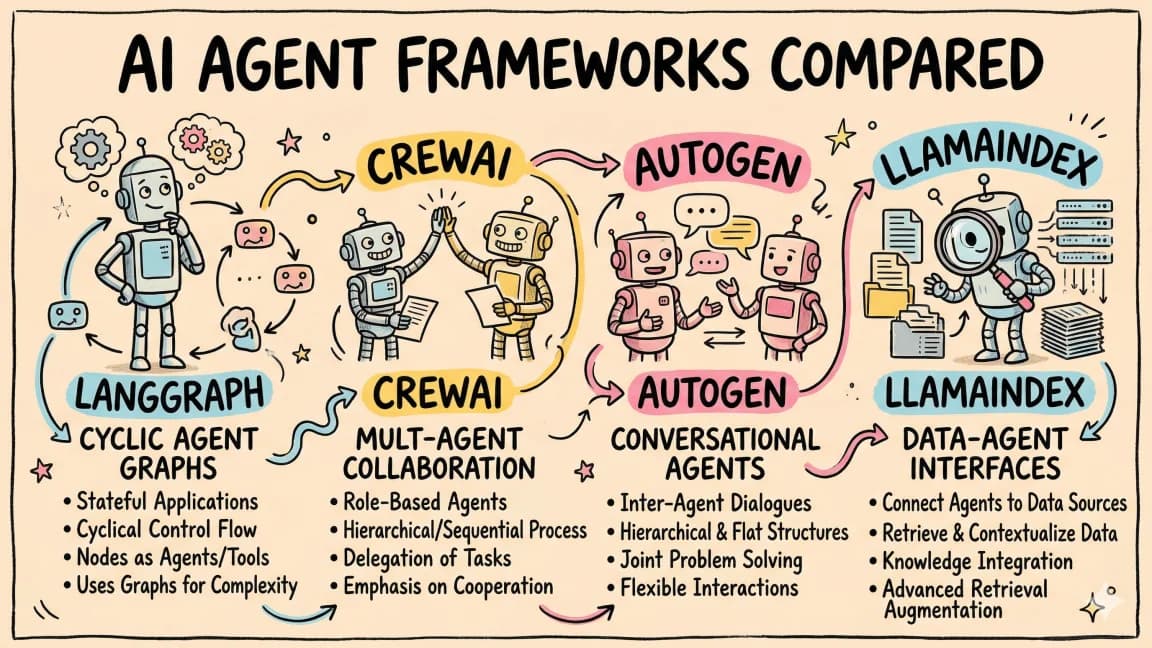
The New AI Coding Stack I Would Pick Today
If I were rebuilding my AI coding workflow on May 30, 2026, I would not pick one magic tool. I would pick a layered stac...

8 min read
AI Coding
The 10 Best AI Coding Tools in 2026
From terminal agents to cloud IDEs - these are the AI coding tools worth using for TypeScript development in 2026.
10 min read
Vibe Coding
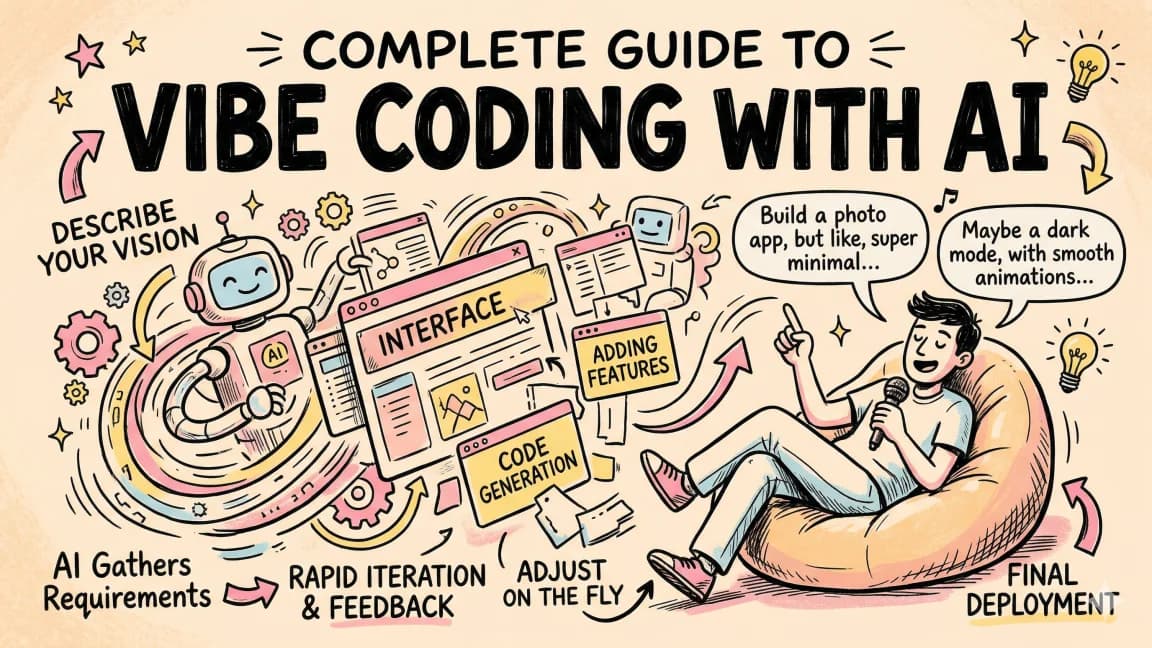
Vibe Coding in 2026: Build Fast Without Losing the Plot
Vibe coding works when you pair natural-language building with repo context, tests, diff review, security checks, and ro...

7 min read
AI Coding
How to Build Full-Stack TypeScript Apps With AI in 2026
A practical guide to building Next.js apps using Claude Code, Cursor, and the modern TypeScript AI stack.
10 min read
MCP
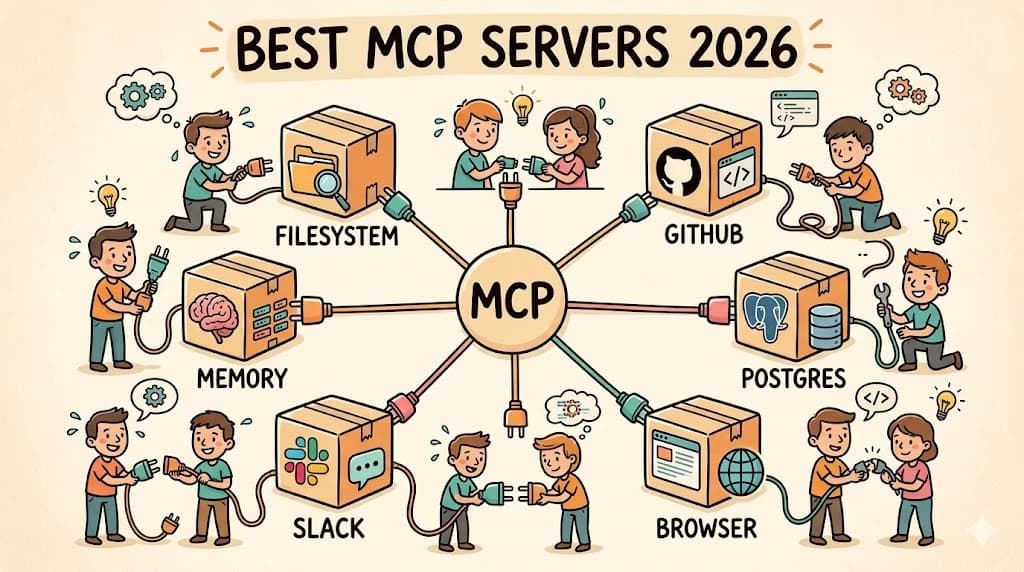
Best MCP Servers in 2026: The Developer Shortlist
A practical ranked list of MCP servers worth installing first for Claude Code, Cursor, Copilot, Codex, and OpenCode: Git...
12 min read
MCP
The Complete Guide to MCP Servers
Everything you need to know about Model Context Protocol - how it works, how to install servers, how to build your own,...

25 min read
Claude Code
60 Claude Code Tips and Tricks for Power Users
The definitive collection of Claude Code tips - sub-agents, hooks, worktrees, MCP, custom agents, keyboard shortcuts, an...
Build with the member tools

Get Smarter About AI Dev
New tutorials, open-source projects, and deep dives on coding agents - delivered weekly.
One email per weekReal code, not theoryFree forever