Claude Science Developer Guide 2026: AI Workbench for Research

TL;DR
Anthropic's Claude Science combines scientific tools, local code execution, and HPC integration into one AI workbench.
Official Sources#
| Source | Description |
|---|---|
| Claude Science Announcement | Anthropic official launch post, June 30 2026 |
| NVIDIA BioNeMo Agent Toolkit | NVIDIA integration announcement |
| Claude Science Pricing | Official Claude pricing page |
| BioNeMo Agent Toolkit on GitHub | Open-source toolkit repository |
| Claude Platform Docs | Model and platform documentation |
Claude Science launched on June 30, 2026 as a beta AI workbench designed for scientific research. Unlike Claude Code, which targets software engineering workflows, Claude Science wraps existing Claude models with specialized tools for laboratory work - local code execution, rich scientific artifacts, database connectors, and remote compute access.
This guide covers what developers and researchers need to know: where to access it, what it costs, how the integration with BioNeMo works, and when Claude Science is the right tool versus Claude Code.
Last updated: July 2, 2026
What Claude Science Is (and Isn't)#
Claude Science is not a new model. It is a desktop application that wraps existing Claude models with scientific infrastructure:
- Local code execution in a sandboxed environment
- Rich artifact rendering for 3D protein structures, genome tracks, chemical structures, and figures
- Database connectors to 60+ curated scientific databases
- Remote compute via SSH to lab workstations and HPC clusters
- Provenance tracking so every figure, table, and manuscript carries its generation code
The core pitch: scientists describe research tasks in natural language, Claude proposes multi-step plans, and the application handles code execution, data retrieval, and artifact generation with full auditability.
Availability and Access#
Current access (July 2026):
| Plan | Access | Notes |
|---|---|---|
| Pro | Yes | $17/month annual, $20/month monthly |
| Max | Yes | From $100/month |
| Team | Yes | Admin must enable first |
| Enterprise | Yes | Admin must enable first |
| Free | No | Not available on free tier |
Supported platforms:
- macOS 13 or later
- Linux x64
- Windows: Not supported at launch
To get started: visit claude.com/science and download the desktop application.
Important for organizations: Team and Enterprise admins must enable Claude Science before members can access it. The feature is off by default during beta.
Pricing#
Claude Science does not have separate pricing. Usage counts against your existing Claude plan limits:
| Plan | Cost | Notes |
|---|---|---|
| Pro | $17/month (annual) or $20/month | Standard Claude Pro usage limits |
| Max | From $100/month | Higher limits, priority access |
| Team Standard | $20/seat/month (annual) | Requires admin enablement |
| Team Premium | $100/seat/month (annual) | 5x usage limits |
| Enterprise | Contact sales | Custom limits and compliance |
Academic discount: Anthropic offers a discounted Team plan for active scientific labs at academic institutions and nonprofit research organizations. Eligibility is verified through the lab's principal investigator.
Grant program: Anthropic is funding up to 50 Claude Science AI for Science projects with up to $30,000 in credits and up to $2,000 in Modal compute. Applications close July 15, 2026. Awards are announced by July 31, 2026. Projects run September 1 through December 1, 2026.
Technical Specifications#
Local Environment#
The default Python environment includes:
- NumPy, pandas, SciPy
- matplotlib, seaborn, Pillow
- Common scientific packages pre-installed
The default R environment includes:
- tidyverse
- ggplot2
- jsonlite
Users can create task-specific environments with additional packages.
Remote Compute#
Claude Science connects via SSH to:
- Lab workstations
- HPC clusters with SLURM job submission
- Cloud compute resources
The application manages job submission and output retrieval. Sensitive datasets stay local - only necessary context is sent to Claude.
Artifact Rendering#
Claude Science natively displays:
- 3D protein structures
- Genome browser tracks
- Chemical structures and molecules
- Figures and visualizations alongside generating code
Every artifact includes:
- The exact code that produced it
- Environment specifications
- Plain-language description
- Full message history for reproducibility
BioNeMo Integration#
The NVIDIA BioNeMo Agent Toolkit is integrated into Claude Science, bringing GPU-accelerated scientific workflows directly into the workbench.
Available Models#
| Model | Category | Description |
|---|---|---|
| Evo 2 | Genomics | DNA/RNA sequence analysis |
| Boltz-2 | Protein structure | Structure prediction |
| OpenFold3 | Protein structure | Open-source structure prediction |
Performance Gains#
The integration delivers significant acceleration:
| Task | Standard | With BioNeMo |
|---|---|---|
| Genomic analysis | Hours | Minutes |
| 1.3M cell preprocessing | 52 minutes | 25 seconds |
| Cheminformatics similarity search | Baseline | Up to 3000x faster |
Access#
BioNeMo workflows are accessed through natural language prompts within Claude Science. The toolkit packages models as containerized NIM microservices with pre-tuned inference endpoints.
Claude Science vs Claude Code#
| Capability | Claude Science | Claude Code |
|---|---|---|
| Primary use | Scientific research | Software development |
| Artifact rendering | 3D structures, molecules, figures | Code, diffs, files |
| HPC integration | SLURM, SSH to clusters | Not built-in |
| Database access | 60+ scientific databases | Filesystem and git |
| BioNeMo integration | Yes | No |
| Platform | macOS, Linux desktop app | Terminal-based |
| Team collaboration | Through artifacts and provenance | Git workflows |
When to use Claude Science:
- Single-cell RNA sequencing analysis
- Protein structure prediction and visualization
- CRISPR screen design
- Literature review with evidence extraction
- Molecular epidemiology studies
- Any workflow requiring rich scientific artifacts
When to use Claude Code:
- Software development and refactoring
- CI/CD pipeline work
- Multi-file code generation
- Terminal-native workflows
Multi-Agent Architecture#
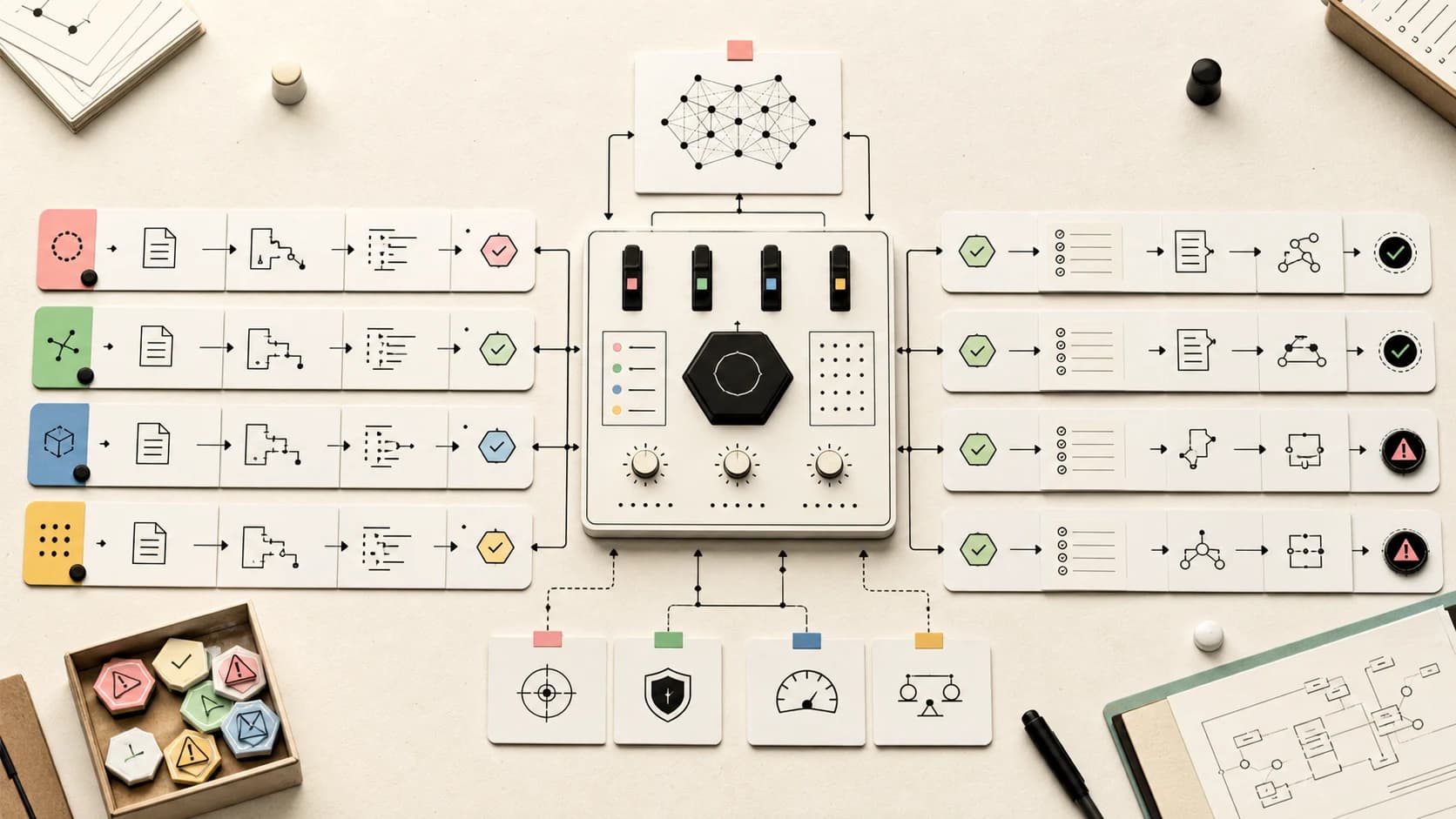
Claude Science uses a coordinating agent with 60+ skills that can spawn specialist agents. A built-in reviewer verifies citations and calculations against execution records.
The permission-based workflow:
- User describes research task in natural language
- Claude proposes a multi-step plan
- User approves plan
- Application requests permission before accessing folders, running code, or using connectors
- Code executes in an OS-level sandbox
- Reviewer checks claims against execution records
- Artifacts are generated with full provenance
Limitations (Beta)#
During beta, be aware of:
- Incomplete admin controls: Organizational dashboards lack full audit logs
- No air-gapped operation: Prompts still sent to Anthropic servers
- Not HIPAA-compliant: Do not use with protected health information during beta
- No Windows support: macOS and Linux only
- Limited reviewer automation on Pro tier: Higher tiers get more automated verification
Real-World Cost Example#
A Forbes article documented a professor mapping their entire field using Claude Science for $26 - the equivalent of a few hours of API usage. The cost scales with complexity, but for many research workflows the economics are favorable compared to manual literature review or custom analysis pipeline development.
Getting Started#
- Verify eligibility: Claude Science requires Pro, Max, Team, or Enterprise plan
- Download the app: Visit claude.com/science
- Connect compute (optional): Add SSH connections to lab workstations or HPC clusters
- Configure environment: Install additional packages as needed
- Start with a task: Describe your research goal in natural language
For academic labs, apply for the discounted Team plan through your principal investigator.
My Take#
Claude Science is Anthropic's bet that workflow ownership beats raw model capability for scientific users. The same way Claude Code became the agentic coding interface rather than just a better code-completion model, Claude Science aims to own the scientific workflow end-to-end.
The BioNeMo integration is strategically smart. 18 of the top 20 pharmaceutical companies already use BioNeMo, so there is an immediate install base in labs Anthropic wants to reach.
The key differentiator is provenance. Scientific figures, tables, notebooks, and manuscripts carry the code, environment, and conversation history that created them. That is a genuine value proposition for reproducibility.
Whether it catches on depends on whether scientists adopt it as their primary interface rather than using Claude directly or via custom pipelines. The beta status and desktop-app requirement create friction. The academic discount and grant program are designed to overcome that.
For developers building research tools or scientific infrastructure, Claude Science is worth watching. The multi-agent architecture and artifact system offer patterns that could influence how AI-assisted research workflows evolve.
FAQ#
What is Claude Science?#
Claude Science is an AI workbench for scientific research that wraps Claude models with specialized tools - local code execution, rich artifact rendering, database connectors, and HPC integration. It launched in beta on June 30, 2026.
How much does Claude Science cost?#
Claude Science uses your existing Claude plan. Pro is $17-20/month, Max starts at $100/month, and Team is $20-100/seat/month. Academic labs can apply for discounted Team pricing.
Is Claude Science available on Windows?#
No. Claude Science currently supports macOS 13+ and Linux x64 only. Windows support is not available at launch.
What is the BioNeMo integration?#
NVIDIA's BioNeMo Agent Toolkit provides GPU-accelerated scientific workflows within Claude Science, including Evo 2 for genomics and Boltz-2/OpenFold3 for protein structure prediction.
How is Claude Science different from Claude Code?#
Claude Science targets scientific research with artifact rendering, HPC integration, and database access. Claude Code targets software development with terminal-native workflows. Use Science for lab work, Code for coding.
Is Claude Science HIPAA compliant?#
No. During beta, Claude Science is not HIPAA compliant. Do not use it with protected health information.
How do I get started with Claude Science?#
Visit claude.com/science with a Pro, Max, Team, or Enterprise account. Download the desktop app and follow the setup instructions.
What is the Claude Science grant program?#
Anthropic is funding up to 50 AI for Science projects with up to $30,000 in credits and $2,000 in Modal compute. Applications close July 15, 2026.
Continue Reading#
- Cowork: Claude Code for Everyone, Not Just Developers
- ChatGPT Work vs Claude Cowork 2026 - Complete Comparison
- Claude Code's Extended Thinking Is a Summary - What That Means for You
- Qualcomm Modular Acquisition: What It Means for AI Developers
Sources#
Verified July 2, 2026.
- Claude Science, an AI workbench for scientists - Anthropic
- NVIDIA BioNeMo Agent Toolkit Brings Accelerated AI to Life Sciences Researchers in Claude Science - NVIDIA Blog
- BioNeMo Agent Toolkit - GitHub
- Plans and Pricing - Claude
- Claude Science: Anthropic AI Workbench, Pricing, Setup and Use Cases - Coursiv
- Anthropic's New AI Workbench Mapped My Field For $26 - Forbes
Get the next deep dive like this in your inbox
One email a week on Claude and the rest of the AI dev stack. Free.
Read next on Claude Code
Claude Code: The Future of Coding?
After 30 days of daily use, Claude Code has become my primary coding tool. It is not trying to be an IDE or a fancy editor. It is a terminal-based AI agent that writes code, runs commands, tests its ...
9 min readClaude Opus 4.8 Is an Agent Honesty Release
Claude Opus 4.8 looks like a benchmark bump, but the developer story is better honesty, dynamic workflows, and effort controls that make long-running agent work easier to review.
8 min readAI Coding Tools Pricing Comparison 2026
AI coding tools pricing, verified September 28, 2026: Claude Code, Codex, Cursor (including Composer 2.5), GitHub Copilot, Google Antigravity, Claude Cowork, Windsurf, and more. Free tiers, pro plans, hidden costs, and what you actually get for your money.
12 min readTechnical content at the intersection of AI and development. Building with AI agents, Claude Code, and modern dev tools - then showing you exactly how it works.