Vertex AI Shutdowns This Week: Gemini 2.5 on October 20, 16 Open Models on October 21
TL;DR
Google Cloud retires Gemini 2.5 Pro, Flash and Flash-Lite on Vertex AI on October 20, 2026, and 16 open MaaS models the next day. Replacement ids, prices, and the code change.
Last updated: October 18, 2026
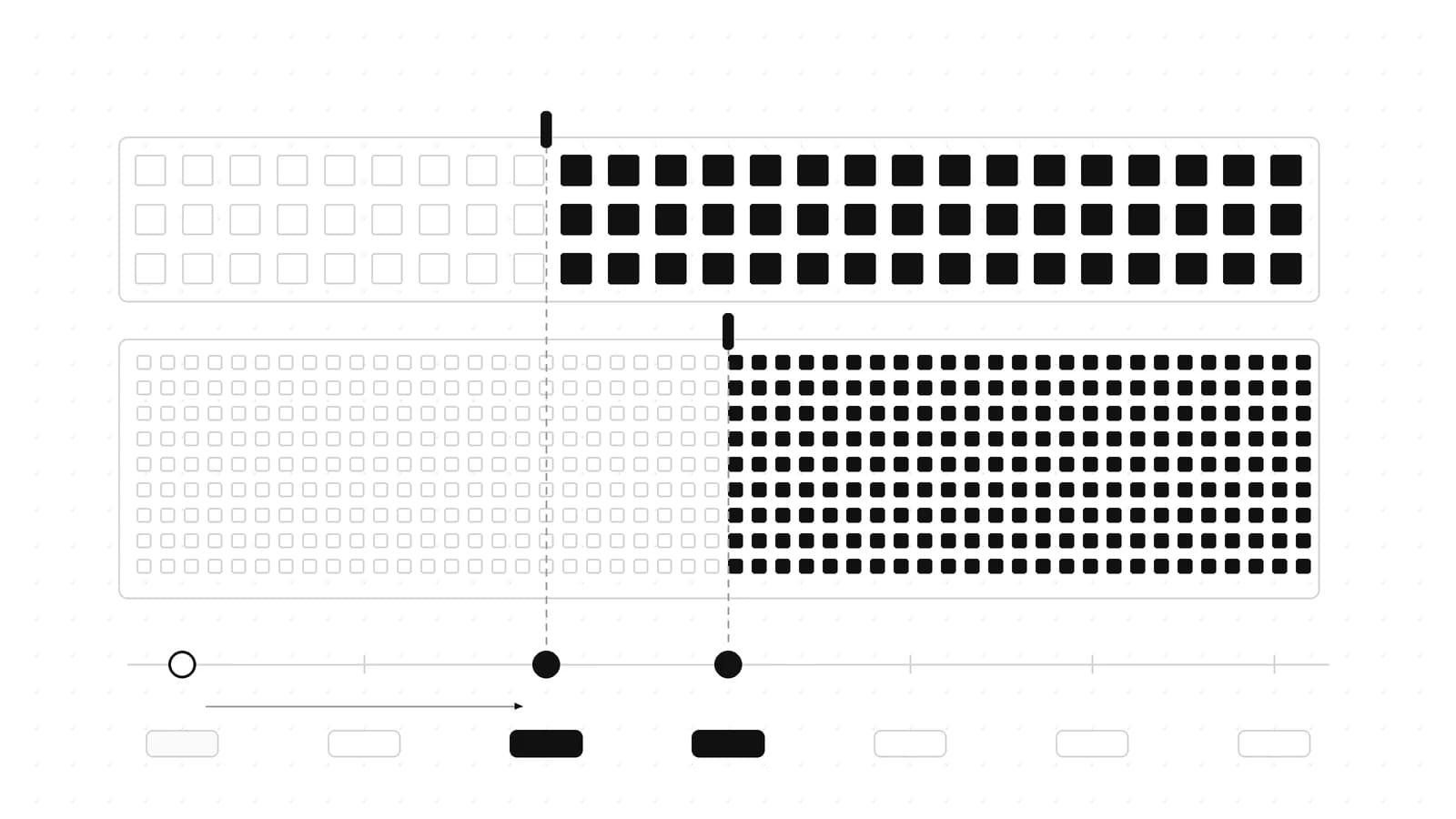
Google Cloud has two shutdowns on back-to-back days this week. On Tuesday, October 20, 2026, gemini-2.5-pro, gemini-2.5-flash and gemini-2.5-flash-lite retire on Vertex AI (now documented as Gemini Enterprise Agent Platform). On Wednesday, October 21, sixteen open models served through Model as a Service (MaaS) retire too, from deepseek-r1-0528-maas to qwen3-coder-480b-a35b-instruct-maas. This post covers what happens on each date, which surface each date applies to, the model ids Google names as replacements, what they cost, and the code change. Everything below was checked against Google's own docs on October 18, 2026.
The two dates, and which surface they apply to#
| Date | Surface | Model ids | What Google says happens |
|---|---|---|---|
| Oct 20, 2026 | Vertex AI only | gemini-2.5-pro, gemini-2.5-flash, gemini-2.5-flash-lite | Retirement. Google's fix-it steps are for "errors caused by models reaching their retirement dates" |
| Oct 21, 2026 | Vertex AI MaaS only | 16 open model ids ending in -maas | "API requests calling a retired model ID will fail" |
| None announced | Gemini API (ai.google.dev) | gemini-2.5-pro, gemini-2.5-flash, gemini-2.5-flash-lite | "No shutdown date announced" |
The Gemini 2.5 date comes from Vertex AI's Model versions and lifecycle page, which lists all three with a retirement date of October 20, 2026. The page does not spell out the failure mode for Gemini models, but its migration section is titled around the problem directly: if you "just need to quickly resolve the errors caused by models reaching their retirement dates", update to the recommended upgrade, test, and deploy. No automatic redirect is documented. The same page promises that "retirement timelines may be extended, they won't be moved to an earlier date", so the date is a floor, not a guess. Neither page gives a time of day or a time zone, so treat Monday night as your deadline.
The MaaS date comes from the Open model deprecations page. It defines retirement plainly: "the model endpoint is permanently deactivated and is no longer accessible or supported. API requests calling a retired model ID will fail." All sixteen were deprecated on July 21, 2026, and the release notes carry the same list under that date.
The Gemini API is a different story. On Google AI for Developers' deprecations page, the stable gemini-2.5-pro, gemini-2.5-flash and gemini-2.5-flash-lite all read "No shutdown date announced" as of October 18. Google's Vertex model page for 3.8 Flash explains the split in a footnote: listed retirement dates "refer to retirement of support in Gemini Enterprise Agent Platform. Models may remain accessible through the Gemini API after these dates have passed. The Gemini API is not a Google Cloud offering and is subject to its own terms of service."
So the same model string can be fine in one codebase and broken in another. If your client is built with vertexai: true, a Google Cloud project and location, or the GOOGLE_GENAI_USE_ENTERPRISE=True environment variable from Google's quickstart, you are on Vertex and October 20 applies. If you call Gemini with an AI Studio API key, it does not, at least not yet. Our Vertex AI deprecations page and Gemini API deprecations page track the two surfaces separately, and the full shutdown calendar puts both next to every other provider's dates.
Gemini 2.5: which model id to switch to#
Google names more than one replacement for each model. From the lifecycle table:
| Retiring on Vertex | Replacement ids Google names |
|---|---|
gemini-2.5-pro | gemini-3.8-flash or gemini-3.5-flash |
gemini-2.5-flash | gemini-3.8-flash, gemini-3.5-flash-lite or gemini-3.1-flash-lite |
gemini-2.5-flash-lite | gemini-3.8-flash, gemini-3.1-flash-lite or Gemma 4 |
gemini-3.8-flash is the one id that appears in all three rows, and it is the replacement our deprecations tracker records. It went GA on September 2, 2026 with a listed retirement date of "September 2, 2027 or later", so it is a long-term model, not a stopgap. Its model page lists the same 1,048,576-token context window and 65,536 maximum output tokens as the 2.5 models, so you do not lose headroom. Compare them on our context window table and knowledge cutoff table.
One thing to notice: Google does not list a Pro-class model as the replacement for gemini-2.5-pro. Both named ids are Flash models. If you chose 2.5 Pro for hard reasoning, run your evals before assuming 3.8 Flash covers it. Gemini 4 Argon went GA on Vertex on October 13, and our Gemini 4 Argon guide covers it, but it is not in Google's replacement column, so that choice is ours to make, not Google's recommendation.
One regional catch. The 3.8 Flash page lists availability only on global and the us and eu multi-regions. If your code pins a single region such as us-central1, changing the model id alone is not enough; change the location too.
Model pages on our side: Gemini 3.8 Flash, Gemini 3.5 Flash-Lite, Gemini 3.1 Flash-Lite, and the retiring Gemini 2.5 Pro, Gemini 2.5 Flash and Gemini 2.5 Flash-Lite. The Google provider hub lists the whole lineup.
What the replacement costs#
Prices per million tokens, Standard pay-as-you-go, global endpoint, read from the Vertex AI pricing page on October 18, 2026. The 3.8 Flash figures match the Gemini API rates in our model facts data.
| Model | Input | Output | Cached input |
|---|---|---|---|
gemini-2.5-pro (up to 200K input) | $1.25 | $10.00 | $0.125 |
gemini-2.5-pro (over 200K input) | $2.50 | $15.00 | $0.25 |
gemini-2.5-flash | $0.30 | $2.50 | $0.03 |
gemini-2.5-flash-lite | $0.10 | $0.40 | $0.01 |
gemini-3.8-flash, through Dec 31, 2026 | $0.75 | $3.75 | $0.075 |
gemini-3.8-flash, from Jan 1, 2027 | $1.50 | $7.50 | $0.15 |
gemini-3.5-flash | $1.50 | $9.00 | $0.15 |
gemini-3.5-flash-lite | $0.30 | $2.50 | $0.03 |
gemini-3.1-flash-lite (text, image, video input) | $0.25 | $1.50 | $0.025 |
Three details from the pricing page itself. The 3.8 Flash row through December 31 carries an asterisk whose footnote reads "Promotional pricing provided through 50% credits back on net spend on select models within a given period", and from January 1, 2027 the page lists double the rate. Non-global endpoints cost 10% more ($0.825 / $4.125 for 3.8 Flash this year). And 3.8 Flash has the same price above and below 200K input tokens, unlike 2.5 Pro.
What that means for each starting point:
- From 2.5 Pro: 3.8 Flash is cheaper on both input and output this year. From January, input ($1.50) costs more than 2.5 Pro's $1.25, output ($7.50) still less than $10.00, and long prompts get much cheaper because there is no long-context tier.
- From 2.5 Flash: 3.8 Flash costs 2.5x on input and 1.5x on output this year, then 5x and 3x from January.
gemini-3.5-flash-litematches 2.5 Flash's price exactly and is also on Google's list for it. - From 2.5 Flash-Lite: 3.8 Flash is a large step up.
gemini-3.1-flash-lite($0.25 / $1.50) is the cheapest Gemini id Google names for you; its third option, Gemma 4, links to a self-deploy Model Garden card.
Also on the pricing page: Batch and Flex run at half of Standard for these models (3.8 Flash Batch is $0.375 / $1.875 this year), which is worth checking if your 2.5 Flash-Lite traffic was offline work.
What changes in the code#
Here is Google's own Python quick start from the Get started page, after pip install --upgrade google-genai and these environment variables:
export GOOGLE_CLOUD_PROJECT=GOOGLE_CLOUD_PROJECT_ID
export GOOGLE_CLOUD_LOCATION=global
export GOOGLE_GENAI_USE_ENTERPRISE=True
from google import genai
from google.genai.types import HttpOptions

client = genai.Client(http_options=HttpOptions(api_version="v1"))
response = client.models.generate_content(
    model="gemini-3.5-flash",
    contents="How does AI work?",
)
print(response.text)
For a 2.5 caller, the minimum change is the model string:
 response = client.models.generate_content(
-    model="gemini-2.5-flash",
+    model="gemini-3.8-flash",
     contents="How does AI work?",
 )
Worth knowing: the same Get started page still uses gemini-2.5-flash in its REST, Go, Java and C# samples on October 18, so if your service started life as a copy of Google's quick start, grep for it.
Google's migration guide lists the parameter changes that matter when you leave 2.5:
- Thinking: Gemini 3 Pro and later models use
thinking_levelinstead ofthinking_budget. The raw budget is "no longer recommended across all Gemini 3.x models" (it only hard-fails with HTTP400on Gemini 4). Per the thinking docs, 3.8 Flash acceptsLOW,MEDIUMorHIGHand defaults toMEDIUM;MINIMALis not in its list. - Sampling: "
temperature,top_p, andtop_kare no longer recommended for all Gemini 3.x models... Remove these parameters from all requests." - Function calling: every
FunctionResponsemust carry theidfrom itsFunctionCall, with a matchingnameand one response per call. Mismatches return empty responses withfinish_reason: STOP"in most cases". - PDFs and media: "Token consumption for PDFs may increase", and for Gemini 3 Pro and later models, "OCR is not used by default when processing scanned PDFs."
- Fine-tunes: a tuned 2.5 model cannot move. "You need to run a new tuning job", and the 3.8 Flash page lists tuning as not supported.
If you set a thinking budget on 2.5, this is the shape of the replacement. It combines the quick start above with the ThinkingConfig fragment from Google's thinking page, filling its THINKING_LEVEL_VALUE placeholder with one of the documented values:
from google import genai
from google.genai import types

client = genai.Client(http_options=types.HttpOptions(api_version="v1"))
response = client.models.generate_content(
    model="gemini-3.8-flash",
    contents="How does AI work?",
    config=types.GenerateContentConfig(
        thinking_config=types.ThinkingConfig(
            # gemini-3.8-flash accepts LOW, MEDIUM (default) or HIGH
            thinking_level=types.ThinkingLevel.LOW
        )
    ),
)
print(response.text)
The 16 MaaS models on October 21#
For open models, Google does not name a replacement model id. The deprecations table offers "a recommended self-deploy alternative" for each one (a Model Garden card for deploying the same weights on your own endpoint) and adds that "you can migrate your workloads to alternative managed endpoints before the retirement date" without naming any.
So the third column below is our suggestion, not Google's. It lists the managed models in the same family that Google's open models for MaaS list still carries and that are not on the October 21 list. Note that the MaaS list still shows all sixteen retiring models as of October 18.
| Retiring Oct 21 | Google's alternative | Same-family managed model (our suggestion) |
|---|---|---|
deepseek-r1-0528-maas | Self-deploy DeepSeek-R1 | deepseek-v4.1-flash-maas |
deepseek-v3.1-maas | Self-deploy DeepSeek-V3.1 | deepseek-v4.1-flash-maas |
deepseek-v3.2-maas | Self-deploy DeepSeek-V3.2 | deepseek-v4.1-flash-maas |
deepseek-ocr-maas | Self-deploy DeepSeek-OCR | None in the family |
glm-4.7-maas | Self-deploy GLM 4.7 | glm-5.2-maas |
glm-5-maas | Self-deploy GLM 5 | glm-5.2-maas |
gpt-oss-20b-maas | Self-deploy GPT OSS | gpt-oss-120b-maas |
llama-3.3-70b-instruct-maas | Self-deploy Llama 3.3 | llama-4-scout-17b-16e-instruct-maas or llama-4-maverick-17b-128e-instruct-maas |
kimi-k2-thinking-maas | Self-deploy Kimi K2 | None in the family |
minimax-m2-maas | Self-deploy MiniMax M2 | None in the family |
qwen3-235b-a22b-instruct-2507-maas | Self-deploy Qwen3 | None in the family |
qwen3-coder-480b-a35b-instruct-maas | Self-deploy Qwen3 Coder | None in the family |
qwen3-next-80b-a3b-instruct-maas | Self-deploy Qwen3 Next | None in the family |
qwen3-next-80b-a3b-thinking-maas | Self-deploy Qwen3 Next | None in the family |
multilingual-e5-large-instruct-maas | Self-deploy E5 Text Embedding | None in the family |
multilingual-e5-small-maas | Self-deploy E5 Text Embedding | None in the family |
Read the fine print on the suggestions before you switch. They are not all long-term:
deepseek-v4.1-flash-maasis Preview, released October 14,globalonly, and its page says the endpoint "is available until at least November 28, 2026". If you were ondeepseek-v3.1-maasordeepseek-r1-0528-maasinus-central1, the region changes too. Pricing: $0.30 input / $1.20 output, against $0.60 / $1.70 for V3.1, $0.56 / $1.68 for V3.2 and $1.35 / $5.40 for R1. Our DeepSeek 4.1 Flash write-up covers how it behaves as a coding model, and its model page has the specs.glm-5.2-maasis Preview, released August 24, and its page says it "is available until at least October 31, 2026". That is ten days of guaranteed runway. Pricing is $1.40 / $4.40, above GLM 4.7 ($0.60 / $2.20) and GLM 5 ($1.00 / $3.20). See GLM 5.2.gpt-oss-120b-maasis GA with no retirement date on its page, at $0.09 / $0.36 against $0.07 / $0.25 for the 20B.- Llama 4 Scout and Maverick are GA,
us-east5only, with an 8,192-token output cap. Scout is $0.25 / $0.70 and Maverick $0.35 / $1.15, both below Llama 3.3 70B's $0.72 / $0.72. Our Llama 4 guide covers the differences. - E5 embeddings: no managed E5 model remains. Vertex's own
gemini-embedding-001(retirement "No sooner than May 20, 2028") andgemini-embedding-2(no retirement date listed) are the embedding models on the lifecycle page without a 2027 date, but any switch means new vectors and a full re-index. Our embedding model guide covers that trade. - Kimi, MiniMax and Qwen3: the managed path ends in the family. Self-deploying from Model Garden keeps the same weights; anything else is a model change that needs evals.
All prices above are per million tokens from the Vertex pricing page on October 18.
The MaaS code change#
Google's Call MaaS APIs for open models page uses the OpenAI-compatible Chat Completions endpoint, with deepseek-ai/deepseek-v3.1-maas as its example model name: Our API compatibility reference lists the OpenAI-compatible base URLs for other providers if you move off Vertex entirely.
from openai import OpenAI
client = OpenAI()
stream = client.chat.completions.create(
    model="MODEL",
    messages=[{"role": "ROLE", "content": "CONTENT"}],
    max_tokens=MAX_OUTPUT_TOKENS,
    stream=True,
)
for chunk in stream:
    print(chunk.choices[0].delta.content or "", end="")
The REST endpoint on that page is https://LOCATION-aiplatform.googleapis.com/v1/projects/PROJECT_ID/locations/LOCATION/endpoints/openapi/chat/completions. For DeepSeek, the swap is:
 stream = client.chat.completions.create(
-    model="deepseek-ai/deepseek-v3.1-maas",
+    model="deepseek-ai/deepseek-v4.1-flash-maas",
Google's DeepSeek V4.1 Flash page writes the id as deepseek-v4.1-flash-maas; the deepseek-ai/ prefix above follows the format of Google's own V3.1 example, so confirm the exact string on the model card before you ship it. Because V4.1 Flash is documented on global only, point the client at the global endpoint as well. Google's partner model docs give the global URL format as https://aiplatform.googleapis.com/v1/projects/PROJECT_ID/locations/global/..., with no region prefix on the host.
One more copy-paste trap: Google's Use open models with MaaS page still uses meta/llama-3.3-70b-instruct-maas as its Gen AI SDK example, and that id retires on Wednesday.
Checklist for this week#
- Find every model string. Search code, config, prompt registries and infrastructure files for
gemini-2.5-and-maas. Include tuned-model endpoints and batch jobs. - Confirm the surface. Vertex (project, location,
vertexai: true,aiplatform.googleapis.com) is affected. A Gemini API key is not affected by October 20. - Pick the id per row. Gemini 2.5 to
gemini-3.8-flash, or the cheaper Flash-Lite ids Google lists. For MaaS, decide between self-deploy (Google's alternative) and a managed model (our table). - Check the location. 3.8 Flash is
global,usoreu. DeepSeek V4.1 Flash and GLM 5.2 areglobal. Llama 4 isus-east5. - Update parameters. Replace
thinking_budgetwiththinking_level, removetemperature/top_p/top_kon Gemini 3.x, and check function response ids. - Re-run your evals and a load test on the new id, then deploy before Monday night. Watch PDF token counts and the January 1 price change.
- Set the next reminder.
glm-5.2-maasis only guaranteed to October 31 anddeepseek-v4.1-flash-maasto November 28.
If you need a template for the eval-then-switch step, the GPT retirement checklist is the same process for OpenAI, and the Copilot Gemini deprecation post covers the IDE side of the Gemini 2.5 Pro exit.
FAQ#
Is Gemini 2.5 Flash shutting down?#
On Vertex AI, yes: gemini-2.5-flash, gemini-2.5-pro and gemini-2.5-flash-lite retire on October 20, 2026. On the Gemini API at ai.google.dev, the deprecations page shows "No shutdown date announced" for all three as of October 18, 2026.
What should I replace Gemini 2.5 Pro with on Vertex AI?#
Google's lifecycle table names gemini-3.8-flash or gemini-3.5-flash. Both are Flash models; Google does not list a Pro-class replacement, so test hard reasoning tasks before you switch.
Will Vertex AI redirect gemini-2.5-flash to a newer model?#
No redirect is documented. Google's migration steps talk about resolving "the errors caused by models reaching their retirement dates", so plan for failed requests, not a silent swap.
What happens to deepseek-r1-0528-maas and the other MaaS models?#
They retire on October 21, 2026. Google's open model deprecations page says the endpoint is "permanently deactivated" and "API requests calling a retired model ID will fail". Google recommends self-deploying the same model from Model Garden; it does not name a managed replacement id.
How much does gemini-3.8-flash cost on Vertex AI?#
$0.75 input, $3.75 output and $0.075 cached input per million tokens on the global endpoint through December 31, 2026, then $1.50, $7.50 and $0.15 from January 1, 2027, per Google's pricing page on October 18.
Continue Reading#
- AI Model Shutdown Dates 2026-2027: Calendar and Migration Plan - every provider's dates by month, including the later Vertex retirements
- Gemini 2.5 Pro and Gemini 3 Flash Deprecated in GitHub Copilot - the same model leaving the IDE side
- Gemini 4 Argon: What Developers Can Actually Use - the newest Gemini model on Vertex, if 3.8 Flash is not enough for your 2.5 Pro workloads
- MiniMax M2.5 and M2.7 Retirement: How to Move to M3 Before November 18 - the next dated shutdown, on MiniMax's own API
- Gemini Live and TTS Preview Models Retire November 17 - the next Google deadline, on the Gemini API rather than Vertex: Live and TTS preview models moving to Gemini 3.8
Sources#
All accessed October 18, 2026.
- Vertex AI (Gemini Enterprise Agent Platform) model versions and lifecycle - Gemini 2.5 retirement dates and replacement ids
- Vertex AI open model deprecations - the 16 MaaS retirements and self-deploy alternatives
- Gemini Enterprise Agent Platform release notes - July 21, 2026 open model deprecation entry
- Gemini API deprecations - Gemini 2.5 stable models with no shutdown date
- Gemini 3.8 Flash on Vertex AI - limits, regions, retirement date, Gemini API footnote
- Vertex AI generative AI pricing - Gemini and MaaS prices
- Get started with Gemini Enterprise Agent Platform - Gen AI SDK quick start
- Migrate to the latest Gemini models - parameter and behaviour changes from 2.5
- Thinking -
thinking_levelvalues per model - Open models for MaaS - current managed open model list
- DeepSeek-V4.1-Flash on Vertex AI - id, stage, region, availability window
- GLM 5.2 on Vertex AI - id, stage, region, availability window
- gpt-oss 120B on Vertex AI - id, stage, region
- Llama 4 Scout and Llama 4 Maverick on Vertex AI - ids, region, output cap
- Call MaaS APIs for open models - OpenAI-compatible sample and endpoint
- Use open models with MaaS - Gen AI SDK sample
- Partner models for MaaS - global endpoint URL format
Get the next deep dive like this in your inbox
One email a week on google and the rest of the AI dev stack. Free.
Read next
AI Model Shutdown Dates 2026-2027: Calendar and Migration Plan
Every scheduled AI model API shutdown through mid 2027 by month: GPT-4o on Jan 14, whisper-1 on Feb 26, Claude Sonnet 4.5 on Nov 30, plus how to migrate.
17 min readGemini 2.5 Pro and Gemini 3 Flash Deprecated in GitHub Copilot: What to Switch To
Gemini 2.5 Pro and Gemini 3 Flash are deprecated in GitHub Copilot. What GitHub suggests instead, the October follow-up deprecations, and how to migrate.
5 min readMigrating Off Retired GPT Models in 2026: A Working Checklist
Migrating off retired GPT models in 2026: the live retirement table, what maps to what, an eval-before-switch day plan, and when to jump providers.
10 min readNew here? Start with
Technical content at the intersection of AI and development. Building with AI agents, Claude Code, and modern dev tools - then showing you exactly how it works.