How Anthropic Merges 30,000 Code Changes a Day: Addy Osmani on Verifying the Software Factory
AI Engineer 2026: Anthropic Talks
21 parts- 1Claude for Long-Horizon Tasks: Lance Martin's Four Rules for Agents That Run for Hours
- 2Inside the Claude Managed Agents Workshop: Pets, Cattle, Outcomes and Dreaming
- 3How Anthropic Builds: Mike Krieger on Being Unreasonable With Claude
- 4How Jarred Sumner Ships Millions of Lines of Agent-Written Code
- 5A Field Guide to Fable: Thariq Shihipar on Unhobbling Claude and Finding Your Unknowns
- 6Claude Tag Lands 65% of Anthropic's Product PRs: Takeaways From Cat Wu and Thariq Shihipar
- 71,000 Claude Agents, Git and a Database: How Fable 5.2 Formalized Fermat Without a Custom Harness
- 8Your Old Prompts Are Making Claude Worse: Lance Martin's Checklist for Frontier Models
- 9Why One Agent Isn't Enough: Anthropic on Flows, UltraCode and Running 1,000 Agents
- 10Tokens Should Have Jobs: Anthropic's Case for Advisors, Graders and Dreamers
- 11Give the Agent a Budget, Not a Token: Anthropic's CI Team on Safe Agent Permissions
- 12Rethinking Claude Code Best Practices: Lydia Hallie on Getting Out of the Loop Safely
- 13How Anthropic Merges 30,000 Code Changes a Day: Addy Osmani on Verifying the Software FactoryCurrent
- 14Using LLMs to Secure Source Code: Eugene Yan's Six-Step Pipeline From Anthropic
- 15From Messages API to Managed Agents: Anthropic's Applied AI Team on Harnesses That Go Stale
- 16Forward Deployed Engineering 101: When Your AI Startup Needs FDEs, From Palantir to Anthropic
- 17The Enterprise Tech Stack for AI Agents: Why Your POC Stalls and How to Design Past It
- 18The Claude Certified Architect Exam as a Field Guide to Agentic Engineering
- 19The Future of MCP: David Soria Parra on Connectivity, Progressive Discovery and Skills Over MCP
- 20Gateways Are All You Need: How Anthropic Thinks About MCP in the Enterprise
- 21How to Build Agents That Run for Hours: Anthropic's Planner, Generator and Evaluator Harness
TL;DR
Addy Osmani of Anthropic and Manish Kapur of Sonar on going from 2,500 to 30,000 merged changes a day: light vs dark software factories, evidence-based review and earned autonomy.
Anthropic went from merging about 2,500 code changes a day in May 2026 to more than 30,000 a day by September. At an AI Engineer session hosted by Manish Kapur of Sonar, Addy Osmani, who joined Anthropic after about fourteen years at Google and works on the Claude Code developer experience, explained what review looks like at that volume.
It is a short conversation, but it is one of the clearest public descriptions of how Anthropic thinks about review when agents write most of the code.
Source: How Anthropic Merges 30,000 Code Changes a Day, Manish Kapur (Sonar) and Addy Osmani (Anthropic), AI Engineer. Survey figures cited are Sonar's and CircleCI's, as presented in the talk.
The Gap: Writing Is Fast, Merging Is Not#
Kapur opens with an industry snapshot. CircleCI analyzed 28 million CI workflows this year and found throughput up about 59%, yet roughly three in ten attempts to merge into production fail. Sonar's upcoming State of Code survey of over a thousand developers adds that most organizations now use coding agents, that a large majority of developers say code arrives faster than they can verify it, and that PRs are getting larger and more complex.
The framing that follows: writing code is the solved, fast part. Confidence is the scarce part.
Light Factories and Dark Factories#
Osmani defines a software factory as "harnessing loops at scale," from their essay Software Factories, Light and Dark:
- A lights-on factory: agents help plan, build, check and ship, again and again, but a person applies judgment and taste inside the loop.
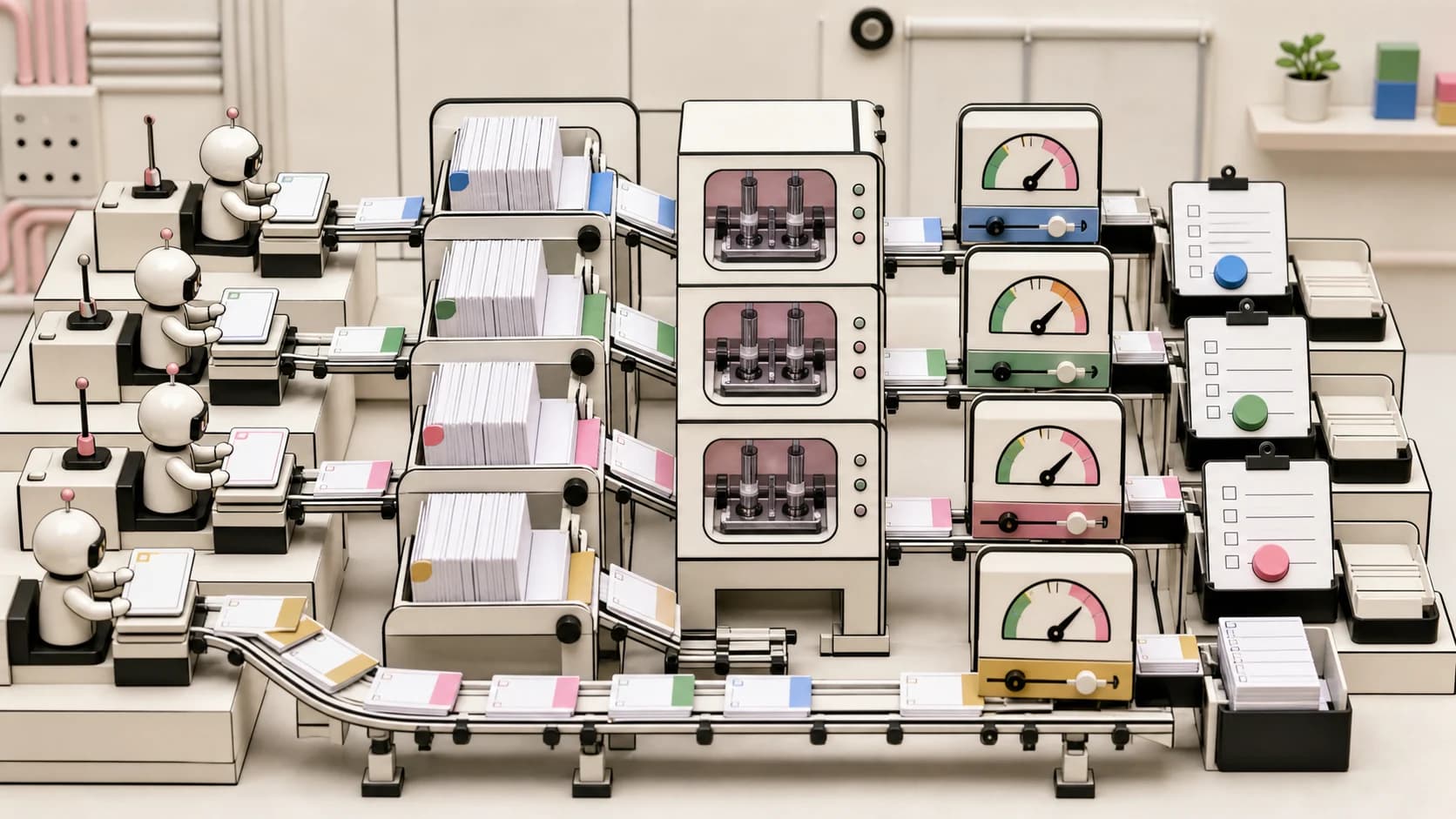
- A dark factory: like a robotic car plant, agents scope, build and check continuously, and the person moves out to intent and is only pulled in for real exceptions.
Most teams are somewhere on that spectrum. How far toward dark you can go depends on how much verification the agents can generate to earn your trust. Their forecast in the lightning round: by the end of 2027, most teams will run light factories with some dark corners. Kapur guessed Anthropic itself would get there sooner.
How Review Works at Anthropic#
Osmani walked through the workflow:
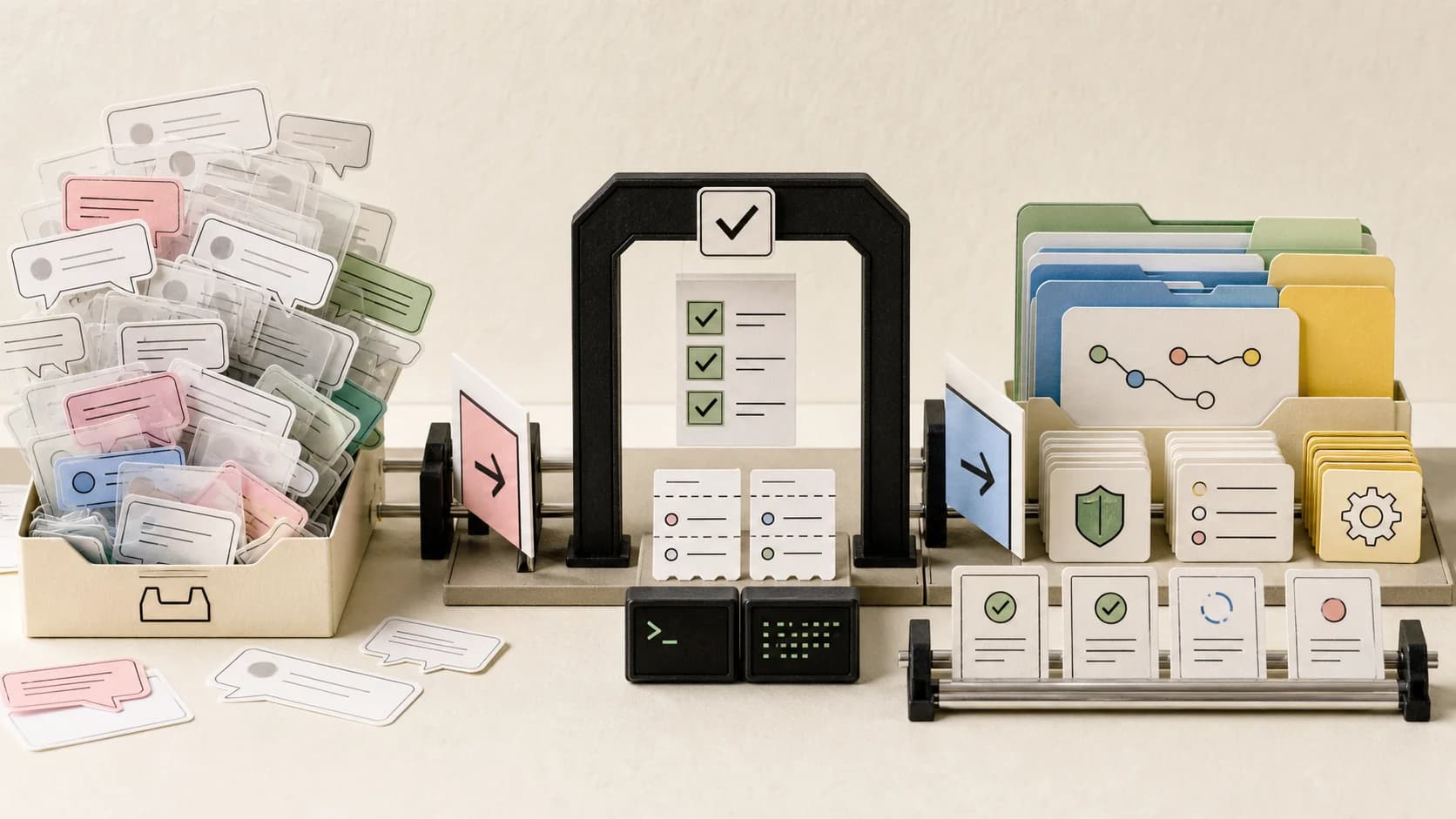
- Claude does a first-pass review of every change, and crucially it can try the experience like a real user: end-to-end tests, opening the app in a browser, running tools and linters, whatever builds confidence.
- Hooks run on edits and study diffs, so when a bug or gap is found the PR is corrected in a tight loop.
- Anthropic's code review product automates as much of review as possible, and the team uses it internally.
- Taste is codified in shared files like CLAUDE.md and AGENTS.md so the reviewing agent can consult the team's standards.
- People review evidence, not diffs. For a UI change, that might be a video of the agent clicking through the feature in a browser, or screenshots across mobile and desktop.
They also mentioned that the recent claude.ai refresh, which Anthropic says roughly tripled its performance, involved about 3,000 pull requests landed in a short window by engineers, designers and other functions.
The key line for practitioners: when you tell people to "verify the work," their next question is "what does that mean?" Osmani's specific answer is end-to-end tests, property-based tests and visual verification tests, the kinds that give enough confidence to merge automatically. If you have correct-and-complete checks in place, they say, the quality of agent output can improve two to three times. We cover the same pattern in Claude Code's team verification system, and Lydia Hallie lays out the Claude Code mechanics in rethinking Claude Code best practices.
%% title: Evidence-based review loop
flowchart TD
  A[Agent opens PR] --> R[Claude first-pass review, tries it like a user]:::emphasis
  R --> H[Hooks fix gaps on each edit]
  H --> E[Evidence: tests, screenshots, video]
  E --> P{Human reviews evidence, scaled by risk}
  P --> M[Merge]
Layered Verification#
Kapur described Sonar's view of multi-layered, zero-trust verification in every loop, whether inside the agent loop, in CI or during maintenance:
- A deterministic layer for known bug and security patterns like SQL injection and buffer overflows.
- An agentic review layer for logic and intent problems that deterministic tools are poorly suited to catch.
- A supply chain layer for CVEs, malware and malicious packages.
Each layer is tuned for one class of problem. That split is a useful way to audit your own pipeline: if all your verification is agentic, you are paying a model to catch what a linter would catch for free; if it is all deterministic, intent bugs walk straight through.
Control, Permissions and the Sandbox#
Osmani described a pattern they have seen at many companies: teams were told to experiment with agents, and a few months later there were hundreds or thousands of agents touching systems and data, maybe deploying to production, with nobody sure what they were doing. The three things enterprises now ask about most are control, permissions and the sandbox, plus agent identity and telemetry. Sonar calls its version "guide rails" rather than guardrails. For a concrete implementation, see Sachin Malhotra's budget, not a token talk.
Lightning Round Answers#
- Should agent-written code be labeled in the PR? Both said yes. Osmani noted Anthropic has moved past pride of authorship: they do not mind Claude being labeled as the author because the focus is outcomes, and labels help decide which extra checks apply. But accountability stays human: if they kicked off the Claude run, they are on the hook if it breaks. Kapur added auditability for regulated industries.
- One skill to build this year? For leaders: push your team to define what verification means, and measure the gap between today's testing and the point where agents can sign off on merges. For juniors: get hands-on experience with every flavor of test, from end-to-end to property-based.
- When is an agent's PR safe to merge? When you have full confidence nothing will go wrong, or you have mitigated the risk as much as possible.
Our Take#
The headline number is 30,000, but the operating principle is autonomy is earned by verification. Anthropic did not get to that volume by reviewing faster. It got there by making agents produce evidence (tests that exercise the real experience, recordings, screenshots) and having humans judge the evidence, with review depth scaled to risk.
If your team wants to move toward a darker factory, the order of operations from this talk is clear: codify your standards where agents can read them, invest in end-to-end, property and visual tests, layer deterministic and agentic checks, and only then turn on auto-merge for the lowest-risk changes. Our earlier piece on why software factories fail without harness engineering covers what happens when teams skip those steps.
FAQ#
How many code changes does Anthropic merge per day?#
According to Anthropic, about 2,500 a day in May 2026 and more than 30,000 a day by September 2026.
What is a dark software factory?#
A setup where agents continuously scope, build and check software, and humans focus on intent and only handle exceptions. A lights-on factory keeps human judgment inside the loop.
What tests matter most for merging agent code automatically?#
Addy Osmani pointed to end-to-end tests, property-based tests and visual verification tests, since they build enough confidence to merge without line-by-line review.
Sources#
- How Anthropic Merges 30,000 Code Changes a Day - video
- Software Factories, Light and Dark - Addy Osmani
- Human judgment doesn't leave the software factory. It relocates. - Addy Osmani
- Agent Skills - Addy Osmani's reusable engineering workflows
The Full Series#
This post is part of our coverage of Anthropic's talks at AI Engineer 2026:
- Claude for Long-Horizon Tasks: Lance Martin's Four Rules for Agents That Run for Hours
- Inside the Claude Managed Agents Workshop: Pets, Cattle, Outcomes and Dreaming
- How Anthropic Builds: Mike Krieger on Being Unreasonable With Claude
- How Jarred Sumner Ships Millions of Lines of Agent-Written Code
- A Field Guide to Fable: Thariq Shihipar on Unhobbling Claude and Finding Your Unknowns
- Claude Tag Lands 65% of Anthropic's Product PRs: Takeaways From Cat Wu and Thariq Shihipar
- 1,000 Claude Agents, Git and a Database: How Fable 5.2 Formalized Fermat Without a Custom Harness
- Your Old Prompts Are Making Claude Worse: Lance Martin's Checklist for Frontier Models
- Why One Agent Isn't Enough: Anthropic on Flows, UltraCode and Running 1,000 Agents
- Tokens Should Have Jobs: Anthropic's Case for Advisors, Graders and Dreamers
- Give the Agent a Budget, Not a Token: Anthropic's CI Team on Safe Agent Permissions
- Rethinking Claude Code Best Practices: Lydia Hallie on Getting Out of the Loop Safely
- Using LLMs to Secure Source Code: Eugene Yan's Six-Step Pipeline From Anthropic
- From Messages API to Managed Agents: Anthropic's Applied AI Team on Harnesses That Go Stale
- Forward Deployed Engineering 101: When Your AI Startup Needs FDEs, From Palantir to Anthropic
- The Enterprise Tech Stack for AI Agents: Why Your POC Stalls and How to Design Past It
- The Claude Certified Architect Exam as a Field Guide to Agentic Engineering
- The Future of MCP: David Soria Parra on Connectivity, Progressive Discovery and Skills Over MCP
- Gateways Are All You Need: How Anthropic Thinks About MCP in the Enterprise
- How to Build Agents That Run for Hours: Anthropic's Planner, Generator and Evaluator Harness
Continue Reading#
Get the next deep dive like this in your inbox
One email a week on Anthropic and the rest of the AI dev stack. Free.
Read next on Claude Code
Why Software Factories Fail: Harness Engineering Is Not Enough
A deep dive into why fully autonomous AI coding agents degrade codebases over time, and what context engineering can actually fix.
9 min readClaude Code Verification System: What Anthropic's Team Actually Does
Anthropic says Claude writes and reviews about 90% of the Claude Code team's code. The interesting part is the verification layer - and which pieces you can copy Monday.
8 min readRethinking Claude Code Best Practices: Lydia Hallie on Getting Out of the Loop Safely
Lydia Hallie of the Claude Code team on how best practices moved from the human to the model, harness and environment: auto mode, deny rules, sandboxes, exit-code-2 hooks and orchestrators.
9 min readTechnical content at the intersection of AI and development. Building with AI agents, Claude Code, and modern dev tools - then showing you exactly how it works.