The Future of MCP: David Soria Parra on Connectivity, Progressive Discovery and Skills Over MCP
AI Engineer 2026: Anthropic Talks
21 parts- 1Claude for Long-Horizon Tasks: Lance Martin's Four Rules for Agents That Run for Hours
- 2Inside the Claude Managed Agents Workshop: Pets, Cattle, Outcomes and Dreaming
- 3How Anthropic Builds: Mike Krieger on Being Unreasonable With Claude
- 4How Jarred Sumner Ships Millions of Lines of Agent-Written Code
- 5A Field Guide to Fable: Thariq Shihipar on Unhobbling Claude and Finding Your Unknowns
- 6Claude Tag Lands 65% of Anthropic's Product PRs: Takeaways From Cat Wu and Thariq Shihipar
- 71,000 Claude Agents, Git and a Database: How Fable 5.2 Formalized Fermat Without a Custom Harness
- 8Your Old Prompts Are Making Claude Worse: Lance Martin's Checklist for Frontier Models
- 9Why One Agent Isn't Enough: Anthropic on Flows, UltraCode and Running 1,000 Agents
- 10Tokens Should Have Jobs: Anthropic's Case for Advisors, Graders and Dreamers
- 11Give the Agent a Budget, Not a Token: Anthropic's CI Team on Safe Agent Permissions
- 12Rethinking Claude Code Best Practices: Lydia Hallie on Getting Out of the Loop Safely
- 13How Anthropic Merges 30,000 Code Changes a Day: Addy Osmani on Verifying the Software Factory
- 14Using LLMs to Secure Source Code: Eugene Yan's Six-Step Pipeline From Anthropic
- 15From Messages API to Managed Agents: Anthropic's Applied AI Team on Harnesses That Go Stale
- 16Forward Deployed Engineering 101: When Your AI Startup Needs FDEs, From Palantir to Anthropic
- 17The Enterprise Tech Stack for AI Agents: Why Your POC Stalls and How to Design Past It
- 18The Claude Certified Architect Exam as a Field Guide to Agentic Engineering
- 19The Future of MCP: David Soria Parra on Connectivity, Progressive Discovery and Skills Over MCPCurrent
- 20Gateways Are All You Need: How Anthropic Thinks About MCP in the Enterprise
- 21How to Build Agents That Run for Hours: Anthropic's Planner, Generator and Evaluator Harness
TL;DR
MCP co-creator David Soria Parra on why 2026 is about agent connectivity: skills, CLIs and MCP together, progressive discovery, programmatic tool calling, a stateless transport and skills over MCP.
David Soria Parra co-created the Model Context Protocol at Anthropic. Their AI Engineer Europe 2026 talk opens with an MCP application running in several different clients, an agent shipping its own interface over a server, and then steps back to argue where the protocol goes next.
Source: The Future of MCP, David Soria Parra, Anthropic, AI Engineer Europe 2026. Roadmap items are as described in the talk; check the MCP specification for what has shipped.
The Demo: An Agent Shipping Its Own UI#
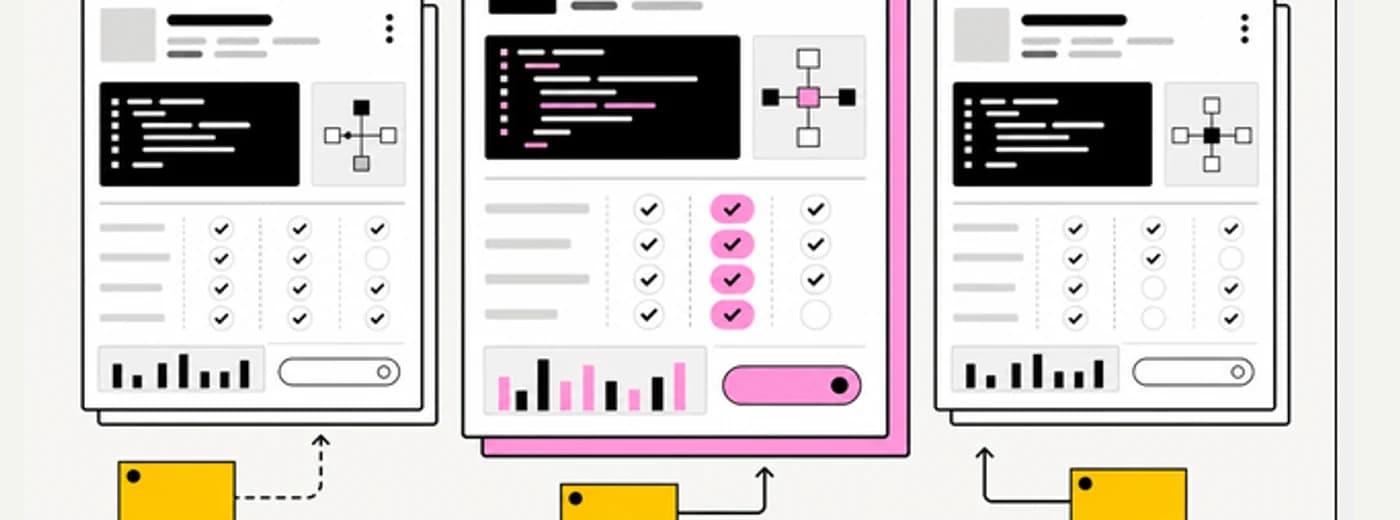
The opening example is an MCP application: an interface served by an MCP server, not a plugin, not an SDK and not something the model renders on the fly. Put the same server into Claude, ChatGPT, VS Code or Cursor and the app works in each.
That only works because both sides share semantics. The client has to know a UI is coming and how to render it. And the server can ship tools alongside the app, so a human can use the interface while the model drives the same application through tools. Soria Parra thinks that dual mode is still largely unexplored. For how MCP apps compare to plain tool calls, see MCP apps vs tool calling.
Eighteen Months In#
They recapped how far the protocol has come. It started as a spec document and a few SDKs, local only, with little beyond tools. Since then it gained remote transports, centralized authorization, elicitation and tasks, and experimental extensions like MCP applications.
The number they cited: about 110 million monthly downloads, most of which come from other projects depending on it, such as OpenAI's Agents SDK, Google's ADK and LangChain. They compared that to React, which took roughly twice as long to reach similar volume. And they stressed that most MCP servers are private, connecting company systems to agents behind closed doors.
2026 Is About Connectivity#
Their framing of the last three years:
- 2024: demos.
- 2025: coding agents, which are the easiest case. They run locally, results are verifiable with a compiler, and a developer is sitting there to fix things.
- 2026: general agents doing knowledge work for analysts and marketers. Those agents do not need a compiler; they need to connect to five SaaS apps and a shared drive.
And connectivity is not one thing. Anyone who says a single approach solves it, whether computer use, CLIs or MCP, is "probably pretty wrong." Soria Parra lays out a stack:
| Layer | Best for |
|---|---|
| Skills | Domain knowledge packaged in a simple, reusable file |
| CLIs | Local agents with a sandbox, especially tools already in pre-training like git and GitHub |
| MCP | Rich semantics, long-running tasks, UI, platform independence, no sandbox, and authorization, governance and policy |
The best agents will use all of them together. That is a more balanced position than the "CLIs over MCP" debate suggests; we covered the other side in CLIs over MCPs.
Work for Client Builders: Progressive Discovery#
The first thing they want harness builders to fix is context bloat. A protocol only moves information across a wire; the client decides what to do with it. Most clients so far dump every tool definition into the context window and are then surprised the window fills up.
The fix is progressive discovery: defer tool definitions and give the model a tool-search tool so it loads tools when it needs them. Anthropic's API offers this, and you can build it yourself. They showed Claude Code's tool context before and after adding it, with a large drop. Our MCP roadmap and progressive discovery piece goes deeper.
Work for Client Builders: Programmatic Tool Calling#
The second fix is programmatic tool calling, often called code mode. When a model calls one tool, reads the result, then calls another, every step costs inference and latency. Instead, give the model an execution environment (a V8 isolate, a Lua interpreter or similar) and let it write a short script that calls several tools and filters the results.
MCP's structured output declares a tool's return type, which lets the model compose calls with type information. If a server does not provide one, Soria Parra suggests asking a cheap model to extract a typed shape. See also code mode in Claude Code.
Work for Server Authors: Design for Agents#
Their sharpest advice for server authors: stop converting REST APIs one-to-one into MCP servers. A wrapper that exposes every endpoint as a tool produces poor agent experiences. Design for how the work is actually done, and a good starting point is how you would want to do it as a human.
Server authors can also apply programmatic tool calling on their side, exposing an execution environment instead of dozens of tools; they cited Cloudflare's MCP server as an example. And they should use the semantics only MCP offers: applications, tasks, elicitation and, soon, skills.
What Is Coming to the Protocol#
The roadmap items Soria Parra described:
- A stateless transport. Streamable HTTP is hard to scale for very large deployments. A proposal from Google makes MCP servers deployable like ordinary stateless services on Cloud Run or Kubernetes. Our stateless migration guide covers the details.
- Better async tasks, effectively agent-to-agent communication, with more clients supporting them.
- Version 2 of the TypeScript and Python SDKs. They were candid that FastMCP is better than the official Python SDK, which they wrote, and that better Python developers are helping rewrite it.
- Cross-app access for enterprises: sign in once with your identity provider (Google, Okta and so on) and use MCP servers without logging in again. See zero-touch OAuth for enterprise MCP.
- Server discovery on well-known URLs, so an agent visiting a site can find out whether it offers an MCP server.
- Extensions, so clients can support optional capabilities. MCP applications, for example, make sense in web clients but not terminals.
- Skills over MCP, so a large server can ship domain knowledge on how to use its tools and update it continuously without a separate plugin registry. You can approximate it today with a load-skills tool. More in skills over MCP.
MCP now sits in a foundation and runs as an open community with a Discord and public issues, and Soria Parra asked for blunt feedback.
Our Take#
The most useful idea here is that most "MCP is bloated" complaints are about clients, not the protocol. A client that loads every tool definition up front pays for it on every turn. Progressive discovery and programmatic tool calling are client-side fixes you can ship this week, and they matter more than any spec change.
For server authors, the takeaway is simpler: if your MCP server is a generated wrapper around your REST API, it is probably the reason agents struggle with it.
FAQ#
What is progressive discovery in MCP?#
A client-side pattern where tool definitions are not loaded into context up front. The model gets a tool-search tool and loads only the tools it needs, which cuts context usage sharply.
What is programmatic tool calling?#
Letting the model write a short script in a sandboxed execution environment that calls several tools and filters results, instead of making one inference round trip per tool call. It is also called code mode.
What is skills over MCP?#
A planned MCP extension that lets a server ship skills, packaged domain knowledge on how to use its tools, so authors can update guidance continuously without a separate plugin system.
Sources#
The Full Series#
This post is part of our coverage of Anthropic's talks at AI Engineer 2026:
- Claude for Long-Horizon Tasks: Lance Martin's Four Rules for Agents That Run for Hours
- Inside the Claude Managed Agents Workshop: Pets, Cattle, Outcomes and Dreaming
- How Anthropic Builds: Mike Krieger on Being Unreasonable With Claude
- How Jarred Sumner Ships Millions of Lines of Agent-Written Code
- A Field Guide to Fable: Thariq Shihipar on Unhobbling Claude and Finding Your Unknowns
- Claude Tag Lands 65% of Anthropic's Product PRs: Takeaways From Cat Wu and Thariq Shihipar
- 1,000 Claude Agents, Git and a Database: How Fable 5.2 Formalized Fermat Without a Custom Harness
- Your Old Prompts Are Making Claude Worse: Lance Martin's Checklist for Frontier Models
- Why One Agent Isn't Enough: Anthropic on Flows, UltraCode and Running 1,000 Agents
- Tokens Should Have Jobs: Anthropic's Case for Advisors, Graders and Dreamers
- Give the Agent a Budget, Not a Token: Anthropic's CI Team on Safe Agent Permissions
- Rethinking Claude Code Best Practices: Lydia Hallie on Getting Out of the Loop Safely
- How Anthropic Merges 30,000 Code Changes a Day: Addy Osmani on Verifying the Software Factory
- Using LLMs to Secure Source Code: Eugene Yan's Six-Step Pipeline From Anthropic
- From Messages API to Managed Agents: Anthropic's Applied AI Team on Harnesses That Go Stale
- Forward Deployed Engineering 101: When Your AI Startup Needs FDEs, From Palantir to Anthropic
- The Enterprise Tech Stack for AI Agents: Why Your POC Stalls and How to Design Past It
- The Claude Certified Architect Exam as a Field Guide to Agentic Engineering
- Gateways Are All You Need: How Anthropic Thinks About MCP in the Enterprise
- How to Build Agents That Run for Hours: Anthropic's Planner, Generator and Evaluator Harness
Continue Reading#
Get the next deep dive like this in your inbox
One email a week on Anthropic and the rest of the AI dev stack. Free.
Read next on Claude Code
The New MCP Roadmap: Progressive Discovery and Agent Auth
The new MCP roadmap prioritizes progressive discovery for large tool catalogs and standardized agent identity. What changes for developers building MCP servers.
7 min readSkills Delivered Over MCP: Why Progressive Disclosure Is the Missing Piece of Both Standards
Skills over MCP: an MCP server whose tools are a skill directory, so agents pay context only for what a task needs. The argument and a working implementation.
9 min readMCP Goes Stateless: The 2026-07-28 Migration Guide
MCP 2026-07-28 spec migration guide: sessions and the initialize handshake are gone. What changed, what breaks, and how to move your MCP servers to stateless.
9 min readTechnical content at the intersection of AI and development. Building with AI agents, Claude Code, and modern dev tools - then showing you exactly how it works.