A Field Guide to Fable: Thariq Shihipar on Unhobbling Claude and Finding Your Unknowns
AI Engineer 2026: Anthropic Talks
21 parts- 1Claude for Long-Horizon Tasks: Lance Martin's Four Rules for Agents That Run for Hours
- 2Inside the Claude Managed Agents Workshop: Pets, Cattle, Outcomes and Dreaming
- 3How Anthropic Builds: Mike Krieger on Being Unreasonable With Claude
- 4How Jarred Sumner Ships Millions of Lines of Agent-Written Code
- 5A Field Guide to Fable: Thariq Shihipar on Unhobbling Claude and Finding Your UnknownsCurrent
- 6Claude Tag Lands 65% of Anthropic's Product PRs: Takeaways From Cat Wu and Thariq Shihipar
- 71,000 Claude Agents, Git and a Database: How Fable 5.2 Formalized Fermat Without a Custom Harness
- 8Your Old Prompts Are Making Claude Worse: Lance Martin's Checklist for Frontier Models
- 9Why One Agent Isn't Enough: Anthropic on Flows, UltraCode and Running 1,000 Agents
- 10Tokens Should Have Jobs: Anthropic's Case for Advisors, Graders and Dreamers
- 11Give the Agent a Budget, Not a Token: Anthropic's CI Team on Safe Agent Permissions
- 12Rethinking Claude Code Best Practices: Lydia Hallie on Getting Out of the Loop Safely
- 13How Anthropic Merges 30,000 Code Changes a Day: Addy Osmani on Verifying the Software Factory
- 14Using LLMs to Secure Source Code: Eugene Yan's Six-Step Pipeline From Anthropic
- 15From Messages API to Managed Agents: Anthropic's Applied AI Team on Harnesses That Go Stale
- 16Forward Deployed Engineering 101: When Your AI Startup Needs FDEs, From Palantir to Anthropic
- 17The Enterprise Tech Stack for AI Agents: Why Your POC Stalls and How to Design Past It
- 18The Claude Certified Architect Exam as a Field Guide to Agentic Engineering
- 19The Future of MCP: David Soria Parra on Connectivity, Progressive Discovery and Skills Over MCP
- 20Gateways Are All You Need: How Anthropic Thinks About MCP in the Enterprise
- 21How to Build Agents That Run for Hours: Anthropic's Planner, Generator and Evaluator Harness
TL;DR
Claude Code's Thariq Shihipar on working with Fable: capability overhang, a smaller system prompt, a four-box method for surfacing unknowns, and why to be less reasonable.
Thariq Shihipar works on Claude Code at Anthropic. They opened their AI Engineer World's Fair 2026 keynote by announcing that Fable was coming back, after its suspension and return, later that same day. The rest of the talk is their field guide to working with the new class of models: what changes, how to find the gaps in your own spec, and how to deal with the odd mix of gain and loss that comes with them.
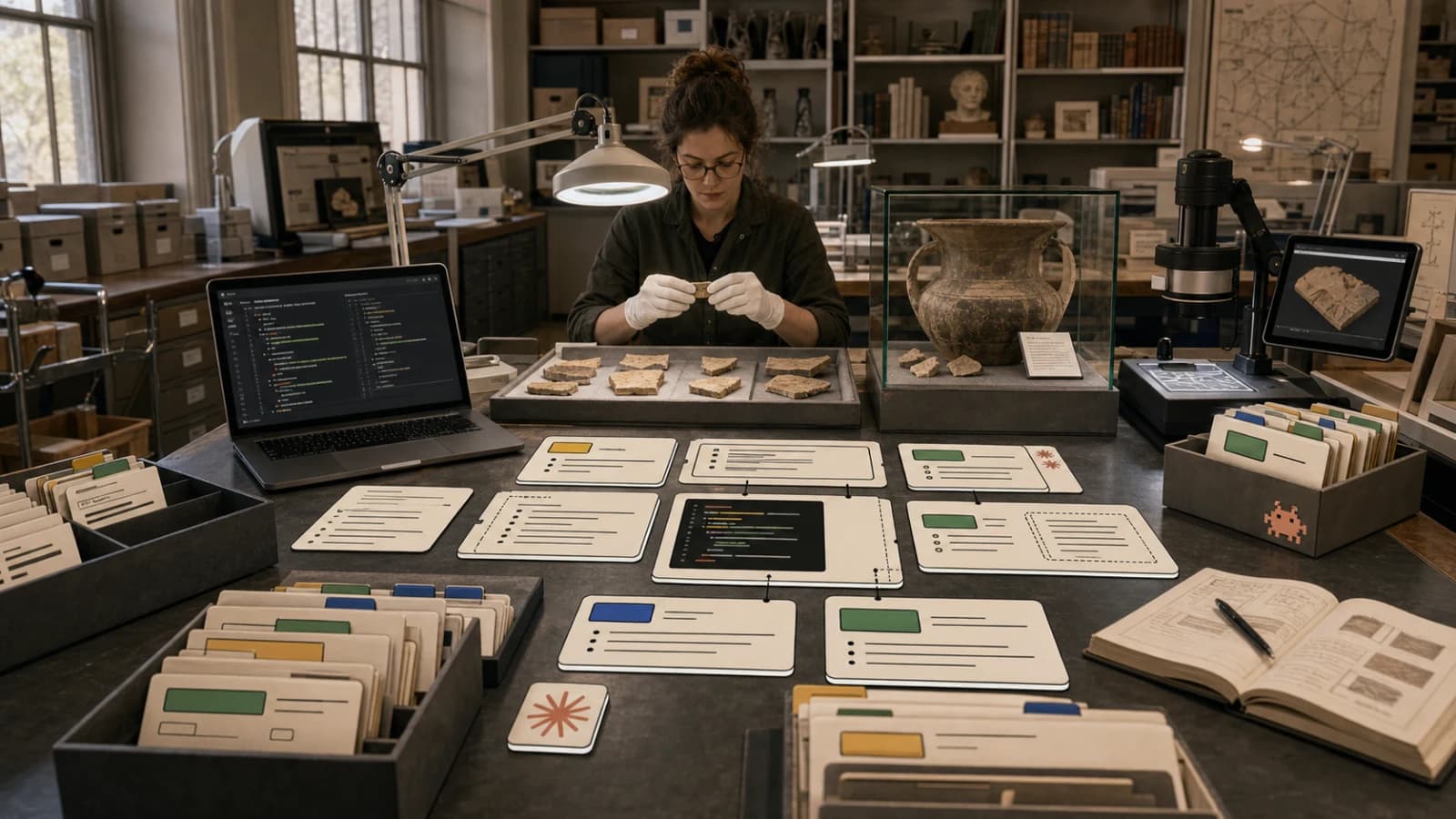
Their metaphor for Fable is an RPG where you finish the tutorial and the open world unlocks. There is suddenly a lot you can do, and that is a little intimidating.
Source: Field Guide to Fable, Thariq Shihipar, AI Engineer World's Fair 2026.
The talk has four parts: unhobbling Claude, finding your unknowns, dealing with the grief, and being unreasonable.
Part 1: Unhobble Claude#
Shihipar's starting point is that models are "grown, not designed." Anthropic does not set out to hit a specific benchmark score; it shapes models with data, feedback and compute, then learns what they can do by using them. The consequence is that what limits a model in practice is usually us: the harness we wrap it in and the way we prompt it, both of which reflect our current, incomplete understanding.
Capability overhang#
Their example: ask a plain chat model which Pokemon names end in "aw" and it struggles, even though it knows every name. Ask Claude Code and it fetches the full list and writes a filter script, finding the two answers. The intelligence was there; the tool unlocked it. They call this capability overhang. Models get smarter in spiky ways, and the job is to find the new spikes.
They trace several of these spikes:
- Context. The naive bet was that coding would be solved with enormous context windows you paste a codebase into. Instead, giving the model a bash tool let it search and build its own context, which is the insight behind Claude Code.
- Proactivity. Claude Code waits to be prompted. Claude Tag can wake itself up and work proactively and multiplayer, which they see as the next wave of agents.
- System prompts. The Claude Code team recently removed about 80% of its system prompt. The best practice went from small prompt, few tools, many examples (Sonnet 3.5 era), to big prompt, many tools, many examples, to now a smaller prompt again. Newer models are more imaginative than the examples, so examples constrain them. Give context, not constraints, and avoid long lists of "do not." We covered the written version in Claude 5 context engineering rules.
- Asking questions. The AskUserQuestion tool barely worked on Opus 4. By Opus 4.5, Claude could interview them with 40 questions about a spec. With Opus 4.8 and Fable it can build a whole HTML report with the questions embedded.
- Output format. Markdown was a good output, then it became how you read plans in plan mode. Now Claude produces rich HTML reports.
They frame this as closer to biology than physics: empirical, organic, with real structure but no complete rulebook. They recommend Anthropic's interpretability paper On the Biology of a Large Language Model as a way to build intuition.
Part 2: Unhobble Yourself by Finding Your Unknowns#
This is the most practical section. "The map is not the territory": your prompt and spec are the map, and the codebase and real-world constraints are the territory. Whenever Claude hits something in the territory that is not on your map, that is an unknown, a decision point you did not specify.
Fable is one of the first models where they felt they really had to find their unknowns in advance, because it traverses so much ground that it will hit a lot of them. In their words, Fable is bottlenecked by their ability to match the map to the territory.
They sort unknowns into four boxes:
| Box | What it is | How to surface it |
|---|---|---|
| Known knowns | What you want, the stuff you write in the prompt | Write it down |
| Known unknowns | Things you know you have not figured out | Interviews |
| Unknown knowns | Things so obvious you would never write them, but you know them when you see them | Brainstorms and prototypes |
| Unknown unknowns | Things you have not considered at all | Blind spot passes |
And then a toolkit for using Fable itself to fill the boxes:
- Blind spot pass. Before working in an unfamiliar area (their example: a new auth provider), ask Claude to scan the relevant code, git history or Slack and tell you the unknown unknowns that would change how you prompt. They also use this to learn new fields entirely, like color grading for video editing.
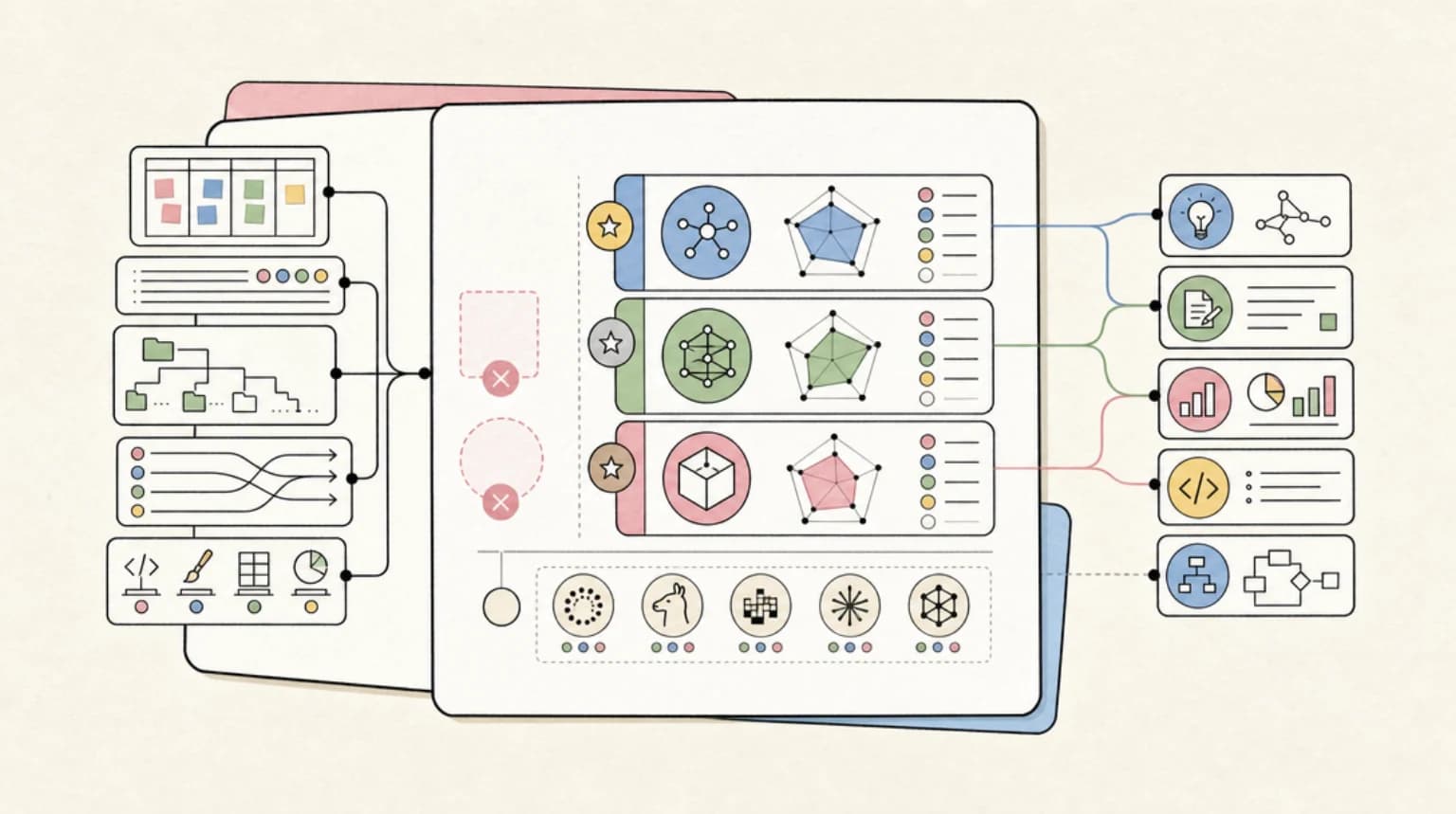
- Brainstorms and prototypes. For taste-driven work, ask for something like an HTML page with four wildly different design directions so you can react. You cannot describe what you want, but you can point at it.
- Interviews. Once you know roughly what you want, have Claude interview you. Tell it what stage you are at and what to prioritize, for example "questions that would change the architecture."
- References. The best way to give Claude a map is to hand it another map: existing code in another language, or an HTML mockup for a React component.
- Implementation notes. While Fable runs, ask it to log every unknown it hits and how it resolved it, so you can see where it deviated and why.
- Quiz me. At the end, have Fable quiz you on what was done so you can actually stand behind the PR.
That last step is underrated. It is a cheap way to stay in the loop on work you did not type yourself, and it addresses the comprehension gap we discussed in the coming loop.
Part 3: The Grief#
Shihipar is candid that their first time using Fable felt like both a gain and a loss. Before LLMs, they ran a YC startup of about 30 people that was constantly forced into tradeoffs because code was so hard: make the app fast or prototype the feature, one month or two. Going back to that codebase recently, the things that would have taken weeks took hours. "How can you not laugh? But also, how can you not cry?"
They loved writing code by hand and holding a codebase in their head. They also remember weeks of debugging and that most projects they worked on failed. They cannot go back, and their conclusion is that the only way out is through.
It is unusual for a keynote from a lab to make space for this, and worth hearing if you have felt the same thing.
Part 4: Be Unreasonable#
The last section is the one other Anthropic speakers kept quoting. One of their favorite parts of Anthropic culture is a belief that tradeoffs are often not real until reality proves them. At their previous company they were used to ranking priorities and picking. The alternative is: what if you just did all of it, and forced reality to show you the actual tradeoff?
"Good, fast, cheap: now it's pick three" is the slogan. They made the talk's deck in about four hours with Fable. Their personal resolution is to be more productive while working less and spending more time with people they care about.
They add an important caveat: building is easier, but generating value is still hard. AI engineers can spend a lot of energy on their setups and process. The point is value, which still takes many swings to find.
Our Take#
The four-box unknowns method is the most useful thing in this talk for anyone using long-running agents. It reframes "prompting better" as an information problem: the agent will make every decision you did not, so your job is to find those decisions before it does, or have it log them when it does.
If you only adopt one habit from it, make it the implementation-notes log. It costs nothing and gives you an audit trail of every place the model filled a gap in your spec.
FAQ#
What is capability overhang?#
Shihipar's term for abilities a model already has but cannot show until the harness or prompt lets it, like a model that knows every Pokemon but only answers a filtering question correctly once it can write and run code.
Why did the Claude Code team shrink the system prompt?#
Newer models follow instructions well and are more imaginative than the examples given to them, so long prompts with many examples and prohibitions started to constrain them. The team removed about 80% of the prompt.
What is a blind spot pass?#
A request asking Claude to investigate an unfamiliar area of a codebase or domain and report the unknowns that would change how you should prompt for the task.
Sources#
- Field Guide to Fable - video
- On the Biology of a Large Language Model - Anthropic interpretability research
The Full Series#
This post is part of our coverage of Anthropic's talks at AI Engineer 2026:
- Claude for Long-Horizon Tasks: Lance Martin's Four Rules for Agents That Run for Hours
- Inside the Claude Managed Agents Workshop: Pets, Cattle, Outcomes and Dreaming
- How Anthropic Builds: Mike Krieger on Being Unreasonable With Claude
- How Jarred Sumner Ships Millions of Lines of Agent-Written Code
- Claude Tag Lands 65% of Anthropic's Product PRs: Takeaways From Cat Wu and Thariq Shihipar
- 1,000 Claude Agents, Git and a Database: How Fable 5.2 Formalized Fermat Without a Custom Harness
- Your Old Prompts Are Making Claude Worse: Lance Martin's Checklist for Frontier Models
- Why One Agent Isn't Enough: Anthropic on Flows, UltraCode and Running 1,000 Agents
- Tokens Should Have Jobs: Anthropic's Case for Advisors, Graders and Dreamers
- Give the Agent a Budget, Not a Token: Anthropic's CI Team on Safe Agent Permissions
- Rethinking Claude Code Best Practices: Lydia Hallie on Getting Out of the Loop Safely
- How Anthropic Merges 30,000 Code Changes a Day: Addy Osmani on Verifying the Software Factory
- Using LLMs to Secure Source Code: Eugene Yan's Six-Step Pipeline From Anthropic
- From Messages API to Managed Agents: Anthropic's Applied AI Team on Harnesses That Go Stale
- Forward Deployed Engineering 101: When Your AI Startup Needs FDEs, From Palantir to Anthropic
- The Enterprise Tech Stack for AI Agents: Why Your POC Stalls and How to Design Past It
- The Claude Certified Architect Exam as a Field Guide to Agentic Engineering
- The Future of MCP: David Soria Parra on Connectivity, Progressive Discovery and Skills Over MCP
- Gateways Are All You Need: How Anthropic Thinks About MCP in the Enterprise
- How to Build Agents That Run for Hours: Anthropic's Planner, Generator and Evaluator Harness
Continue Reading#
Get the next deep dive like this in your inbox
One email a week on Anthropic and the rest of the AI dev stack. Free.
Read next on Claude Code
Anthropic Removed 80% of Claude Code's System Prompt. Here Is What They Learned.
Anthropic cut over 80% of Claude Code's system prompt for Claude 5 models with no coding eval loss. The new context engineering rules and what HN thinks.
7 min readClaude Tag Lands 65% of Anthropic's Product PRs: Takeaways From Cat Wu and Thariq Shihipar
Cat Wu and Thariq Shihipar talk with Simon Willison about Fable, Claude Tag landing 65% of product engineering PRs, why rewrites are good now, and Anthropic's culture.
8 min readFable 5 Is Back: The Anthropic Model the Government Switched Off
Fable 5 is back after a US export-control suspension. What the Anthropic model is, the specs and refusal behavior to handle, and when to pick Opus 4.8.
6 min readTechnical content at the intersection of AI and development. Building with AI agents, Claude Code, and modern dev tools - then showing you exactly how it works.