Gateways Are All You Need: How Anthropic Thinks About MCP in the Enterprise
AI Engineer 2026: Anthropic Talks
21 parts- 1Claude for Long-Horizon Tasks: Lance Martin's Four Rules for Agents That Run for Hours
- 2Inside the Claude Managed Agents Workshop: Pets, Cattle, Outcomes and Dreaming
- 3How Anthropic Builds: Mike Krieger on Being Unreasonable With Claude
- 4How Jarred Sumner Ships Millions of Lines of Agent-Written Code
- 5A Field Guide to Fable: Thariq Shihipar on Unhobbling Claude and Finding Your Unknowns
- 6Claude Tag Lands 65% of Anthropic's Product PRs: Takeaways From Cat Wu and Thariq Shihipar
- 71,000 Claude Agents, Git and a Database: How Fable 5.2 Formalized Fermat Without a Custom Harness
- 8Your Old Prompts Are Making Claude Worse: Lance Martin's Checklist for Frontier Models
- 9Why One Agent Isn't Enough: Anthropic on Flows, UltraCode and Running 1,000 Agents
- 10Tokens Should Have Jobs: Anthropic's Case for Advisors, Graders and Dreamers
- 11Give the Agent a Budget, Not a Token: Anthropic's CI Team on Safe Agent Permissions
- 12Rethinking Claude Code Best Practices: Lydia Hallie on Getting Out of the Loop Safely
- 13How Anthropic Merges 30,000 Code Changes a Day: Addy Osmani on Verifying the Software Factory
- 14Using LLMs to Secure Source Code: Eugene Yan's Six-Step Pipeline From Anthropic
- 15From Messages API to Managed Agents: Anthropic's Applied AI Team on Harnesses That Go Stale
- 16Forward Deployed Engineering 101: When Your AI Startup Needs FDEs, From Palantir to Anthropic
- 17The Enterprise Tech Stack for AI Agents: Why Your POC Stalls and How to Design Past It
- 18The Claude Certified Architect Exam as a Field Guide to Agentic Engineering
- 19The Future of MCP: David Soria Parra on Connectivity, Progressive Discovery and Skills Over MCP
- 20Gateways Are All You Need: How Anthropic Thinks About MCP in the EnterpriseCurrent
- 21How to Build Agents That Run for Hours: Anthropic's Planner, Generator and Evaluator Harness
TL;DR
Anthropic's Karan Sampath on why enterprises get stuck with a handful of MCP servers, and how one blessed gateway for auth, access control, routing and observability lets every team ship its own.
Karan Sampath is a product engineer at Anthropic, the first one based outside the US, and spends much of their time helping enterprises deploy MCP. Their AI Engineer Europe 2026 talk argues that the thing holding enterprise MCP back is not the protocol or the servers. It is the lack of one trusted platform to run them on.
Source: Gateways are All You Need, Karan Sampath, Anthropic, AI Engineer Europe 2026.
The Three-Headed Hydra#
The official MCP registry now lists thousands of servers, and companies build new ones constantly. Yet Sampath sees enterprises stuck with a handful. The blockers are what enterprises consider table stakes:
- Observability. Who is using which server and which tools? Which tools fail? Today this is largely opaque.
- Access control. The whole company might be allowed to read from an observability server, while only a few people should be able to change dashboards. Scoping servers and tools by group is hard.
- Security. Is this server safe? Can it exfiltrate data or harm internal infrastructure? And how do you let remote, possibly untrusted clients reach private data?
Registries help with discovery, but they do not cover authentication, access control, observability or credential management.
The Bottleneck#
The result is a familiar org chart failure. With coding agents, every team can now build an MCP server, but they cannot get it deployed, or it cannot get the access it needs. Security teams are overloaded and cannot review everything. Leadership asks why the agents are not delivering. Sampath's warning is that if enterprises stay stuck with a few MCP servers, it will hold back both the protocol and agents.
Bless One Platform#
The slide Sampath said to remember if you remember only one: the security team's goal should be to bless one platform, a single root of trust, and let teams build freely on top of it.
That matters because MCP value compounds. Every good server makes every agent in the company more capable, so unlocking decentralized server building has knock-on effects well beyond any one server.
What a Gateway Is#
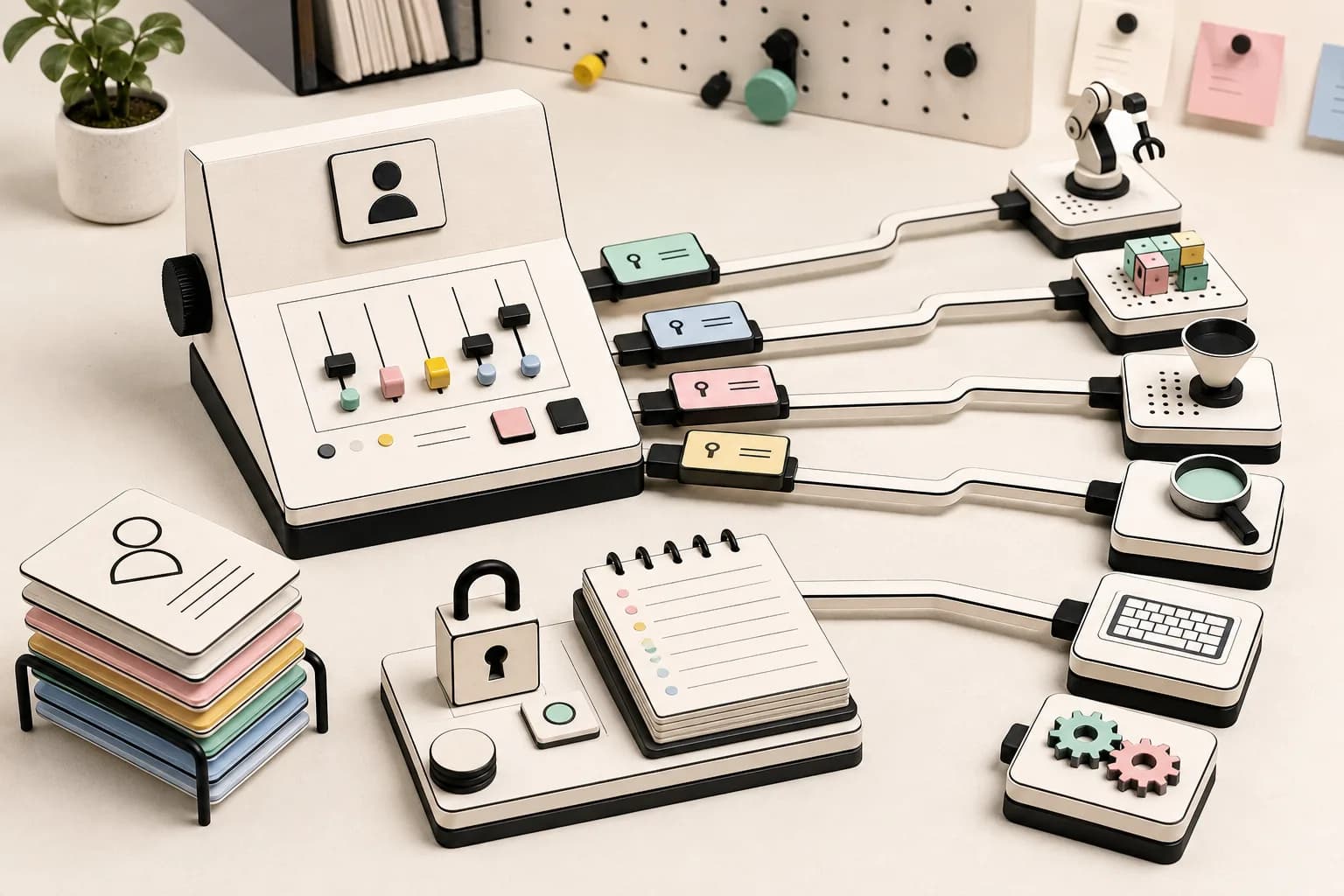
As a black box, a gateway is a middle layer between your MCP servers, potentially hundreds of them, and any MCP client. Its job is to take the cross-cutting concerns off every server author:
| Component | What it does |
|---|---|
| Auth | Plug in your identity provider; delegated identity for users and agents |
| Role-based access control | Which groups can see which servers and tools |
| Proxy and routing | Clients only see the gateway; servers trust only the gateway |
| Secure tunnel | Encrypted connections between untrusted clients and internal servers |
| Sub-registry | Your internal catalogue of servers |
| Tooling | A CLI so a team's coding agent can scaffold and register a new server |
With that in place, a legal team building a contract-review server only writes business logic: what to look for, how to redline, when to escalate. They do not decide who can access it, how often, or how it scales. And because their coding agent can drive the gateway CLI, they may not need a separate engineering team at all.
%% title: The gateway is the one root of trust
flowchart LR
  C[Claude.ai, Claude Code, Cowork, custom agents] --> G[MCP gateway: auth, RBAC, routing, audit]:::emphasis
  G --> S1[Legal server]
  G --> S2[Observability server]
  G --> S3[Data server]
The Free Lunches#
Once a gateway exists, Sampath lists benefits that come almost for free:
- New surfaces in one step. Claude.ai, Claude Code and Cowork all talk to the same gateway, instead of 40 servers each configured slightly differently per client.
- Secured connections for sensitive internal data, so servers can use real data rather than toy datasets.
- Fast iteration. Teams change their own servers without a fresh security review every time.
- Standard primitives. The gateway encodes the enterprise's own standards for what tools look like and what is not allowed.
- Pluggable credentials. User, team or service-account auth can be swapped per server.
- Scale. Going from tens to hundreds of thousands of agent calls is the gateway's problem, not every server's.
Observability here means more than usage counts. Sampath wants teams to see which tools are load-bearing and how tool definitions should evolve as the protocol changes.
Separate the Harness From the Data#
The bigger picture is decoupling. Agents are multiplying, and they should not be tightly coupled to how your data and servers are structured. With a gateway, the same servers work whether you run agents on Claude Managed Agents or build them in-house with the Claude Agent SDK, so whether an agent lives inside or outside the company becomes a decision you can change later.
This is the same "decouple the brain from the hands" principle Anthropic applies inside Managed Agents, described in their engineering post on the topic.
Our Take#
The argument is persuasive because it is organizational, not technical. Gateways are an old idea from the API era. What changed is that coding agents made building MCP servers cheap for every team, which moved the bottleneck to security review. A single blessed platform is how you get the security team out of the critical path without lowering the bar.
If you are planning enterprise MCP, the three takeaways in Sampath's order: invest in common infrastructure rather than letting each team roll its own, use the gateway as your root of trust, and keep the agent harness separate from your data layer. For the identity piece, see our post on zero-touch OAuth for enterprise MCP; for the protocol roadmap, David Soria Parra's future of MCP.
FAQ#
What is an MCP gateway?#
A middle layer between MCP clients and an organization's MCP servers that centralizes authentication, role-based access control, routing, secure tunnels, an internal registry and observability, so individual servers only implement business logic.
Why do enterprises struggle to adopt MCP?#
According to Sampath, because observability, access control and security are hard to provide server by server, so security teams become a bottleneck and companies end up with only a handful of approved servers.
Does a gateway lock you into one agent platform?#
No. The point is the opposite: the gateway decouples servers from the agent harness, so the same servers work with Claude.ai, Claude Code, Cowork, Managed Agents or an in-house Agent SDK build.
Sources#
- Gateways are All You Need - video
- Introducing the MCP Registry
- MCP security best practices
- Decoupling the brain from the hands
- Connect the Claude Agent SDK to MCP
The Full Series#
This post is part of our coverage of Anthropic's talks at AI Engineer 2026:
- Claude for Long-Horizon Tasks: Lance Martin's Four Rules for Agents That Run for Hours
- Inside the Claude Managed Agents Workshop: Pets, Cattle, Outcomes and Dreaming
- How Anthropic Builds: Mike Krieger on Being Unreasonable With Claude
- How Jarred Sumner Ships Millions of Lines of Agent-Written Code
- A Field Guide to Fable: Thariq Shihipar on Unhobbling Claude and Finding Your Unknowns
- Claude Tag Lands 65% of Anthropic's Product PRs: Takeaways From Cat Wu and Thariq Shihipar
- 1,000 Claude Agents, Git and a Database: How Fable 5.2 Formalized Fermat Without a Custom Harness
- Your Old Prompts Are Making Claude Worse: Lance Martin's Checklist for Frontier Models
- Why One Agent Isn't Enough: Anthropic on Flows, UltraCode and Running 1,000 Agents
- Tokens Should Have Jobs: Anthropic's Case for Advisors, Graders and Dreamers
- Give the Agent a Budget, Not a Token: Anthropic's CI Team on Safe Agent Permissions
- Rethinking Claude Code Best Practices: Lydia Hallie on Getting Out of the Loop Safely
- How Anthropic Merges 30,000 Code Changes a Day: Addy Osmani on Verifying the Software Factory
- Using LLMs to Secure Source Code: Eugene Yan's Six-Step Pipeline From Anthropic
- From Messages API to Managed Agents: Anthropic's Applied AI Team on Harnesses That Go Stale
- Forward Deployed Engineering 101: When Your AI Startup Needs FDEs, From Palantir to Anthropic
- The Enterprise Tech Stack for AI Agents: Why Your POC Stalls and How to Design Past It
- The Claude Certified Architect Exam as a Field Guide to Agentic Engineering
- The Future of MCP: David Soria Parra on Connectivity, Progressive Discovery and Skills Over MCP
- How to Build Agents That Run for Hours: Anthropic's Planner, Generator and Evaluator Harness
Continue Reading#
Get the next deep dive like this in your inbox
One email a week on Anthropic and the rest of the AI dev stack. Free.
Read next on Claude Code
The Future of MCP: David Soria Parra on Connectivity, Progressive Discovery and Skills Over MCP
MCP co-creator David Soria Parra on why 2026 is about agent connectivity: skills, CLIs and MCP together, progressive discovery, programmatic tool calling, a stateless transport and skills over MCP.
8 min readZero-Touch OAuth Is the MCP Feature Enterprises Were Waiting For
MCP Enterprise-Managed Authorization explained: zero-touch OAuth moves agent tool access into the identity, policy and audit systems enterprises already run.
8 min readThe Enterprise Tech Stack for AI Agents: Why Your POC Stalls and How to Design Past It
Anthropic's Christopher Lovejoy and Anterior's Saul Howard on the four questions that stall enterprise agent POCs - audit, sensitive data, escalation and evals - and an event-sourced stack that answers them.
8 min readTechnical content at the intersection of AI and development. Building with AI agents, Claude Code, and modern dev tools - then showing you exactly how it works.