From Messages API to Managed Agents: Anthropic's Applied AI Team on Harnesses That Go Stale
AI Engineer 2026: Anthropic Talks
21 parts- 1Claude for Long-Horizon Tasks: Lance Martin's Four Rules for Agents That Run for Hours
- 2Inside the Claude Managed Agents Workshop: Pets, Cattle, Outcomes and Dreaming
- 3How Anthropic Builds: Mike Krieger on Being Unreasonable With Claude
- 4How Jarred Sumner Ships Millions of Lines of Agent-Written Code
- 5A Field Guide to Fable: Thariq Shihipar on Unhobbling Claude and Finding Your Unknowns
- 6Claude Tag Lands 65% of Anthropic's Product PRs: Takeaways From Cat Wu and Thariq Shihipar
- 71,000 Claude Agents, Git and a Database: How Fable 5.2 Formalized Fermat Without a Custom Harness
- 8Your Old Prompts Are Making Claude Worse: Lance Martin's Checklist for Frontier Models
- 9Why One Agent Isn't Enough: Anthropic on Flows, UltraCode and Running 1,000 Agents
- 10Tokens Should Have Jobs: Anthropic's Case for Advisors, Graders and Dreamers
- 11Give the Agent a Budget, Not a Token: Anthropic's CI Team on Safe Agent Permissions
- 12Rethinking Claude Code Best Practices: Lydia Hallie on Getting Out of the Loop Safely
- 13How Anthropic Merges 30,000 Code Changes a Day: Addy Osmani on Verifying the Software Factory
- 14Using LLMs to Secure Source Code: Eugene Yan's Six-Step Pipeline From Anthropic
- 15From Messages API to Managed Agents: Anthropic's Applied AI Team on Harnesses That Go StaleCurrent
- 16Forward Deployed Engineering 101: When Your AI Startup Needs FDEs, From Palantir to Anthropic
- 17The Enterprise Tech Stack for AI Agents: Why Your POC Stalls and How to Design Past It
- 18The Claude Certified Architect Exam as a Field Guide to Agentic Engineering
- 19The Future of MCP: David Soria Parra on Connectivity, Progressive Discovery and Skills Over MCP
- 20Gateways Are All You Need: How Anthropic Thinks About MCP in the Enterprise
- 21How to Build Agents That Run for Hours: Anthropic's Planner, Generator and Evaluator Harness
TL;DR
Gagan Bhat and Isabella He of Anthropic's Applied AI team on how agent surfaces evolved, why harness fixes become dead weight, and the latency and security wins of decoupling.
Gagan Bhat and Isabella Kai He are members of technical staff on Anthropic's Applied AI team, which sits between product, research and go-to-market and builds agents with enterprise customers. Their AI Engineer World's Fair 2026 talk traces three years of agent surfaces, from the Messages API to Claude Managed Agents, and explains the engineering lessons behind the latest one.
If you are deciding which Anthropic surface to build on, this is the clearest map of the tradeoffs.
Source: Anthropic's Applied AI team on the Evolution of Agentic Surfaces, Gagan Bhat and Isabella Kai He, AI Engineer World's Fair 2026.
Questions, Then Tasks, Then Outcomes#
Bhat's framing: as capability grew, the work we hand models went from questions (simple Q&A) to tasks (delegated chunks of work) to outcomes (the agent owns the result). Each step needed a new surface.
Three Surfaces, and What Each Leaves to You#
Messages API (launched alongside Claude 3): tokens in, tokens out. As tasks got longer, every customer ended up hand-building an agent loop (call Claude, run tools, manage context) and then all the production infrastructure around it. The loop turned out to be surprisingly hard to maintain.
Claude Agent SDK: packages the Claude Code harness, with a built-in loop, file system access, tools and sandboxing primitives. You embed it in your product, but you still own credentials, hosting, scaling and more. Our comparison: Claude Agent SDK vs Claude Code.
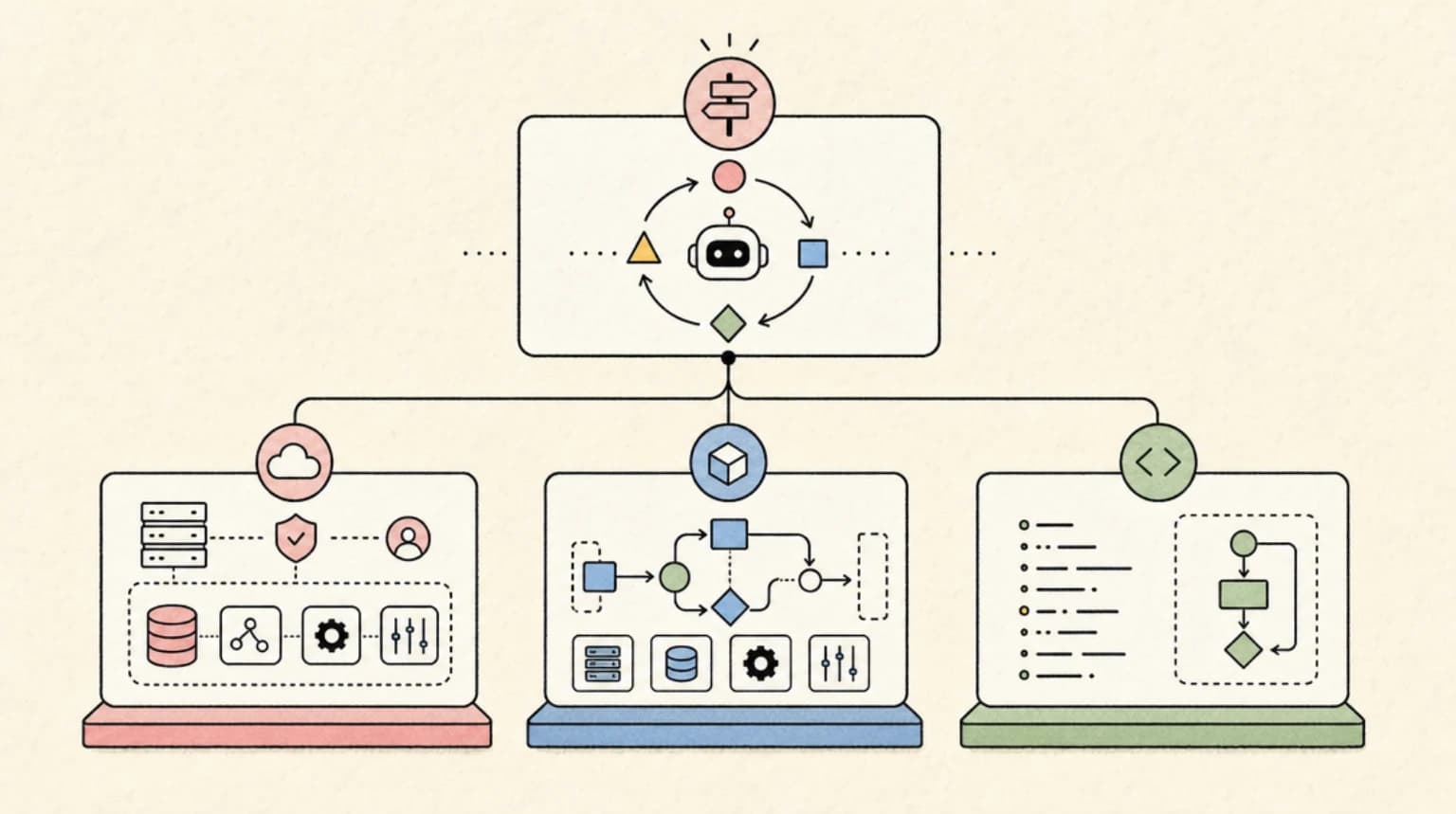
Claude Managed Agents: you own the product, the task, your context and domain knowledge. Anthropic runs the brain (the loop, Claude, and the harness improvements) plus just-in-time sandboxes and the production infrastructure.
Bhat's list of the infrastructure questions teams were spending their time on is a good checklist even if you roll your own:
| Concern | The question |
|---|---|
| Hosting and scaling | Where does the agent run, how long does it live, what breaks under load? |
| Session management | Where do history and progress live, and how do many agents run concurrently? |
| File system | How does Claude create and edit files? |
| Execution isolation | Where does generated code run, and how is it kept safe? |
| Credentials | How does Claude reach sensitive systems without seeing the tokens? |
| Observability | What is actually happening inside complex orchestration? |
Lesson 1: Harnesses Encode Assumptions That Go Stale#
Isabella Kai He's core principle: a harness encodes assumptions about what Claude cannot do on its own, such as when to reset context or how to compact. Those assumptions must be questioned constantly because models improve.
The concrete example, also told in the Managed Agents workshop: Sonnet 4.5 had "context anxiety," wrapping up early as it neared its context limit. The team added context resets to the harness. Opus 4.5 did not have the problem, so the resets became dead weight that added latency and sometimes discarded the cache incorrectly. When the model moves and the harness does not, the agent gets worse.
Isabella Kai He sees the same split among enterprise customers: some harnesses are agile, others were built rigidly around older models and take weeks or months to migrate. With release cycles shortening, that is a real cost. The prescription: design for tomorrow's model capabilities, and keep components independent so each piece can be swapped while the architecture stays stable.
Lesson 2: Decoupling Brain From Hands Cuts Latency#
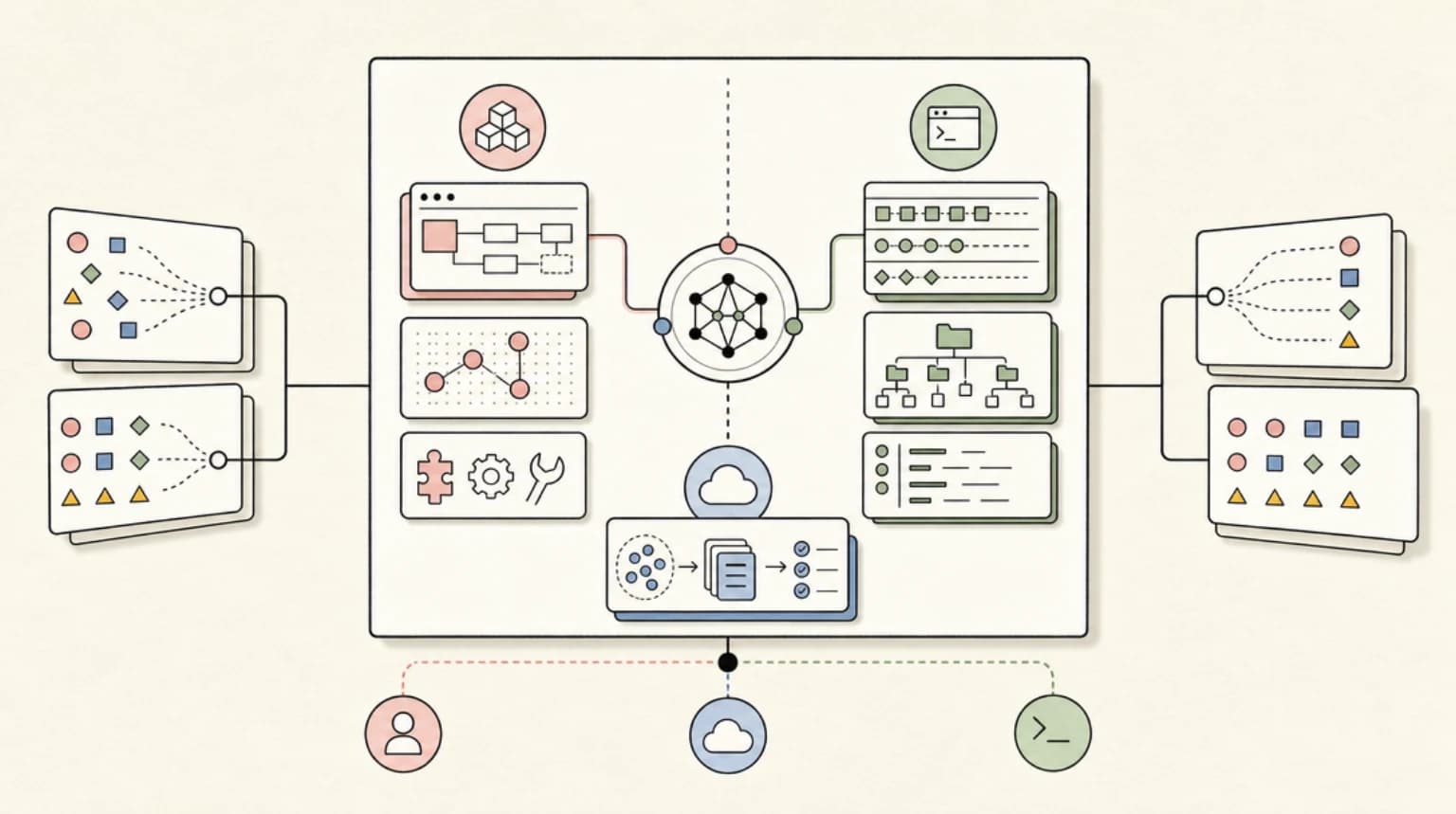
The first Managed Agents design ran the loop and tool execution in one container, which made tool calls easy but had limitations, including startup latency: reasoning could not begin until the container was fully set up.
After decoupling, model reasoning starts immediately while container setup runs in parallel, or is skipped entirely if a task never needs a sandbox. The team reports about 60% faster time to first token at P50 and over 90% faster at P95. That is a benefit of the brain-and-hands split that gets less attention than reliability, and it matters for any interactive product.
Lesson 3: The Session Log Does Three Jobs#
Customers kept asking two questions: what is my agent doing, and how does it get better over time? Both answers are the session log, the play-by-play event record of user messages, model responses, tool calls and results.
- Shown in a UI, it is observability.
- Kept as history, it feeds memory.
- Processed offline with dreaming, it updates memory so the next run is better.
Lesson 4: Hands Can Run Anywhere#
Security-conscious enterprises wanted tool execution inside their own VPC. Because the hands are decoupled, they can run anywhere. That enabled self-hosted sandboxes, where customers control the sandbox control plane and run tools under their own policies, and MCP tunnels, where private MCP servers make only outbound connections to the agent loop and are never exposed to the public internet. Details: self-hosted sandboxes and MCP tunnels, and our post on self-hosted Managed Agents.
The Frontier Features: Dreaming and Outcomes#
- Dreaming runs as a periodic batch over transcripts and the current memory state, extracting insights and reorganizing memory so the next day's sessions start smarter. Bhat sees memory and dreaming as the start of a unified memory system that will extend to organization-scale memory such as team runbooks.
- Outcomes let you define success criteria and failure cases as a rubric. A separate grader agent runs alongside the agent loop and keeps the agent iterating until the rubric is satisfied. See the define outcomes docs.
Our Take#
The talk's closing claim is worth sitting with: harnesses, not models, have become the limiting factor on what products deliver. That is a strong argument for buying rather than building your harness if you are not prepared to re-evaluate it with every model release.
If you do build your own, take the two most concrete lessons: audit your harness for workarounds that newer models no longer need, and separate reasoning from execution so you can start thinking before the sandbox is ready. The Managed Agents vs LangGraph vs DIY comparison lays out when each path makes sense.
FAQ#
What is the difference between the Messages API, Agent SDK and Managed Agents?#
The Messages API is tokens in and out, so you build the loop and infrastructure. The Agent SDK gives you Claude Code's harness to embed but you host it. Managed Agents runs the harness, sandboxes, sessions, credentials and observability for you.
Why do agent harnesses need regular updates?#
They encode workarounds for model limitations. When a new model no longer has the limitation, like Sonnet 4.5's context anxiety that Opus 4.5 did not share, the workaround becomes overhead that can hurt performance.
How much faster is time to first token after decoupling the harness from the sandbox?#
Anthropic reported about 60% faster time to first token at the median and over 90% faster at P95, because reasoning starts while the container is still being prepared.
Sources#
- Anthropic's Applied AI team on the Evolution of Agentic Surfaces - video
- Scaling Managed Agents: Decoupling the brain from the hands
- Claude Managed Agents overview
- Agent SDK overview
- Define outcomes
The Full Series#
This post is part of our coverage of Anthropic's talks at AI Engineer 2026:
- Claude for Long-Horizon Tasks: Lance Martin's Four Rules for Agents That Run for Hours
- Inside the Claude Managed Agents Workshop: Pets, Cattle, Outcomes and Dreaming
- How Anthropic Builds: Mike Krieger on Being Unreasonable With Claude
- How Jarred Sumner Ships Millions of Lines of Agent-Written Code
- A Field Guide to Fable: Thariq Shihipar on Unhobbling Claude and Finding Your Unknowns
- Claude Tag Lands 65% of Anthropic's Product PRs: Takeaways From Cat Wu and Thariq Shihipar
- 1,000 Claude Agents, Git and a Database: How Fable 5.2 Formalized Fermat Without a Custom Harness
- Your Old Prompts Are Making Claude Worse: Lance Martin's Checklist for Frontier Models
- Why One Agent Isn't Enough: Anthropic on Flows, UltraCode and Running 1,000 Agents
- Tokens Should Have Jobs: Anthropic's Case for Advisors, Graders and Dreamers
- Give the Agent a Budget, Not a Token: Anthropic's CI Team on Safe Agent Permissions
- Rethinking Claude Code Best Practices: Lydia Hallie on Getting Out of the Loop Safely
- How Anthropic Merges 30,000 Code Changes a Day: Addy Osmani on Verifying the Software Factory
- Using LLMs to Secure Source Code: Eugene Yan's Six-Step Pipeline From Anthropic
- Forward Deployed Engineering 101: When Your AI Startup Needs FDEs, From Palantir to Anthropic
- The Enterprise Tech Stack for AI Agents: Why Your POC Stalls and How to Design Past It
- The Claude Certified Architect Exam as a Field Guide to Agentic Engineering
- The Future of MCP: David Soria Parra on Connectivity, Progressive Discovery and Skills Over MCP
- Gateways Are All You Need: How Anthropic Thinks About MCP in the Enterprise
- How to Build Agents That Run for Hours: Anthropic's Planner, Generator and Evaluator Harness
Continue Reading#
Get the next deep dive like this in your inbox
One email a week on Anthropic and the rest of the AI dev stack. Free.
Read next on Claude Code
Inside the Claude Managed Agents Workshop: Pets, Cattle, Outcomes and Dreaming
What Anthropic's Managed Agents team taught in their two-hour AI Engineer workshop: why the first architecture failed, the core APIs, multi-session orchestration and dreaming.
10 min readClaude Agent SDK vs Claude Code: When to Build and When to Drive
Claude Agent SDK vs Claude Code explained: same engine, two surfaces. Here is the concrete decision line, plus where Managed Agents fits as the hosted third option.
8 min readManaged Agents vs LangGraph vs Rolling Your Own: Who Should Run Your Agent Loop in 2026
Managed agents vs LangGraph vs a DIY while-loop - compare state, sandboxing, cost, lock-in and compliance to decide who should run your agent loop in 2026.
9 min readTechnical content at the intersection of AI and development. Building with AI agents, Claude Code, and modern dev tools - then showing you exactly how it works.