12-Factor Agents: Production Principles for Reliable AI Agents
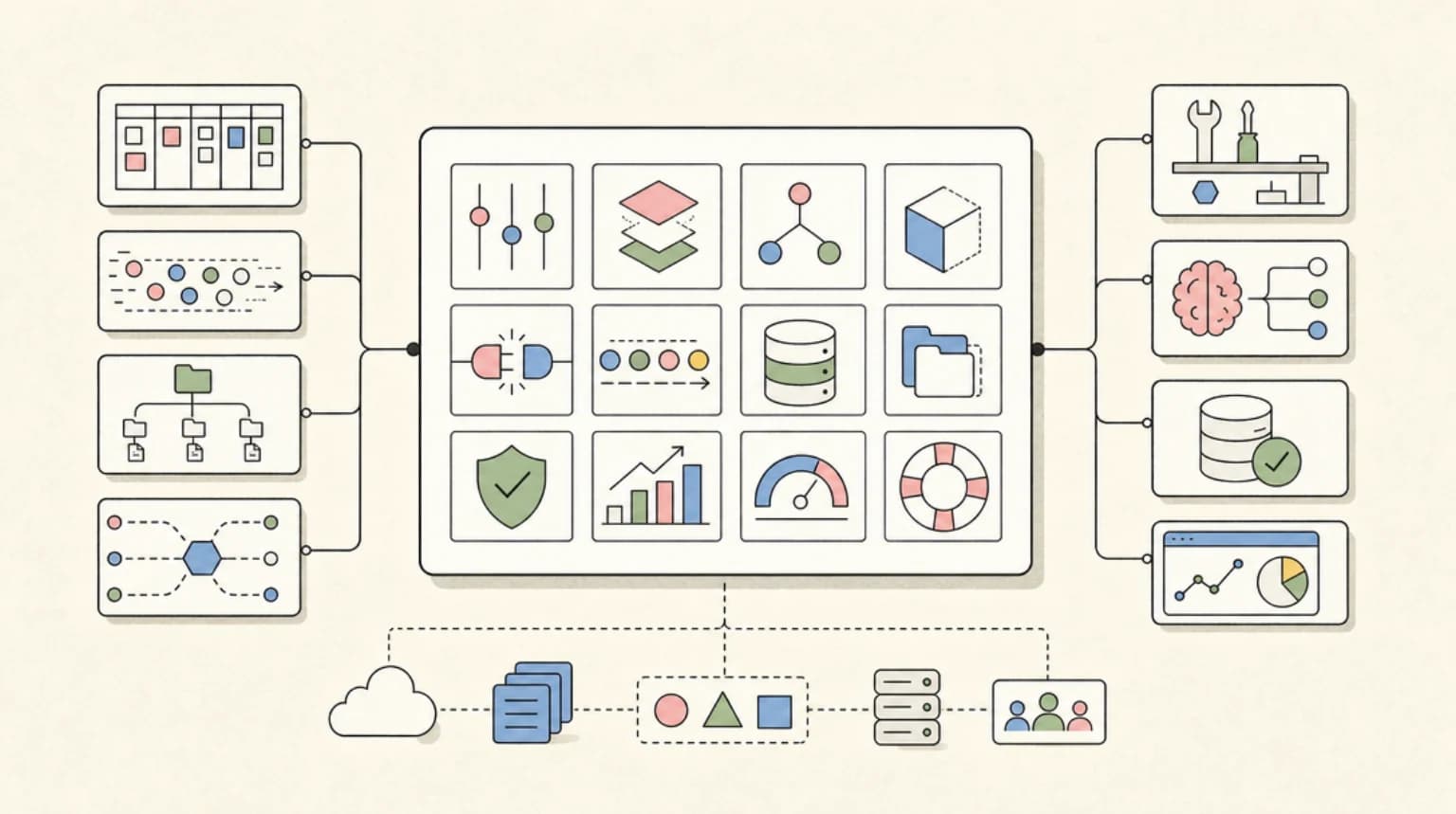
TL;DR
HumanLayer's 12-Factor Agents guide turns agent reliability into an engineering checklist: own prompts, context, tools, control flow, state, human approval, and observability before a demo becomes production.
Last updated: June 24, 2026
Official Sources#
| Resource | Link |
|---|---|
| 12-Factor Agents GitHub | github.com/humanlayer/12-factor-agents |
| HumanLayer 12-Factor Agents | humanlayer.dev/12-factor-agents |
| Original 12-Factor App | 12factor.net |
| Anthropic Building Effective Agents | anthropic.com/engineering/building-effective-agents |
| Anthropic Context Engineering | anthropic.com/engineering/effective-context-engineering-for-ai-agents |
The Trend Was Real. The Checklist Is The Asset.#
The older posts on this site covered humanlayer/12-factor-agents as a fast-rising GitHub Trending repo. The dated star-count hook is stale. The production checklist is still useful.
As of this refresh, the GitHub API shows humanlayer/12-factor-agents at roughly 23.5k stars, 1.8k forks, TypeScript-first, and last pushed in September 2025. The README describes it as principles for building reliable LLM applications, inspired by the original 12-Factor App methodology.
The repo is not a framework, CLI, or package. It is a design guide by Dex Horthy and HumanLayer for building LLM-powered software that is good enough for production customers.
That framing is why it still matters. Agent teams do not need one more magic loop. They need a language for review: prompts, context, tools, state, lifecycle, humans, control flow, errors, scope, triggers, and reducers.
This belongs next to what an AI coding agent is, context engineering, long-running agents needing harnesses, debugging AI agent workflows, and permissions, logs, and rollback for AI coding agents. The model is not the product. The system around the model is.
What The 12 Factors Actually Say#
The current README lists the twelve factors as a short version:
- Natural Language to Tool Calls
- Own your prompts
- Own your context window
- Tools are just structured outputs
- Unify execution state and business state
- Launch/Pause/Resume with simple APIs
- Contact humans with tool calls
- Own your control flow
- Compact Errors into Context Window
- Small, Focused Agents
- Trigger from anywhere, meet users where they are
- Make your agent a stateless reducer
The useful theme is not the number twelve. It is ownership.
Own the prompt. Own the context. Own the control flow. Own the lifecycle. Own the state boundary. Own how humans enter the loop.
That is the opposite of many agent demos, where a framework hides the prompt, grows the context window, stores hidden state, and calls the result "autonomy."
The Best Way To Use It#
Use 12-Factor Agents as a review checklist.
Before shipping an agent feature, ask:
- Where is the prompt versioned?
- What exactly enters the context window?
- Which tool calls can mutate external state?
- Where does execution state live?
- Can the run pause and resume?
- How does a human approve, reject, or correct a step?
- Which control flow is deterministic code and which part is model choice?
- How are errors compacted back into context?
- Is the agent narrow enough to debug?
- Which surfaces can trigger it?
- Can we replay or reduce a run into state plus event?
Those questions pair naturally with tool-use production patterns, agent workflows as state machines, agent replays, and agent security before connecting tools. The checklist is not about rejecting tools. It is about refusing hidden behavior where review needs explicit behavior.
From the archive
AI Security Scanners Move the Bottleneck to Triage
May 23, 2026 • 8 min read
Models.dev Makes Model Routing Feel Like Infrastructure
May 23, 2026 • 7 min read
Multi-Stream LLMs Hint at the Next Agent Architecture
May 23, 2026 • 8 min read
Claude Code's Official Plugin Marketplace Is Here - and It's Already at 23k Stars
May 22, 2026 • 5 min read
The Factors That Matter Most In Practice#
All twelve are useful, but four carry most of the production load.
Own your context window. Context is now the system boundary. If you let every log line, memory, tool result, and retrieved document into the prompt, you get a slower and less reliable agent. Context should be curated, source-linked, compacted, and reviewable.
Own your control flow. The model can choose the next action, but the application should own the loop, stop conditions, retries, approval gates, and budget ceilings. This is the difference between a product and a runaway process.
Contact humans with tool calls. Human approval should not be a side channel. If a human decision changes the run, model it as structured input the agent can observe and continue from.
Make your agent a stateless reducer. This is the hardest factor to apply literally, but the review value is high. If a run cannot be represented as state plus event plus next state, debugging becomes archaeology.
The Opposing View#
The guide can read more anti-framework than some teams need.
That is the main caveat. Frameworks are not automatically the enemy. LangGraph, Mastra, OpenAI Agents SDK, Claude Agent SDK, and many internal harnesses exist because production agent systems need state, tracing, tools, retries, and deployment surfaces. Rebuilding all of that from scratch can be its own failure mode.
The better reading is narrower:
- do not outsource prompts you cannot inspect
- do not hide control flow you need to debug
- do not store state where the product cannot reason about it
- do not treat human approval as a UI-only concern
- do not let a framework choose what belongs in context without review
That reading makes the guide compatible with frameworks. It turns it into an evaluation rubric.
If a framework helps you satisfy the factors, use it. If it prevents you from answering the review questions, avoid that part of the abstraction. Start with managed agents versus LangGraph versus DIY or Vercel AI SDK 6 versus LangGraph for TypeScript agents if you are choosing the stack.
The Production Pattern#
The strongest pattern is boring:
- deterministic product code receives an event
- deterministic code prepares scoped context
- the model returns structured output
- deterministic code validates the output
- tools execute with permissions and logs
- human approval enters as structured tool output when needed
- errors are compacted into context
- state is persisted in a product-owned store
- the final receipt explains what happened
That pattern is visible across the best agent content right now: Anthropic's Building Effective Agents, effective context engineering for AI agents, and the operational lessons in agent PR governance.
The lesson is not "never use agents." It is "agents should be software you can inspect."
How This Fits Claude Code And Codex#
Claude Code and Codex make the factors concrete because they run inside real repos with real files, tools, permissions, and verification commands.
AGENTS.md, CLAUDE.md, skills, hooks, MCP tools, worktrees, and final receipts are the local version of the same production concerns:
- prompts become repo instructions and skills
- context becomes selected files, memories, graph results, and traces
- tools become shell commands, MCP servers, and permission prompts
- state becomes files, branches, tasks, logs, and PRs
- human contact becomes approval flows and review comments
- control flow becomes the harness around the agent
That is why the guide pairs well with what Claude Code is, OpenAI Codex, agent swarms needing receipts, and the MCP server guide. The principles stop being abstract once an agent can edit your repo.
The Take#
12-Factor Agents is worth reading because it pushes the agent conversation back toward software engineering.
The guide is not perfect. It is not a full architecture. It will not tell you which framework to pick. It will not prove your agent is reliable.
But it gives teams a useful shared vocabulary for the review that matters:
- Who owns the prompt?
- Who owns the context?
- Who owns the loop?
- Who owns the state?
- Who owns the human handoff?
- Who owns the final proof?
If you can answer those questions, you are much closer to a production agent than the team with the flashier demo.
FAQ#
What is 12-Factor Agents?#
12-Factor Agents is an open-source design guide from HumanLayer that adapts the spirit of the original 12-Factor App methodology to LLM-powered software and agent systems.
Is 12-Factor Agents a framework?#
No. It is a principles guide, not a runtime, SDK, or package. Use it as a design and review checklist for whichever framework or custom harness you use.
What is the most important factor?#
For production teams, the highest-leverage factors are owning your context window, owning your control flow, contacting humans with tool calls, and making the agent easy to reduce into state transitions.
Does the guide mean I should avoid LangGraph or agent frameworks?#
No. The better lesson is to avoid abstractions that hide prompts, control flow, state, or human approval paths you need to inspect. A framework that keeps those surfaces reviewable can still be a good choice.
How should I apply it to Claude Code or Codex?#
Map the factors onto repo instructions, skills, hooks, MCP tools, worktrees, tests, logs, and final receipts. Use the guide to ask whether the agent run is inspectable and recoverable.
What is the main risk?#
The main risk is treating the factors as slogans. They only help if they turn into concrete review questions, source-linked context, deterministic checks, and clear ownership of state and control flow.
Continue Reading#
Sources#
- humanlayer/12-factor-agents GitHub repository
- HumanLayer 12-Factor Agents page
- HumanLayer 12-Factor Agents blog post
- 12-Factor Agents README
- Factor 1: Natural Language to Tool Calls
- Factor 3: Own your context window
- Factor 8: Own your control flow
- Factor 12: Make your agent a stateless reducer
- Original 12-Factor App methodology
- Anthropic: Building Effective Agents
- Anthropic: Effective Context Engineering for AI Agents
Read next
Harness Handbook Shows the Missing Map for Coding Agents
A July 2026 paper from Tencent Hunyuan turns agent harnesses into behavior-level maps. The useful lesson for builders is simple: code search is not enough when one behavior spans prompts, tools, state, permissions, and runtime policy.
8 min readLong-Running Agents Need Harnesses, Not Hope
A long-running coding agent is only useful if the environment around it can queue tasks, capture logs, checkpoint state, verify behavior, limit cost, and recover from failure.
9 min readApproval Fatigue Is an Agent Security Bug
Manual approval prompts stop protecting users when coding agents ask too often. The better pattern is risk-aware autonomy: safe defaults, narrow deny rules, and approvals only for meaningful changes.
7 min readShare
Developers Digest
Technical content at the intersection of AI and development. Building with AI agents, Claude Code, and modern dev tools - then showing you exactly how it works.
300+ videos30K+ GitHub stars850+ articles
Related Tools
AI Frameworks
A
Agency Swarm
Multi-agent orchestration framework built on the OpenAI Agents SDK. Define agent roles, typed tools, and directional com...
View ToolProductivityNew
A
AgentCanvas
A hosted infinite canvas your headless AI agents drive over MCP. Any MCP-speaking agent - Claude Code, Codex, Cursor, or...
View ToolAI CodingDaily Driver

Claude Code
Anthropic's agentic coding CLI. Runs in your terminal, edits files autonomously, spawns sub-agents, and maintains memory...
View ToolAI FrameworksNew

Claude Agent SDK
Anthropic's Python SDK for building production agent systems. Tool use, guardrails, agent handoffs, and orchestration. R...
View ToolApps from Developers Digest
SaaS Products
Overnight Agents
Spec out AI agents, run them overnight, wake up to a verified GitHub repo.
View AppDeveloper ToolsIn Progress
Subagent Studio
Design subagents visually instead of editing YAML by hand.
View AppDeveloper ToolsIn Progress
Agent Workflow Hub
Queue and organize repeatable agent workflows before they become production automations.
View AppRelated Guides
Guide
Claude Code Setup Guide
Configure Claude Code for maximum productivity -- CLAUDE.md, sub-agents, MCP servers, and autonomous workflows.
AI AgentsGuide
AI Agent Frameworks Compared: LangGraph vs CrewAI vs Mastra vs CopilotKit
Deep comparison of the top AI agent frameworks - LangGraph, CrewAI, Mastra, CopilotKit, AutoGen, and Claude Code.
AI AgentsGuide
AGENTS.md - Claude Code
Define custom subagent types within your project's memory layer.
Claude CodeRelated Videos

Buzz: Open-Source Collaboration for Humans + AI Agents
Buzz by Block: Open-Source Slack-Style Collaboration for Humans + AI Agents (Demo & Setup) Check out Arcade: https://arcade.dev.plug.dev/xiDRwlA Repo: https://github.com/block/buzz The video introd...
Video·

Agents 101: How to Build and Deploy Anything with AI Agents
Build Anything with Vercel, the Agentic Infrastructure Stack Check out Vercel: https://vercel.plug.dev/cwBLgfW The video shows a behind-the-scenes walkthrough of how the creator rapidly builds and d...
Video·
Claude Code NEW Sub Agents in 7 Minutes
Leveraging Anthropic's Subagent for Claude Code: A Step-by-Step Guide In this video, we explore Anthropic's newly released subagent feature for Cloud Code, which allows developers to create...
Video·
Related Posts
8 min read
AI Security
Vera Shows Agent Safety Needs Test Oracles, Not Vibes
A new Vera paper tests Codex, Claude Code, OpenClaw, and Hermes with executable safety cases. The useful lesson is not p...
16 min read
Loop Engineering
The Definitive Guide to Loop Engineering in Claude Code and Codex
Goal, loop, routine. Three verbs, two tools, one hard part. A complete field guide to running agentic loops in Claude Co...

9 min read
AI Security
Security Agents Need Repro Harnesses, Not More Scan Prompts
Anthropic's open-source vulnerability harness shows where AI security work is going: reproducible exploit loops, separat...
9 min read
AI Agents
AI Agent Containment Needs a Capability Ledger
Anthropic's Claude containment writeup points to the next security layer for coding agents: deterministic capability led...
9 min read
AI Coding
Local Code Graphs Are the Agent Context Layer
CodeGraph shows why coding agents need a local, queryable repo map. The win is not magic token savings. It is faster ori...
8 min read
AI Coding
AI Chat Fatigue Is a Workflow Design Bug
A front-page Hacker News essay about being tired of AI answers points at a real developer problem: chat is too easy to l...
Build with the member tools

Get Smarter About AI Dev
New tutorials, open-source projects, and deep dives on coding agents - delivered weekly.
One email per weekReal code, not theoryFree forever