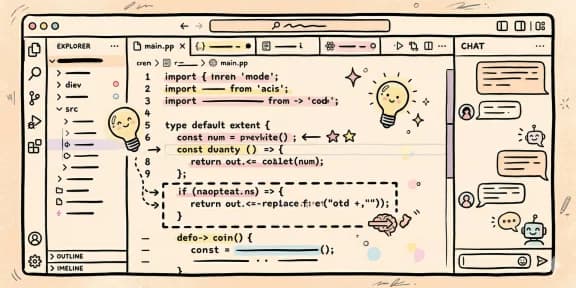
Zed Just Made Parallel AI Agents a Native Editor Primitive
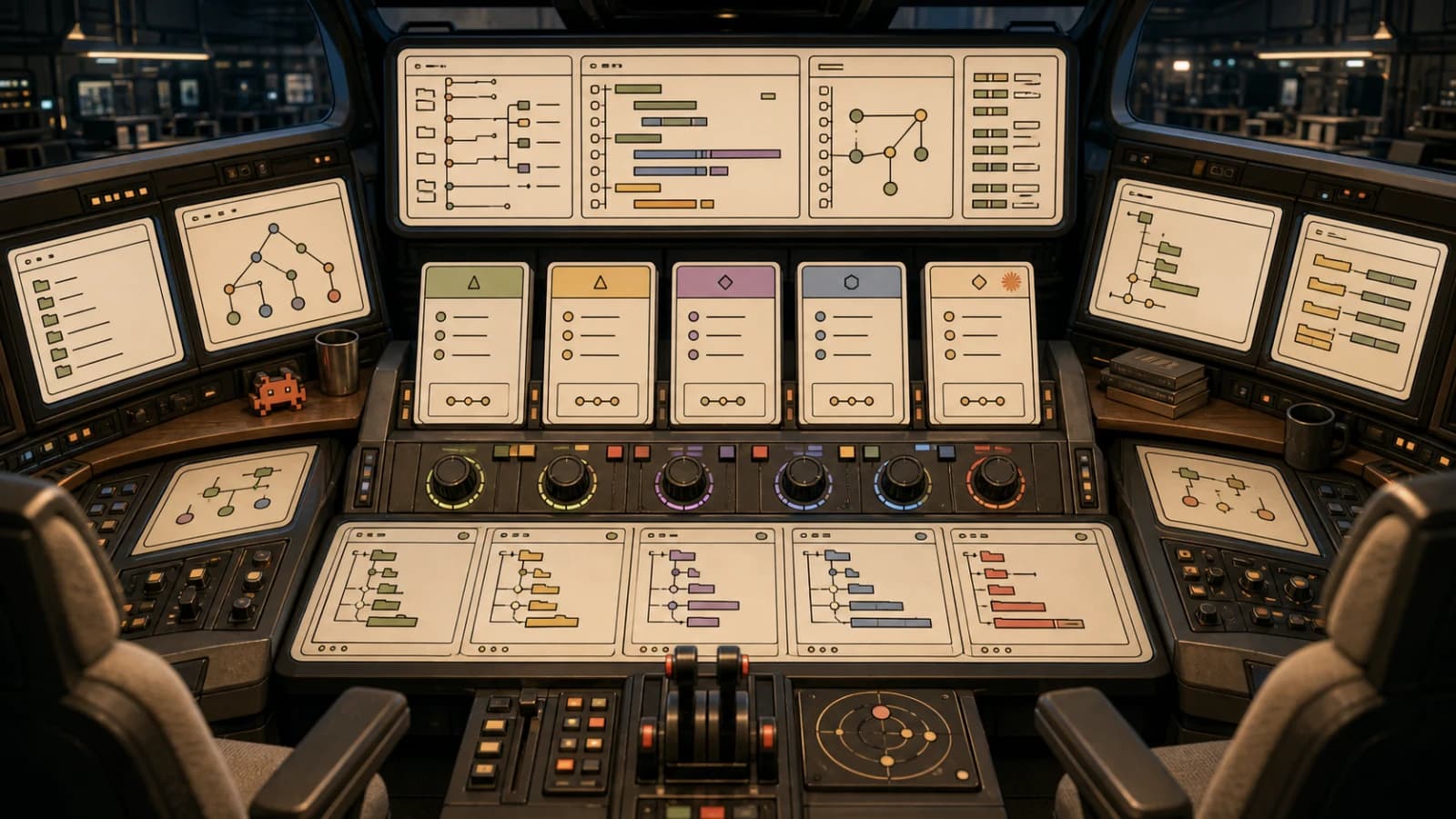
AI Tools Deep Dive
20 parts- 1Claude Design: Anthropic's Bet That Designers and Developers Want the Same Tool
- 2The 10 Best AI Coding Tools in 2026
- 3Cursor: The AI-Powered Code Editor That Changed How Developers Work
- 4OpenAI Codex: Terminal and Cloud AI Coding Agent
- 5Gemini CLI Guide: 1M Token Context and Who Can Still Use It
- 6Kimi K2: Fast, Cheap, and Efficient Coding
- 7GitHub Copilot in 2026: Still Worth It for TypeScript Developers?
- 8Aider vs Claude Code: Open Source vs Commercial AI Coding CLI
- 9Aider vs Claude Code in 2026: Git-First Open Source vs Subagent Runtime
- 10Every AI Coding Tool Compared: The 2026 Matrix
- 11Qwen3.6-27B Is the Local Coding Model to Test First
- 12Zed Just Made Parallel AI Agents a Native Editor PrimitiveCurrent
- 13Warp Open Sourced the Terminal. The Real Story Is Agent Operations
- 14AI Design Slop: 16 Patterns That Mark a Site as Vibe-Coded
- 15The Claude Design Moment: AI Design Skills Just Got Their Breakout Week
- 16Codeburn: The First TUI That Actually Shows Where Your Claude Max Subscription Is Going
- 17Promptlock: Deterministic Prompt Versioning for LLM Apps
- 18Agent Replays with TraceTrail: Loom for Agent Runs
- 19Hookyard Shows Why Claude Code Hooks Need a Package Manager
- 20MCP Lens: Wireshark for Model Context Protocol Servers
TL;DR
Zed Parallel Agents adds a native Threads Sidebar that runs multiple AI agents in one window, with per-thread agent choice and worktree isolation.
Last updated: June 11, 2026
The editor finally caught up to how we actually work#
If you have been running more than one AI coding agent at a time this year, you have been doing it manually. You opened a second Claude Code tab. You spun up a second Cursor window. You shelled out to Aider in a second terminal. You kept a mental map of which agent was in which worktree on which branch. You switched contexts by squinting at a window title bar.
Zed just shipped a feature that treats that workflow as the default instead of the exception. Parallel Agents is not a plugin or a marketplace extension. It is a native editor panel. The HN thread is sitting at 168 points and 104 comments as I write this, and it is the first major code editor to make multi-agent orchestration a first-class primitive rather than something you cobble together.
This is a bigger deal than the announcement makes it look.
What Zed actually shipped#
The headline feature is the Threads Sidebar. Threads dock on the left by default, next to the Agent Panel. Project and Git panels move to the right. Each thread is an independent agent session with its own scoped access. The sidebar lets you start, stop, archive, and monitor threads from a single view, grouped by project.
A few specifics worth pulling out because they are where the design thought happened.
Per-thread agent selection. Zed lets you choose which agent runs in which thread. You can keep Claude for the hard refactor, Codex for the bugfix, GPT for the doc generation, and a local Ollama model for the playground thread. All in the same editor window, all at the same time.
Per-thread worktree isolation. You can pin a thread to a specific folder or repository. If your repo is set up with worktrees, you can keep three threads hammering three different worktrees without any of them seeing the others' uncommitted state. This was the single most painful part of parallel agent work before, because coordination failure at the filesystem level produces silent bugs that are hard to trace.
Cross-project threads. The inverse is also true. If you want one thread reading and writing across multiple repos, the sidebar supports it. That is a meaningful difference from the implicit single-root assumption in most editors.
Everything runs at 120 fps, open source, and works with any agent backend Zed supports. Agent choice is not gated by a paid plan.
Why this is the right architecture#
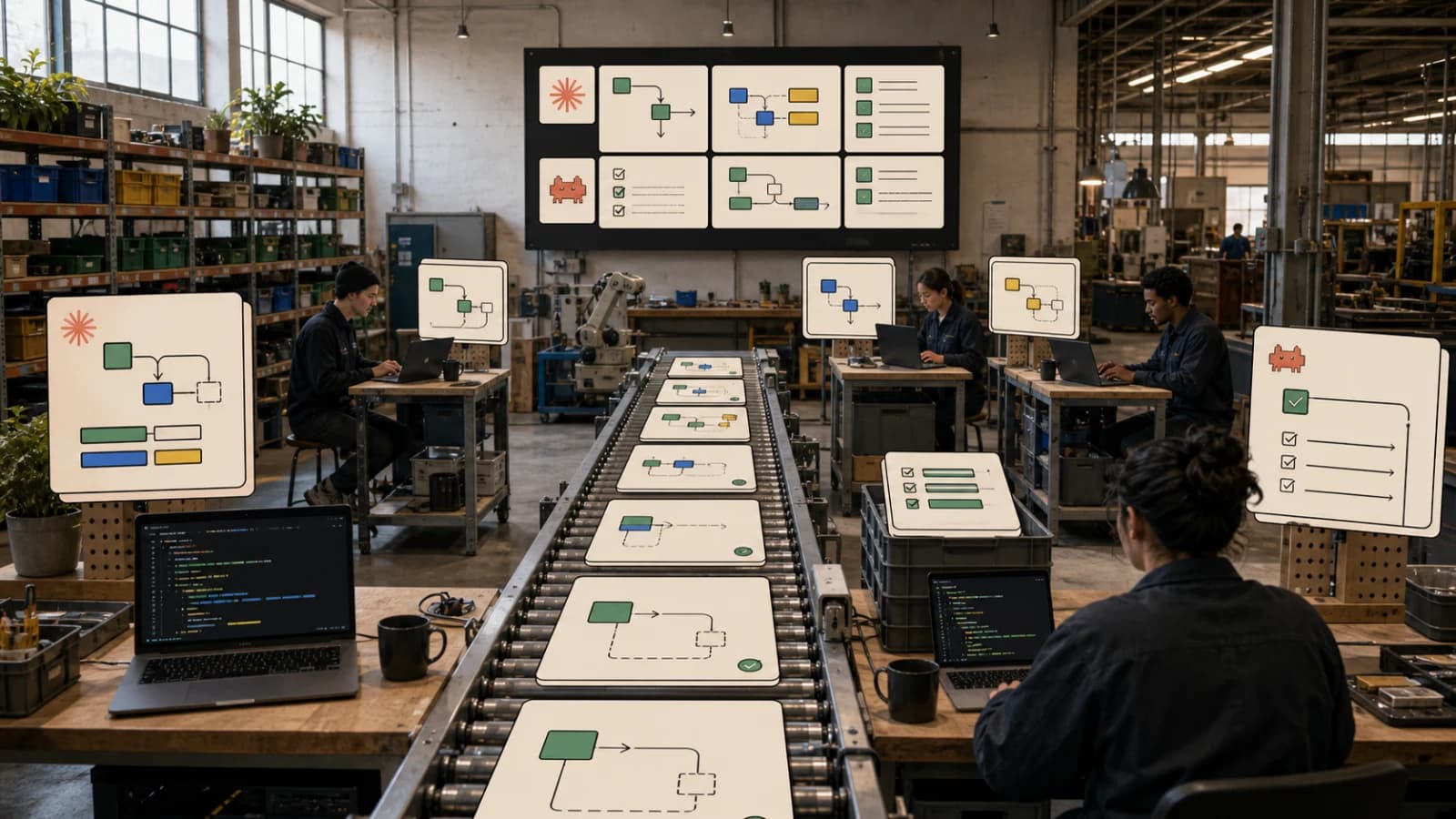
Multi-agent workflows are not new. The craft has been shipping in the form of tmux splits, multiple terminal tabs, and hand-rolled worktree scripts for at least eighteen months. I run five to eight parallel Claude Code sessions on a productive day. Every serious AI-native engineer I know has a similar setup.
What has been missing is an editor that assumes the workflow exists. Cursor's chat UI is single-threaded by design. VS Code with Copilot Chat is single-threaded by default. Aider is CLI-first and the multi-session workflow is a shell problem, not an editor problem. Claude Code runs in the terminal and you stack sessions by opening more terminal windows. All of these work. None of them make parallel the default.
Zed saying "threads are how you use the editor" is an architectural statement. The implication is that single-agent thinking is the weird case, not the common case. Everything about the new default layout, the thread grouping by project, the per-thread settings, the worktree isolation, the agent switcher, reads as "we assume you have five of these going."
That is the right read of 2026 reality. The models have gotten fast enough that one agent is rarely the bottleneck. The bottleneck is humans, and specifically the cost of holding multiple lines of work in your head at once. A good editor makes the cost of that holding cheaper.
What this validates about the rest of the stack#
The parallel-first design also validates a set of adjacent practices that have been emerging across the AI dev tooling space.
Worktrees are the right unit of isolation. Claude Code's worktree workflow, where each task gets its own ephemeral worktree on a branch, has been the best available answer to "how do I run three agents on the same repo without them stepping on each other." Zed's per-thread worktree pin takes the same idea and makes it navigable from the sidebar. The implicit endorsement is significant.
Agent-mixing is real. For a while, the industry framing was that you picked your agent and stayed loyal. Cursor users were Cursor users. Claude Code users were Claude Code users. In practice, most productive engineers I know rotate through three or four agents depending on the task. Zed has built the editor that acknowledges this. Claude for long-context refactors. GPT for small, fast edits. Local models for anything you do not want hitting an API. Pick the right tool per job, per thread.
Monitoring is part of the loop. One of the quieter parts of the Zed post is that the sidebar lets you monitor threads as they run. Not just review their final output but watch them work. That is a direct response to the failure mode where you set five agents going and come back to four unfinished runs and one that rewrote your auth system because a retry loop got stuck. Visibility is a safety feature when parallelism goes up.
What it still does not solve#
Parallel agents are an editor-level win. They are not a reasoning-level win.
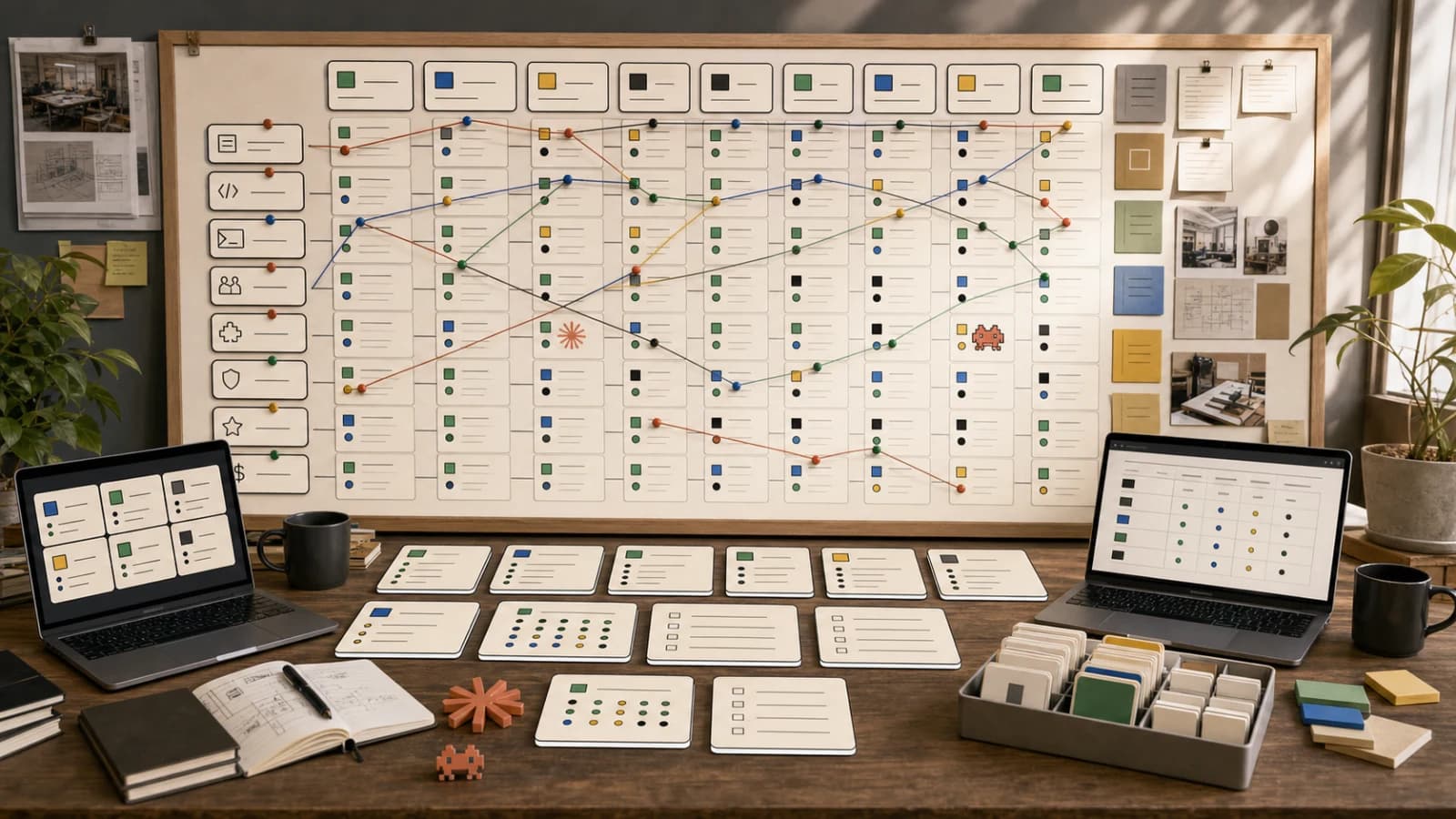
The hard problem of parallel AI work is coordination, not execution. Three agents running on three worktrees is great until two of them want to refactor the same interface in incompatible ways. Then you have three diffs you cannot cleanly merge and the gain you got from parallelism evaporates into conflict resolution overhead. The editor does not solve this. Nothing in the industry solves this yet. The practical workaround is aggressive scoping. Each thread gets a task small enough to finish in one pass and narrow enough that the blast radius is contained. That is a human discipline, not a tool feature.
The other thing parallel agents do not solve is the restraint problem. If you have read our piece on over-editing from earlier today, you know that one agent can produce a 50-line diff for a one-character bug. Five agents can produce 250 lines. Parallelism is a throughput multiplier, including for the bad habits. The Zed sidebar gives you the visibility to catch this but it does not prevent it.
The strategic read#
Zed is positioning itself as the editor that takes agentic engineering seriously. Nathan Sobo, Zed's co-founder, coined the phrase "agentic engineering" in a 2025 post that framed the craft as "combining human craftsmanship with AI tools to build better software." That framing is now concrete in the product. The parallel agents feature is Zed saying that the editor is the place where this craft happens, and that the competition is not Cursor or VS Code, it is the set of hand-rolled workflows that developers have been cobbling together from tmux, worktrees, and multiple terminal tabs.
That is a smart position to take. The vendors that are going to win the next eighteen months are the ones that make multi-agent workflows feel native rather than bolted on. Cursor's chat-first UX has not made the leap yet. VS Code is shackled by backwards compatibility with the single-window assumption that Copilot was built on. Claude Code and its CLI peers are excellent but they are terminal tools, not editor-level environments.
If you have been running parallel agents by hand for months and building mental scaffolding to keep them coordinated, Zed just made that scaffolding disappear into the editor. That alone is enough to make the switch worth trying.
How to try it#
Download Zed, or update to the latest version if you already have it. Open the Threads Sidebar from the icon in the bottom-left, or use option-cmd-j on macOS or ctrl-option-j on Linux and Windows. The new default layout is opt-in for existing users, so you will need to flip the layout yourself.
Start with three threads on three scoped tasks. A small bugfix, a doc update, and a test coverage pass. Use a different agent per thread. Watch them work from the sidebar. If you come away thinking it felt smoother than whatever you were doing before, that is the signal. If you come away thinking it felt like more windows to manage, you probably need to scope the tasks smaller.
The editor is catching up to how we actually work. Adjust accordingly.
FAQ#
What is Zed's Parallel Agents feature?#
Parallel Agents is a native Threads Sidebar in the Zed editor that lets you run multiple AI agents simultaneously in one window. Each thread is an independent agent session with its own scoped access, worktree isolation, and agent model selection. Unlike plugins or extensions, this is built into the editor as a first-class feature.
Can I use different AI models in different threads?#
Yes. Zed lets you choose which agent runs in each thread independently. You can have Claude handling a long-context refactor, Codex on a bugfix, GPT generating documentation, and a local Ollama model for experimental work - all in the same editor window at the same time.
How does Zed prevent parallel agents from conflicting?#
Zed supports per-thread worktree isolation. You can pin each thread to a specific folder or repository, and if your repo uses git worktrees, each thread can work on a different worktree without seeing the others' uncommitted changes. This prevents the silent filesystem-level bugs that happen when multiple agents edit the same files.
How does Zed compare to Cursor or VS Code for multi-agent work?#
Cursor's chat UI is single-threaded by design. VS Code with Copilot Chat is single-threaded by default. Zed is the first major editor to make parallel agents a native architectural assumption rather than something you cobble together with multiple windows or terminals.
Does Zed's parallel agents feature require a paid plan?#
No. Agent choice is not gated by a paid plan in Zed. The editor runs at 120 fps, is open source, and works with any agent backend that Zed supports.
What problems do parallel agents not solve?#
Parallel agents do not solve coordination problems. If two agents try to refactor the same interface in incompatible ways, you still end up with merge conflicts. The practical workaround is aggressive scoping - give each thread a task small enough and narrow enough that the blast radius is contained.
How do I try Zed's Parallel Agents?#
Download Zed or update to the latest version. Open the Threads Sidebar from the icon in the bottom-left, or use option-cmd-j on macOS or ctrl-option-j on Linux and Windows. Start with three threads on three scoped tasks (a bugfix, a doc update, and a test pass), using a different agent per thread.
Official Sources#
| Resource | Description |
|---|---|
| Zed Parallel Agents Announcement | Official blog post introducing the Threads Sidebar and parallel agent architecture |
| Zed Homepage | Download page and feature overview for the Zed editor |
| Zed Documentation | Full documentation including agent configuration, keybindings, and workspace setup |
| Zed GitHub Repository | Open source repository for the Zed editor |
| Zed Extensions | Extension marketplace for additional language support and integrations |
| Zed Changelog | Release notes and version history |
Further reading#
- Building Multi-Agent Workflows with Claude Code
- Best AI Coding Tools in 2026
- Over-Editing: Why Your AI Agent Rewrites What Isn't Broken
Get the next deep dive like this in your inbox
One email a week on Zed and the rest of the AI dev stack. Free.
Read next on Cursor
Building Multi-Agent Workflows in Claude Code: A Practical Tutorial
Multi-agent workflows in Claude Code: use the Task tool, custom sub-agents and worktrees to run parallel development, with real prompts and agent configs.
11 min readThe 10 Best AI Coding Tools in 2026
From terminal agents to cloud IDEs - these are the AI coding tools worth using for TypeScript development in 2026.
8 min readAider vs Claude Code in 2026: Git-First Open Source vs Subagent Runtime
Aider vs Claude Code: git-first, model-agnostic Aider against the Claude Code runtime of subagents and hooks. Compare architecture, cost, governance and fit.
10 min readNew here? Start with
Technical content at the intersection of AI and development. Building with AI agents, Claude Code, and modern dev tools - then showing you exactly how it works.